
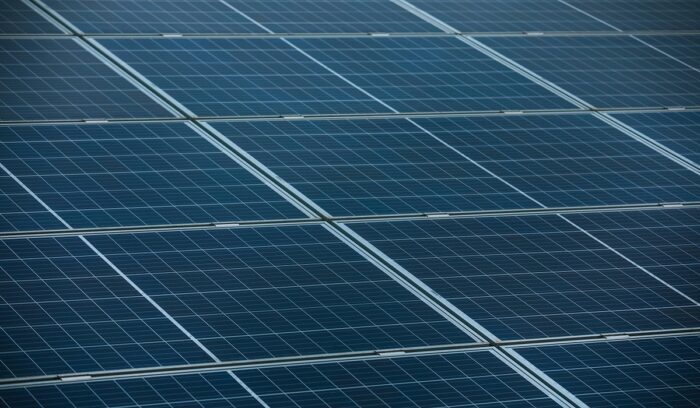
A new facility in southern France is tackling one of solar energy’s least visible problems: what happens to panels when they die. Veolia, the French water and waste group, has opened what it describes as Europe’s first dedicated recycling plant for photovoltaic (PV) panels, in Rousset in the Provence region — a milestone in building a circular economy around clean energy.
At a glance
- Solar panel recycling: The Rousset plant has a contract with PV Cycle France to process 1,300 tonnes of end-of-life panels in 2018, with plans to scale to 4,000 tonnes by 2022.
- Recovered materials: Robots disassemble panels to extract glass, silicon, plastics, copper, and silver, which are crushed into granulates that can be used to make new panels.
- PV waste outlook: The International Renewable Energy Agency (IRENA) projects global PV waste streams will grow from roughly 250,000 tonnes in 2016 to more than five million tonnes by 2050.
Why a dedicated plant matters
Until now, broken or aging solar panels have typically been processed in general-purpose glass recycling facilities. Those plants recover only the glass and aluminum frames, mix specialty solar glass with ordinary glass, and often burn the remainder in cement ovens.
Veolia’s Rousset plant does something fundamentally different. Its robots take panels apart layer by layer, separating out the materials that give a solar panel its value: glass (65–75% of a typical crystalline silicon panel by weight), aluminum from the frame (10–15%), plastic (around 10%), and the silicon, copper, and silver that make it generate electricity. The recovered granulates can feed directly into manufacturing new panels.
This is what a closed loop looks like in practice — turning yesterday’s clean energy hardware into tomorrow’s.
The timing is no accident
Solar panels have lifespans of around 25 years. The first large wave of panels installed during Europe’s early solar boom is only now beginning to reach the end of its working life in sufficient volume to make a dedicated facility economically viable. France alone saw 53,000 tonnes of solar capacity installed in 2016 C.E. and 84,000 tonnes in 2017 C.E., with installed capacity growing 30–40% per year, according to Veolia.
That growth curve makes the recycling challenge urgent. IRENA has estimated that by 2030 C.E., recovered materials from decommissioned panels could be worth $450 million globally — and could exceed $15 billion by 2050 C.E. as the volume of PV waste approaches the mass contained in new installations each year.
This story fits into a much larger pattern. It is one of many clean energy milestones pointing toward a renewable economy that accounts for the full life cycle of its technology — not just the clean electricity it generates.
France as a proving ground for a global model
Veolia says it aims to recycle all decommissioned PV panels in France and intends to use the Rousset facility as a template for plants in other countries. Gilles Carsuzaa, head of electronics recycling at Veolia, described the plant to reporters as “the first dedicated solar panel recycling plant in Europe, possibly in the world.”
IRENA’s own analysis, published in a 2016 C.E. study on solar panel end-of-life management, concluded that dedicated PV recycling plants make long-term economic sense — and that the materials locked inside aging panels represent a significant and recoverable resource.
The plant does carry one meaningful limitation: it processes crystalline silicon panels only and does not handle thin-film solar panels, which use a different material stack. Thin-film panels make up a small share of the French market, but they present their own recycling challenges that remain unsolved at industrial scale.
Closing a loop in the clean energy story
Solar power’s environmental case has always rested on its operational cleanliness — no combustion, no emissions at the point of generation. But a genuinely circular energy system has to account for manufacturing and end-of-life too. By recovering the silicon, silver, and copper embedded in panels, recycling plants reduce the need to mine and refine those materials again — compounding the climate benefit of solar energy across its full life cycle.
Worldwide, Veolia expects the tonnage of decommissioned PV panels to reach several tens of millions of tonnes by 2050 C.E. The window to build the infrastructure to handle that wave is open now, while volumes are still manageable. France, it turns out, didn’t wait.
Read more
For more on this story, see: Reuters
For more from Good News for Humankind, see:
- Australia hits a renewable energy milestone
- Renewable energy costs drop 91% — beating fossil fuels
- The Good News for Humankind archive on clean energy
About this article
- 🤖 This article is AI-generated, based on a framework created by Peter Schulte.
- 🌍 It aims to be inspirational but clear-eyed, accurate, and evidence-based, and grounded in care for the Earth, peace and belonging for all, and human evolution.
- 💬 Leave your notes and suggestions in the comments below — I will do my best to review and implement where appropriate.
- ✉️ One verified piece of good news, one insight from Antihero Project, every weekday morning. Subscribe free.


