
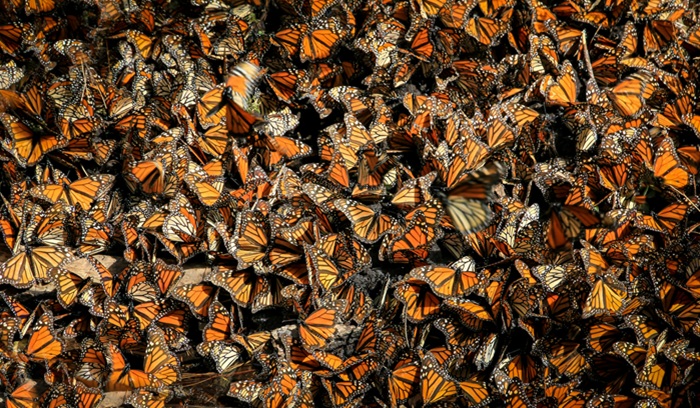
More than double the number of orange-and-black wings now blanket the high-altitude forests of central Mexico compared to last year. New data from the annual survey shows the monarch butterfly population occupied 2.49 hectares of forest this winter. This represents a 176 percent increase from the 0.9 hectares recorded during the previous season.
- The overwintering area expanded by 176 percent this year.
- Favorable weather during the autumn migration helped more butterflies complete their 3,000-mile journey.
- Local communities are successfully reducing illegal logging in the protected bioreserve.
This shift in the forest provides a much-needed lift for conservationists across North America. For years, the numbers had been sliding toward a dangerous low. This sudden surge proves that the species possesses an incredible capacity to bounce back when conditions align.
Tracking the recovery of the monarch butterfly population
The survey was conducted by the National Alliance for the Conservation of the Monarch Butterfly. This group includes the World Wildlife Fund and the environment ministry of Mexico. They spend weeks counting the trees that are completely covered by the insects in the states of Michoacán and Estado de México.
Scientists believe that ideal temperatures in the United States and Canada during the breeding season allowed more caterpillars to survive. When it came time to fly south, the weather remained clear and the winds were helpful. This allowed a much higher percentage of the population to reach their winter home safely.
The health of the forest in Mexico is also improving. The government has worked closely with local residents to create new jobs that do not rely on cutting down trees. This protection ensures that the butterflies have a thick canopy to shield them from the freezing mountain nights. You can find more details on these habitat standards through the Commission for Environmental Cooperation.
Why the return of the migration matters for local families
On a macro level, this is a story about the health of a continent-wide ecosystem. On a micro level, it is a story about the economic survival of mountain villages. When the butterflies return in large numbers, they bring thousands of tourists who want to witness the migration.
For a local guide in the village of El Rosario, the return of the insects brings a steady source of income. This money supports local cafes, hotels, and markets. It creates a sustainable economy that values the living forest over timber sales. This alignment of interests is the key to long-term success.
The butterflies also act as a natural indicator of the health of our environment. Because they travel across three nations, their survival depends on the presence of wildflowers and clean water along the entire route. Their recovery suggests that the “pollinator corridors” being built by everyday citizens are starting to work. The U.S. Fish and Wildlife Service provides guides on how to help these insects in your own backyard.
A measured look at the ongoing risks for the species
While the 176 percent increase is a significant victory, researchers maintain a measured and cautious outlook. The population is still well below the six-hectare target that scientists believe is necessary for long-term survival. One bad storm in the mountains could still wipe out a large portion of the insects while they are clustered together.
Climate change remains a persistent threat to the migration pattern. Unusual heatwaves or late frosts can disrupt the timing of the butterflies and the plants they rely on for food. There is also a concern about the continued use of certain pesticides in the agricultural heartland of North America.
To manage these risks, organizations like Monarch Watch are encouraging people to plant more milkweed. This is the only plant that monarch caterpillars can eat. By creating “waystations” for the butterflies, humans can provide the fuel they need to survive their long journey. This effort requires a persistent, multi-year commitment from everyone involved.
Leading a continental movement for pollinator health
The success in Mexico is a sign that international cooperation can solve complex problems. The three nations of North America have signed agreements to coordinate their conservation strategies. This ensures that a win in Mexico is supported by actions in the United States and Canada.
This achievement serves as a vital blueprint for other migratory species that are currently in decline. It proves that we can physically repair the path that these animals take across the world. As the forests of Mexico fill with orange wings once again, they offer a hopeful vision of what is possible.
Ultimately, the recovery of the monarch is a victory for human persistence. It is a reminder that the natural world can heal if we provide the right protection and resources. As the butterflies prepare to head north again, they carry a message of resilience that spans thousands of miles.
This story was originally reported by The Guardian.
More Good News
-

Chile surpasses 50% ocean protection with the world’s third-largest fully protected marine zone
Chilean President Gabriel Boric has signed a decree extending full Chile ocean protection to roughly 140,000 square miles around the Juan Fernández and Nazca-Desventuradas marine parks, pushing national coverage past 50% of its exclusive economic zone. Once implemented, the fully protected zone will rank as the third largest in the world, behind the Ross Sea and Papahānaumokuākea. The Organización Comunitaria Funcional Mar de Juan Fernández — a community of fewer than 1,000 people managing a sustainable lobster fishery since 1890 — drove the proposal forward. Their success demonstrates that durable ocean conservation starts with the people who live there.
-

Los Angeles jury finds tech giants liable in landmark social media safety trial
In a historic verdict for digital accountability, a Los Angeles Superior Court jury has found Meta and YouTube liable for designing addictive features that harm children. The first-of-its-kind ruling awarded $6 million in damages to a 20-year-old plaintiff, focusing on social media safety and the negligent engineering of “infinite scrolls” and autoplay. While tech companies are expected to appeal, the decision builds on research from the Center for Humane Technology and marks the first time a jury has held platforms responsible for their design choices. This victory provides a major blueprint for protecting the mental health of the next generation.
-

Wales becomes first part of U.K. to mandate solar panels on new buildings
The Welsh Government has officially updated its national building regulations to require the installation of solar panels on new buildings across the country. This historic move makes Wales the first nation in the United Kingdom to mandate that all new homes and non-domestic structures generate their own clean electricity. While housing experts maintain a measured outlook on the initial construction costs, the policy is designed to dramatically lower energy bills for families and secure national energy independence. This achievement provides a practical blueprint for how modern urban planning can successfully drive the global transition toward a net-zero future.
-

Bhumika Shrestha becomes Nepal’s first out trans lawmaker
A historic milestone for representation has been reached as Bhumika Shrestha becomes the first out transgender lawmaker in the federal parliament of Nepal. A long-time leader with the Blue Diamond Society, Shrestha was appointed through the nation’s Proportional Representation system to ensure marginalized voices have a seat in the legislature. While activists maintain a measured outlook on the work remaining for marriage equality and rural acceptance, this appointment builds on a 20-year history of legal progress. This achievement provides a powerful regional blueprint for how developing nations can successfully integrate diverse identities into modern, democratic governance.
-

Monarch butterfly population sees dramatic increase in Mexico wintering grounds
A new survey from the National Alliance for the Conservation of the Monarch Butterfly reveals that the monarch butterfly population in Mexico’s wintering grounds has increased by 176 percent. Data shows the butterflies occupied 2.49 hectares of forest this year, up from 0.9 hectares in the previous season. While researchers maintain a measured outlook because the population remains below historical levels, the growth signals a major victory for habitat protection efforts across North America. This recovery proves that coordinated conservation between three nations can protect the most vulnerable migratory species and ensure a vibrant future.