
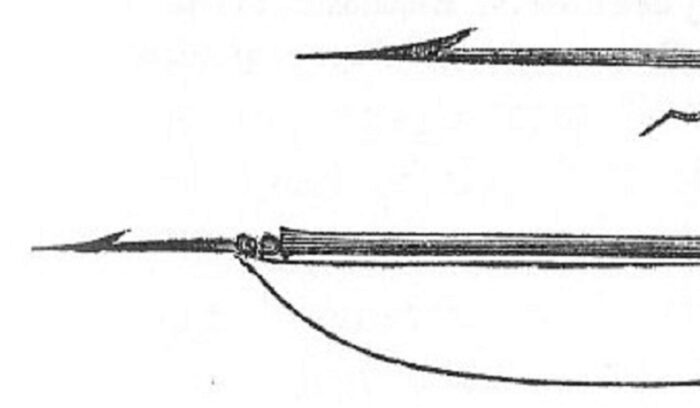
The invention of the bone harpoon represents a critical achievement in early human technological and cognitive development, opening up entirely new ecological niches for survival. This simple, yet revolutionary, tool required a unique combination of ingenuity: the abstract understanding of biomechanics, the planning depth to anticipate seasonal resources, and the skilled craftsmanship of complex composite tools. The earliest examples of this innovation, the Semliki harpoons, were unearthed at an archaeological site near the Semliki River in the Democratic Republic of the Congo.
The Ingenuity of Complex Tooling
These remarkable artifacts, carved from bone, date back approximately 90,000 years, placing them firmly within the Middle Stone Age. Before their discovery, archaeologists generally believed complex bone industries were a later development, leading to initial skepticism about the dating. However, subsequent confirmation solidified the Semliki harpoons as one of the oldest known examples of specialized bone technology, predating similar tools found elsewhere by tens of thousands of years. The creation of such a tool—with a carefully shaped barbed head—required foresight, material knowledge, and precision, showcasing early human engineering aptitude.
The harpoons are evidence that hominins were mastering advanced construction techniques, moving beyond simple flaked stone tools. The process of shaping bone required different skills than knapping stone, indicating a diversification of technical knowledge within the community. This ability to manipulate disparate materials for specific functions is a key hallmark of human intellectual progress and adaptive flexibility. Learn more about the Semliki harpoon discovery.
Abstract Thought and Aquatic Adaptation
The harpoon’s design embodies abstract thought applied to the challenge of acquiring fast-moving aquatic prey. The barbs are not accidental; they represent a deliberate, conceptual solution to the problem of penetration and retention. The inventor had to mentally calculate the trajectory, speed, and force needed to secure a fish, as well as the mechanical principle that allows the barb to hold firmly beneath the skin once pulled.
This specialized innovation allowed humans to consistently exploit aquatic resources, a reliable and calorie-rich food source. The site where the harpoons were found is littered with catfish bones, suggesting the people who used the harpoons specialized in catching adult catfish. This indicates an abstract understanding of animal behavior, specifically the migration or feeding patterns of fish, ensuring reliable sustenance. This expansion of the diet broadened human ecological resilience, which was especially crucial during the wetter climatic conditions of the early to mid-Holocene period.
Planning Depth and Seasonal Harvesting
The purposeful construction of a durable, specialized tool like the harpoon strongly suggests a strategy of planning depth for seasonal resource exploitation. Manufacturing harpoons required considerable time and skill, a commitment only justified by the anticipation of a future, large-scale yield. The archaeological evidence suggests these early fishermen returned to the Semliki River annually.
This cyclical approach to resource management is vital evidence of complex, long-term planning. Unlike opportunistic foraging, seasonal harvesting demands social coordination to prepare equipment, organize the timing of the expedition, and process a large volume of catch. The regular acquisition of resources like giant catfish could have supported larger, more stable social groups, providing the necessary caloric surplus to fuel further technological and cultural development. Explore the research on complex bone industries in Africa.
Positive Contributions to Community Life
The harpoon’s invention positively impacted social structure and knowledge transmission. It fostered a culture of cumulative cultural adaptation, where specialized fishing knowledge and bone-working techniques were preserved and taught across generations. The very existence of such an advanced, standardized tool confirms a community that valued learning and technological persistence.
This reliable access to fish protein contributed significantly to the human diet, potentially supporting brain development and overall health within the population. It also facilitated a more sedentary lifestyle around rich water sources, setting the stage for more complex social organization and, eventually, farming. The ingenious design of these 90,000-year-old tools, which are surprisingly similar to harpoons used much later, reduces the behavioral distance between these ancient communities and modern humans.