
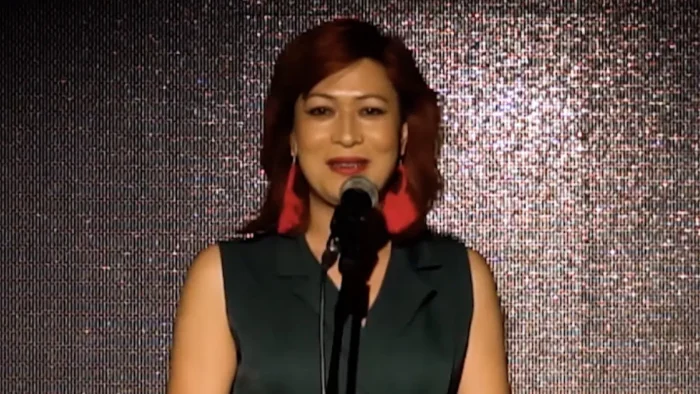
A prominent human rights activist has officially broken one of the highest political glass ceilings in Central Asia. Bhumika Shrestha took her oath of office this week as the first out transgender lawmaker to serve in the federal parliament of Nepal. This historic appointment marks the culmination of two decades of relentless advocacy for the country’s sexual and gender minorities. It signals a major shift in how the nation integrates diverse voices into its top levels of government.
- Bhumika Shrestha is a long-time leader with the Blue Diamond Society, Nepal’s oldest LGBTQ+ rights organization.
- Her appointment utilized the country’s Proportional Representation system, which is designed to ensure diverse groups have a voice in the legislature.
- Nepal was already a regional leader after recognizing a “third gender” category on official documents and passports in 2015.
This development marks a significant turning point for representation in a region that has often struggled with conservative social norms. For years, activists argued that legal recognition was only the first step. They believed that true progress required a transgender lawmaker to have a seat at the table where the laws are actually written.
A lifelong journey for a transgender lawmaker
Shrestha has spent her entire adult life fighting for the rights of the marginalized. She joined the Blue Diamond Society in the early 2000s when the movement was still operating in the shadows. At that time, police harassment and social exclusion were daily realities for most members of the community. She eventually became one of the most recognizable faces of the movement, representing Nepal at international forums.
When Shrestha took her seat in the House of Representatives, she was not just representing herself. She was carrying the hopes of thousands of people who have historically been ignored by the political establishment. Her presence in the chamber forces other lawmakers to confront the humanity and the needs of a community they previously viewed only through the lens of statistics.
This transition from an outside activist to an inside legislator is a rare and difficult path. It requires the ability to move from protest to policy without losing the trust of the original movement. Shrestha has stated that her primary goal is to ensure that the constitutional promises of equality are translated into practical laws for every citizen.
Building on a history of legal progress in Nepal
The success of a transgender lawmaker in Nepal is built on a foundation of progressive court rulings. In 2007, the Supreme Court of Nepal issued a landmark decision ordering the government to end discrimination based on sexual orientation and gender identity. This ruling was one of the first of its kind in the world and established Nepal as a pioneer for human rights.
The court also mandated that the state recognize a third gender category for those who do not identify as male or female. This led to the inclusion of an “O” for “Other” on citizenship certificates and passports. You can review the details of these legal shifts in the U.S. Department of State human rights reports for the region.
These legal victories created the safe space necessary for activists like Shrestha to run for office. Without the protection of the courts, it is unlikely that a major political party would have felt comfortable nominating an out transgender candidate. This proves that judicial leadership can pave the way for a more inclusive and democratic legislature.
The micro-impact on local communities
On a macro level, this is a victory for global human rights. On a micro level, it is a story about the changing lives of students and young professionals in Kathmandu. When a young person sees a transgender lawmaker in the news, they see a viable future for themselves in public service. This representation removes the “unseen” barrier that often keeps marginalized youth from dreaming of leadership roles.
For a local business owner, Shrestha’s presence in parliament means that the concerns of small LGBTQ+ enterprises might finally be heard. This can lead to better protections against discrimination in hiring and more equitable access to government contracts. It creates a more stable and fair environment for everyone who wants to contribute to the nation’s economy.
This policy shift also encourages local police and health officials to treat the community with more respect. When the “boss” of the system is a member of that community, it changes the power dynamic on the street. This can lead to a measurable decrease in the rates of violence and harassment that often target gender minorities.
Navigating the remaining challenges for equality
While the swearing-in is a victory, Shrestha and her supporters maintain a measured and cautious outlook. The presence of one lawmaker does not immediately erase centuries of deep-seated social prejudice. Many people in rural parts of Nepal still face intense pressure from their families and neighbors to hide their identities.
There is also the challenge of updating thousands of existing laws to be truly inclusive. Issues such as marriage equality, inheritance rights, and property ownership still need to be addressed by the legislature. Shrestha will have to navigate a complex political environment where not everyone shares her vision for a modern and equal Nepal.
To manage these hurdles, Shrestha plans to work across party lines to build broad coalitions for human rights. She knows that lasting change requires more than just a single vote. It requires changing the hearts and minds of her fellow legislators. The Human Rights Watch archives track the ongoing legislative progress and the hurdles that remain for the movement.
Setting a regional precedent for representation
The success of the Nepalese movement is being watched closely by activists in neighboring India, Pakistan, and Bangladesh. It provides a practical blueprint for how to move from legal recognition to political power. By utilizing the United Nations Development Programme framework for inclusive governance, Nepal is proving that a developing nation can lead the world in social progress.
This achievement serves as a vital reminder that the global fight for dignity is moving forward. It shows that even in reclusive or traditional regions, significant environmental and social progress is possible. As Shrestha begins her work in the parliament, she offers a hopeful vision for the coming decades.
Ultimately, the return of a marginalized group to the halls of power is a sign of a healthier democracy. It is a reminder that the land has an incredible capacity to heal if we provide the right tools and protection. As the first out transgender lawmaker settles into her new role, she offers a powerful vision of what is possible when humanity chooses to build instead of destroy.
This story was originally reported by LGBTQ Nation.
More Good News
-

Chile surpasses 50% ocean protection with the world’s third-largest fully protected marine zone
Chilean President Gabriel Boric has signed a decree extending full Chile ocean protection to roughly 140,000 square miles around the Juan Fernández and Nazca-Desventuradas marine parks, pushing national coverage past 50% of its exclusive economic zone. Once implemented, the fully protected zone will rank as the third largest in the world, behind the Ross Sea and Papahānaumokuākea. The Organización Comunitaria Funcional Mar de Juan Fernández — a community of fewer than 1,000 people managing a sustainable lobster fishery since 1890 — drove the proposal forward. Their success demonstrates that durable ocean conservation starts with the people who live there.
-

Los Angeles jury finds tech giants liable in landmark social media safety trial
In a historic verdict for digital accountability, a Los Angeles Superior Court jury has found Meta and YouTube liable for designing addictive features that harm children. The first-of-its-kind ruling awarded $6 million in damages to a 20-year-old plaintiff, focusing on social media safety and the negligent engineering of “infinite scrolls” and autoplay. While tech companies are expected to appeal, the decision builds on research from the Center for Humane Technology and marks the first time a jury has held platforms responsible for their design choices. This victory provides a major blueprint for protecting the mental health of the next generation.
-

Wales becomes first part of U.K. to mandate solar panels on new buildings
The Welsh Government has officially updated its national building regulations to require the installation of solar panels on new buildings across the country. This historic move makes Wales the first nation in the United Kingdom to mandate that all new homes and non-domestic structures generate their own clean electricity. While housing experts maintain a measured outlook on the initial construction costs, the policy is designed to dramatically lower energy bills for families and secure national energy independence. This achievement provides a practical blueprint for how modern urban planning can successfully drive the global transition toward a net-zero future.
-
Bhumika Shrestha becomes Nepal’s first out trans lawmaker
A historic milestone for representation has been reached as Bhumika Shrestha becomes the first out transgender lawmaker in the federal parliament of Nepal. A long-time leader with the Blue Diamond Society, Shrestha was appointed through the nation’s Proportional Representation system to ensure marginalized voices have a seat in the legislature. While activists maintain a measured outlook on the work remaining for marriage equality and rural acceptance, this appointment builds on a 20-year history of legal progress. This achievement provides a powerful regional blueprint for how developing nations can successfully integrate diverse identities into modern, democratic governance.
-

Monarch butterfly population sees dramatic increase in Mexico wintering grounds
A new survey from the National Alliance for the Conservation of the Monarch Butterfly reveals that the monarch butterfly population in Mexico’s wintering grounds has increased by 176 percent. Data shows the butterflies occupied 2.49 hectares of forest this year, up from 0.9 hectares in the previous season. While researchers maintain a measured outlook because the population remains below historical levels, the growth signals a major victory for habitat protection efforts across North America. This recovery proves that coordinated conservation between three nations can protect the most vulnerable migratory species and ensure a vibrant future.