Good News Links

Brazilian Indigenous protest victory

Indigenous protests in Brazil topple law seen as threat to rural schools

After 23 days of protests, Indigenous groups and teachers in the Brazilian state of Pará have successfully pressured Governor Helder Barbalho to revoke a controversial education law that favored online learning in remote communities and slashed benefits for teachers. According to Indigenous leaders and the local teachers’ union, the law eliminated the existing education framework, cut teachers’ incomes, including a transportation allowance for teachers to reach remote communities.

Someone holding a phone opening the TikTok app

Brazil bans smartphones in schools to aim for better learning

Brazil’s Ministry of Education says that the restriction aims to protect students’ mental and physical health while promoting more rational use of technology. Institutions, governments, parents, and others have for years have associated smartphone use by children with bullying, suicidal ideation, anxiety, and loss of concentration necessary for learning. China moved last year to limit children’s use of smartphones, while France has banned smartphones in schools for kids aged six to 15.

Two people holding hands

U.S. approves “milestone” Parkinson’s treatment for 2025 release

The treatment, which will be sold under the name Onapgo, is essentially a subcutaneous – under the skin – device that allows for continuous infusion of the dopamine agonist apomorphine hydrochloride to reduce ‘off’ episodes. These episodes are periods during the day and night when lepodova medication wears off and adverse motor-function symptoms become amplified. In trial, Onapgo significantly reduced these daily off episodes by an average of 2.47 hours, compared to the placebo treatment.

Holding pills

U.S. FDA approves non-addictive alternative to opioids

The U.S. Food and Drug Administration has signed off on the first new type of pain reliever to be approved in more than two decades. The drug, suzetrigine, is a 50-milligram prescription pill that’s taken every 12 hours after a larger starter dose. Crucially, suzetrigine creates no euphoria or high like opioids sometimes can, so doctors believe there’s no potential for it to create addiction or dependence in people who use it.

Power lines

African nations commit to electricity for 300 million people by 2030

The heads of 30 African nations have endorsed a plan to provide “reliable, affordable and sustainable” electricity to 300 million people who currently do not have regular access across the continent over the next five years. The plan is expected not only to boost renewable energy and economic opportunity around the continent, but also support new jobs. The World Bank has committed $30 billion to the plan, while the AfDB pledged $10 billion. The Asia Infrastructure Investment Bank pledged $1 billion in financing, while the Islamic Development Bank committed $4.65 billion.

New Zealand's Taranaki Mounga

New Zealand mountain granted same legal rights as a person

Taranaki Mounga, the second-highest mountain on New Zealand’s North Island, and its surrounding peaks have been granted legal personhood, becoming the country’s third natural feature to gain the same rights, duties, and protections as individuals. The mountain region is of considerable cultural significance to Taranaki Māori and its designation of legal personhood is a long-awaited acknowledgment of their relationship to it. The mountain will also now be solely referred to officially by its Māori name, laying to rest its former colonial name, Mount Egmont.

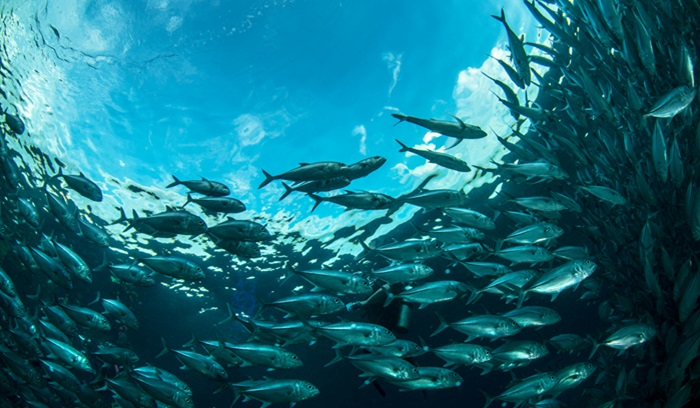
School of fish

Marshall Islands protects ‘pristine’ Pacific corals with first marine sanctuary

The Marshall Islands government has announced it will protect an area of the Pacific Ocean described as one of the most “remote, pristine” marine ecosystems on Earth. The 18,500-square-mile marine sanctuary covers two of the country’s northernmost uninhabited atolls and the surrounding deep sea, and it is the first federal marine protected area (MPA) established by the Pacific Island nation. Fishing and other extractive activities will now be strictly forbidden, future-proofing the area against threats and formalizing protections.

Norwegian flag|Norway fjord

Norway is set to become the first country to fully transition to electric vehicles

Despite its vast oil and gas reserves, the Nordic country has long been recognized as a global leader in sustainable transportation. Its EV sales have increased from less than 1% of total auto sales in 2010 to a whopping 88.9% last year — and this trend doesn’t show any sign of slowing. Data published by the Norwegian Public Roads Administration found EVs accounted for more than 96% of new cars sold in the first few weeks of this year. It puts Norway within touching distance of going fully electric — realizing a non-binding goal that was first established by lawmakers back in 2017.

A variety of LGBTQ+ pride flags

Michigan expands hate crime law to protect LGBTQ+ identities

Michigan Gov. Gretchen Whitmer has signed a bill adding sexual orientation and gender identity to the state’s hate crime law, along with a companion bill amending sentencing guidelines for hate crimes. The 1988 ethnic intimidation law initially applied only to religion, ethnicity, and race. The new law adds LGBTQ+ identities, as well as sex, age, disability, national origin, and affiliation with these groups. A first offense for committing a hate crime against one of the protected classes is punishable with a fine of $5,000 and/or up to two years behind bars.

Thai flag

Thailand makes hormone therapy free for trans people

Just days after marriage equality became the law in Thailand, the country’s national health ministry added hormone replacement therapy (HRT) to the free health services available to citizens. The Public Health Ministry allocated 145 million baht to the National Health Security Office for HRT. The targeted funds will cover the HRT needs of 200,000 transgender Thais. Until now, self-funding for HRT has prevented some trans individuals from gaining access to proper care, leading to health risks if they resorted to purchasing and using hormones without medical supervision.