
Homo sapiens settle island of Great Britain
The earliest direct evidence of Homo sapiens on Britain is a jaw fragment found in Kent’s Cavern, Devon estimated it to be at least 40,000 years old.

The earliest direct evidence of Homo sapiens on Britain is a jaw fragment found in Kent’s Cavern, Devon estimated it to be at least 40,000 years old.

The human presence on the island dates back at least 40,000 years, to the oldest homo sapiens migrations out of Africa.

Evidence indicates the presence of Aborigines in Tasmania about 40,000 years ago. Rising sea levels cut Tasmania off from mainland Australia about 10,000 years ago and by the time of European contact, the Aboriginal people in Tasmania had nine major nations, or ethnic groups

By around 30,000 years ago, Australo-Melanesians were present in all regions of Southeast Asia. In most lands they were eventually displaced from the coastal lowlands and pushed to the uplands and hinterlands by later immigrants.

Archaeological evidence suggests that human beings arrived in Sarawak – overland – at least 40,000 years ago.


According to the field of genetic genealogy, people first resided in Siberia by 45,000 B.C.E. and spread out east and west to populate Europe and the Americas.

Early humans traveled by sea and spread from mainland Asia eastward to New Guinea and Australia. Homo sapiens reached the region by around 45,000 years ago.
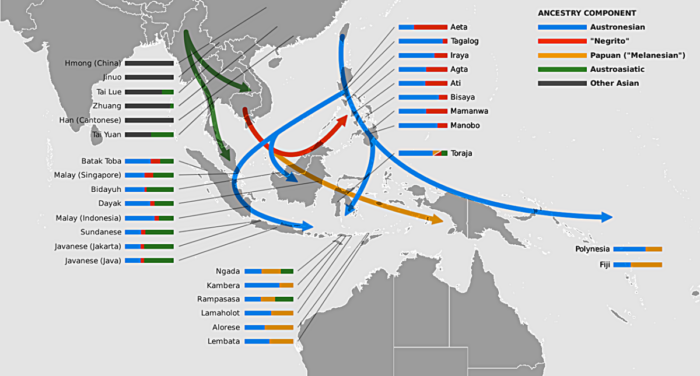
The oldest remains of modern humans in the islands, however, is the Tabon Man of Palawan, carbon-dated to 47,000 ± 11–10,000 years ago. The Tabon man is presumably a Negrito, who were among the archipelago’s earliest inhabitants, descendants of the first human migrations out of Africa.
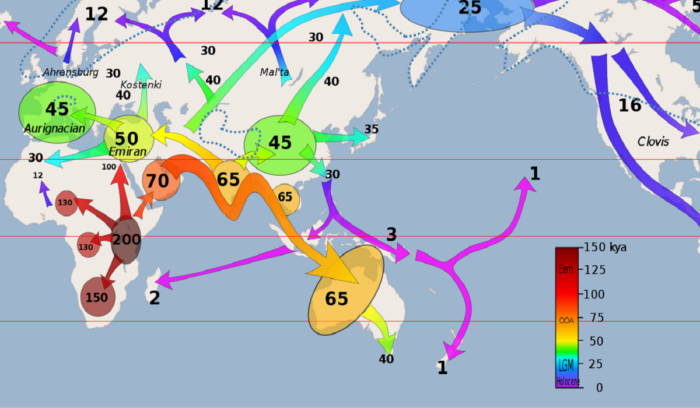
Southern Africa was first reached by Homo sapiens before 130,000 years ago, possibly before 260,000 years ago.