
Humans in ancient Iraq invent musical notation
The earliest form of musical notation can be found in a cuneiform tablet that was created at Nippur, in Sumer (today’s Iraq), in about 1400 B.C.E.
The earliest form of musical notation can be found in a cuneiform tablet that was created at Nippur, in Sumer (today’s Iraq), in about 1400 B.C.E.

A flat wooden dish which stood on wooden legs and features many characteristics of lathes was found in a pit grave at Mycenae dated at 1100 to 1400 B.C.E.
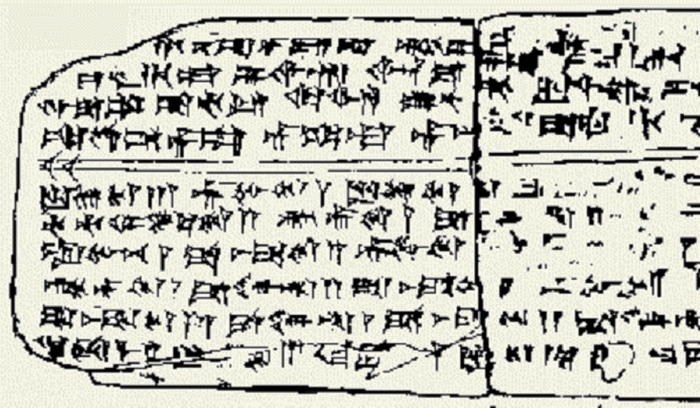
For the title of oldest extant song, most historians point to Hurrian Hymn No. 6, an ode to the goddess Nikkal that was composed in cuneiform by the ancient Hurrians sometime around the 14th century B.C.

A codex known as the “Yuta Tnoho” that belonged to the Mixtec culture in the 1500s B.C.E. is the earliest historical record of psilocybin use in human history.

The Northern Marianas were the first islands in Oceania colonized by the Austronesian peoples. It was settled by the voyagers who sailed eastwards from the Philippines at approximately 1500 B.C.E.

The Iron Age began when iron replaced bronze as the most popular metal used for weapons.

The Nok culture is an early Iron Age population whose material remains are named after the Ham village of Nok in Kaduna State of Nigeria, where their famous terracotta sculptures were first discovered by Westerners in 1928.

The finding of bronze axes at Nyaunggan located in Shwebo township suggests that Bronze Age of Burma began around 1500 B.C.E. in parallel with the earlier stages of Southeast Asian bronze production.

Samoa was discovered and settled by their Lapita ancestors (Austronesian people speaking Oceanic languages), with New Zealand scientists dating remains in Samoa to about 2900–3500 years ago.

The Shang dynasty is the earliest dynasty of traditional Chinese history supported by archaeological evidence.