
Joseph Bramah invents the hydraulic press
A hydraulic press is a machine press using a hydraulic cylinder to generate a compressive force.
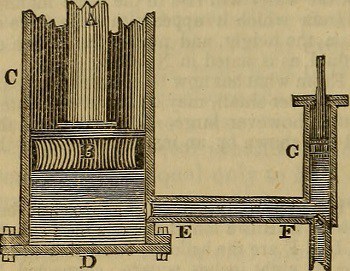
A hydraulic press is a machine press using a hydraulic cylinder to generate a compressive force.
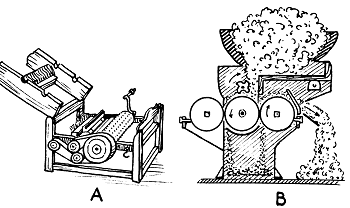
In 1794, U.S.-born inventor Eli Whitney (1765-1825) patented the cotton gin, a machine that revolutionized the production of cotton by greatly speeding up the process of removing seeds from cotton fiber.

Universal suffrage (or franchise) ensures the right to vote for as many people who are bound by a government’s laws as possible, as supported by the “one person, one vote” principle.

The Bill of Rights amendments add specific guarantees of personal freedoms and rights, clear limitations on the government’s power in judicial and other proceedings, and explicit declarations that all powers not specifically granted to the federal government by the Constitution are reserved to the states or the people.
Mozart’s Requiem is a choral masterpiece whose genesis is shrouded in mystery — one that makes the piece all the more fascinating and emotionally stirring.

Rights of Man (1791), a book by Thomas Paine, including 31 articles, posits that popular political revolution is permissible when a government does not safeguard the natural rights of its people
Dream of the Red Chamber, also called The Story of the Stone, composed by Cao Xueqin, is one of China’s Four Great Classical Novels. It was written sometime in the middle of the 18th century during the Qing Dynasty.

In 1790, the English inventor Thomas Saint invented the first sewing machine design, but he did not successfully advertise or market his invention. His machine was meant to be used on leather and canvas material.

Hui opera, or Huiju, remains as a popular regional genre of Chinese opera. It is now most prominent in the area around Huangshan City and Chizhou, as well as Wuyuan County, Jiangxi.

The first school lunches were thought to be served in 1790 in Munich, Germany, by an American-born physicist, Benjamin Thompson, also known as Count Rumford. In Munich, Thompson founded the Poor People’s Institute, which employed both adults and children to make uniforms for the German Army. They were fed and clothed for their work, and the children were taught reading, writing, and arithmetic. Years later, Thompson would feed 60,000 people a day from his soup kitchen in London.