Good News Links

Nagoya

Aichi becomes Japan’s first prefecture to consider same-sex couples with children as family

Aichi – which is home to Japan’s fourth largest city Nagoya – will become the country’s first prefecture to recognize non-heterosexual and common-law couples and their children as families under a “family ship” oath system that will come into effect on April 1. Those who take the oath will have the right to public housing provided by the prefecture and will have the right to give consent when a loved one needs surgery at a hospital managed by the prefecture.
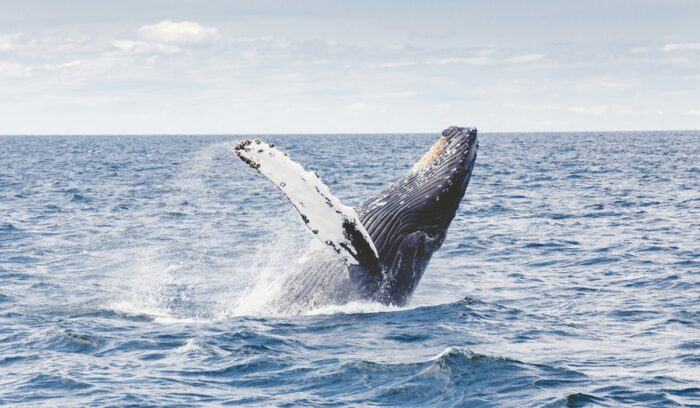

Whale jumping

In move to protect whales, Polynesian Indigenous groups give them ‘personhood’

Indigenous leaders of New Zealand, Tahiti, and the Cook Islands signed a historic treaty that recognizes whales as legal persons in a move conservationists believe will apply pressure to national governments to offer greater protections for the large mammals. “It’s fitting that the traditional guardians are initiating this,” said Mere Takoko, a Māori conservationist who leads Hinemoana Halo Ocean Initiative, the group that spearheaded the treaty. “For us, by restoring those world populations we also restore our communities.”

Cargo ship in harbor

A majority of nations agrees to global tax on shipping emissions for first-time ever

Two weeks of talks at the U.N.’s International Maritime Organization have concluded in London, with a clear majority of countries emerging in favor of a historic, first-ever global emissions levy. The shipping sector, which accounts for 3% of global emissions and transports more than 90% of global trade, is regarded as one of the hardest industries to decarbonize, partly owing to the vast amounts of dirty fossil fuels the ships burn each year.

Spotted owl

Biden administration restores threatened species protections in the U.S. dropped by Trump

Among the changes, the U.S. Fish and Wildlife Service will reinstate a decades-old regulation that mandates blanket protections for animals and plants newly classified as threatened. That means officials won’t have to craft specific plans to shield each individual species while protections are pending, as has been done recently with North American wolverines in the Rocky Mountains, alligator snapping turtles in the Southeast and spotted owls in California.

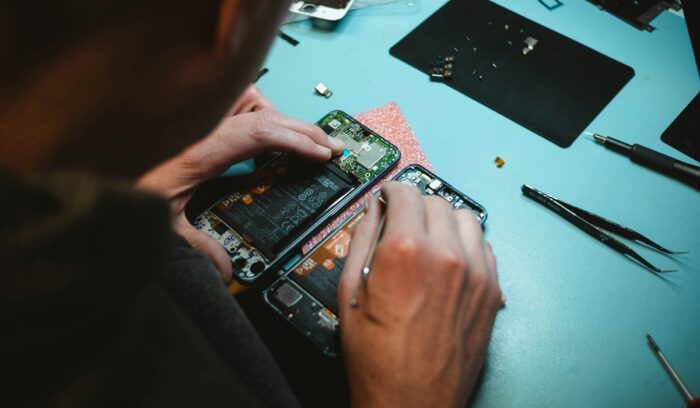
Person repairing smart phone

Oregon governor signs nation’s first right-to-repair bill that bans parts pairing

The law, like those passed in New York, California, and Minnesota, will require many manufacturers to provide the same parts, tools, and documentation to individuals and repair shops that they provide to their own repair teams. But Oregon’s bill goes further, preventing companies from implementing schemes that require parts to be verified through encrypted software checks before they will function.

Zagreb

Croatia approves law to criminalize femicide 

After Cyprus and Malta, Croatia is the third E.U. member state to recognize the crime of femicide, which is defined as the killing of a woman or girl, in particular by a man and on account of her gender. The legislation will also increase the prison sentence for rape from one to five years to three to eight, and victims will have the option to give testimony via videocall rather than attending in person.

Hand holding living cannabis plant

Germany approves partial legalization of cannabis

The new law will allow adults to carry up to 25 grams of cannabis for their own consumption and store up to 50 grams at home. Public consumption will be allowed, so long as it is not within sight of children or near sports facilities. It will also be prohibited in pedestrian zones between 7 a.m. and 8 p.m. It is slated to come into effect on April 1.

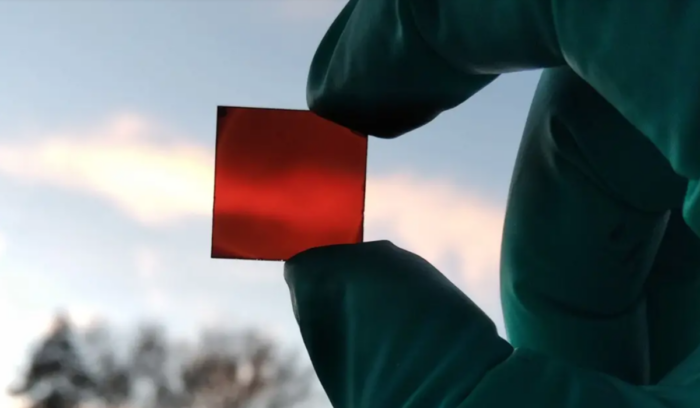
Bifacial PV plate

British scientists develop new bifacial solar technology that generates more power at reduced cost

Scientists from the University of Surrey in England, working with colleagues at the University of Cambridge, the Chinese Academy of Sciences, Xidian University, and Zhengzhou University, have developed a flexible perovskite solar panel that use electrodes made of tiny carbon nanotubes. The researchers demonstrated that in addition to producing more energy than traditional solar panels, “the material cost of an all-carbon-electrode-based bifacial PSC is about 70% lower than that of a monofacial device.”