
Good News Links

Plant coming out of concrete

‘Absolute miracle’ breakthrough provides recipe for zero-carbon cement

Concrete is the world’s most used building material, and making it is a particularly dirty business – concrete production alone is responsible for about 8% of total global CO2 emissions. But according to new research from the University of Cambridge, throwing old concrete into steel-processing furnaces not only purifies iron but produces “reactivated cement” as a byproduct. If done using renewable energy, the process could make for completely carbon-zero cement.

Good news for public health

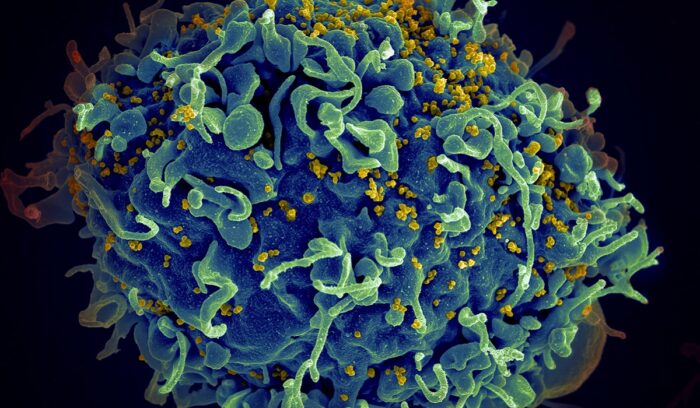
HIV transmissions in the U.S. dropped 12% between 2018 and 2002

According to recent data from the Centers for Disease Control and Prevention (CDC) HIV Surveillance Supplemental Report, the largest decrease in HIV infections from 2018 to 2022 was among men ages 13 to 24, where HIV infections decreased by 30%. In another recent report, the CDC found that over 80% of people diagnosed with HIV had access to care within one month of diagnosis. Furthermore, 65% had achieved viral suppression in 2022.

Person holding graduation cap up to sun

Biden administration cancels $7.7 billion in student debt for 160,500 Americans

The White House has approved $7.7 billion of student debt cancellation for 160,500 borrowers, part of its ongoing effort to provide relief after the Supreme Court last year blocked President Joe Biden’s plan for broad-based college loan forgiveness. With the latest round of forgiveness, the administration has erased a total of $167 billion in student loans for 4.75 million people, or about 1 in 10 student loan borrowers.

Cargo ship at sunset

New piloting approach cuts cargo ship emissions by 17.3% in first trials

Currently, most cargo ships go as quickly as they can from port A to port B. When they get there, they sit still and wait at idle, continuing to burn fuel, until it’s time for them to dock. The Blue Visby Solution simply tells the ships to slow down, so they arrive at port right on time. Pushing all that bulk through the water at a slower speed cuts down hugely on hydrodynamic drag, so the engines burn considerably less fuel.

Vast salt flat

Chile to create network of protected salt flats

Currently, only around 8% of Chile’s salt flats are protected. The new network of protected salt flats will raise that to 25%. This also aligns with the 30×30 goal as outlined by the global Convention on Biological Diversity, which ensures that at least 30% of the planet’s ecosystems are protected by 2030. The protection plan is part of the broader National Lithium Strategy, which seeks to make Chile the world’s lead producer of lithium, a critical component of EV batteries.

Packages of diapers

Tennessee to become the first U.S. state to provide some children’s diapers

According to the National Diaper Bank Network, 92% of families receiving diapers in Tennessee are working and still unable to afford an adequate supply of diapers. However, it was just announced that the state’s Medicaid program will officially start covering 100 diapers a month for newborns, infants, and one-year-olds in August 2024, becoming the first U.S. state to do so.

Ambulance and EMT workers at night

Researchers develop a ‘game-changing’ blood test for stroke detection in the field

Stroke is the top cause of disability worldwide—and the second leading cause of death—but early intervention can prevent severe consequences, and a new tool could be a game-changer. Researchers at Massachusetts’ Brigham and Women’s Hospital developed a new test by combining blood-based biomarkers with a clinical score to identify patients experiencing large vessel occlusion strokes (LVO) with high accuracy.

Liechtenstein town

Liechtenstein legalizes same-sex marriage

Liechtenstein’s parliament has voted to legalize same-sex marriage, making it the 22nd country in Europe to do so. Lawmakers in the German-speaking microstate voted nearly unanimously in favor of the measure, with 24 of the 25 MPs supporting it, Liechtensteiner Vaterland reported.

Silhouette of person holding fun

Crime in England and Wales has plummeted 80% in 30 years

As of 2024, violence, burglary, and car crime have been declining for 30 years and by close to 90%, according to the Crime Survey for England and Wales (CSEW). The drop in violence includes domestic violence and other violence against women. Anti-social behavior has similarly declined. While increased fraud and computer misuse now make up half of crime, this mainly reflects how far the rates of other crimes have fallen.