Good News Links

Man clutching his chest from acute pain

New heart attack detector gives results in minutes, not hours

Someone presenting to the emergency room with a suspected heart attack will undergo a number of standard blood tests to determine heart muscle damage. The problem is that it can take one or two hours to receive the results. Now, Johns Hopkins University researchers have led the design of a tiny chip that diagnoses heart attack by detecting these important biomarkers in minutes rather than hours, even if they are present at very low concentrations. The researchers foresee an at-home heart attack detector in the future.


Good news for LGBTQ rights

More than 800 U.S. military veterans receive honorable discharges from Pentagon’s “don’t ask, don’t tell” records review

More than 800 veterans from the U.S. military who were kicked out of the military for their sexual orientation under a policy that banned gays and lesbians from openly serving, known as “don’t ask, don’t tell,” will receive honorable discharges, Secretary of Defense Lloyd J. Austin has announced. An honorable discharge status unlocks access to benefits that some of these veterans may have been missing out on for decades, including things like health care, college tuition assistance, VA loan programs, and even some jobs.

Ovarian and Cervical Cancer Awareness. a Teal Ribbon

New cervical cancer treatment regime ‘cuts risk of dying from disease by 40%’

Doctors are hailing a “remarkable” new treatment regime for cervical cancer developed by researchers at University College London that reduces the risk of dying by 40%, in the biggest advance against the disease in 25 years. The new treatment plan was tested in patients recruited over 10 years from the UK, Mexico, India, Italy, and Brazil. Cervical cancer is the fourth most common cancer in women globally, with about 660,000 new cases and 350,000 deaths every year, according to the World Health Organization.

Birds flying at the beach on a sunny day

California gets final approval for nation’s third-largest marine sanctuary

A new 4,543-square-mile area off a gorgeous and ecologically rich stretch of the California coast has achieved federal protection. The Chumash Heritage National Marine Sanctuary was officially designated Friday along 116 miles of the coast in the San Luis Obispo and Santa Barbara counties. Created by the National Oceanic and Atmospheric Administration, it is the country’s third-largest marine sanctuary. It is also first designed with the involvement of Indigenous groups and the first in 30 years in California.

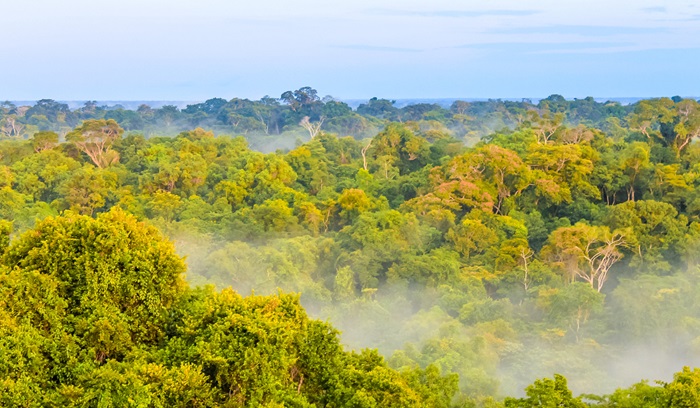
Morning fog over the brazilian rainforest in Brazil

Brazil upgrades park to protect South America’s tallest tree

South America’s tallest tree, a 400-year-old red angelim in the northern tip of the Brazilian Amazon, is the star of a newly created conservation area called the Giant Trees of the Amazon State Park. The area was officially sectioned off from the larger Paru State Forest for stronger protection. Now, the 1.38-million-acre Giant Trees of the Amazon State Park has been upgraded to the “full protection” category. This means that activities like logging, permitted under the “sustainable use” category when it was previously part of Paru State Park, can no longer be proposed in its bounds.

Good news for wildlife conservation

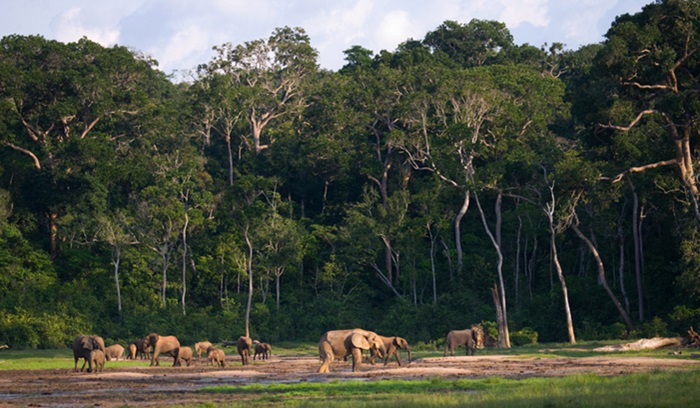
Republic of Congo to catalyze investment in high-integrity forests

Conservation authorities in the Republic of Congo have launched a plan to invest in the protection of “high-integrity forests” in Nouabalé-Ndoki National Park, treating these ecosystems as an asset class. The new initiative aims to fill a funding gap to protect the ROC’s forests by selling high-integrity forest (HIFOR) units, defined as representing “one hectare of healthy, high integrity tropical forest actively conserved within a large landscape for decades.”

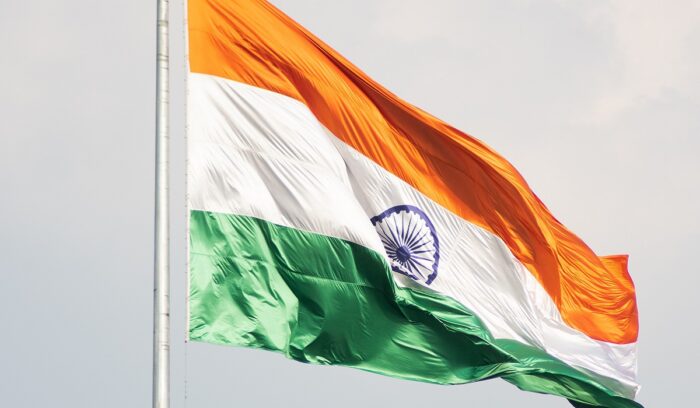
Indian flag

India eliminates trachoma as a public health problem

The World Health Organization has validated the world’s most populous country as having eliminated trachoma as a public health problem. India joins Nepal and Myanmar in the WHO South-East Asia Region and 19 other countries globally that have previously achieved this feat. Though trachoma is preventable, blindness from trachoma is extremely difficult to reverse. Trachoma continues to be a public health problem in 39 countries and is responsible for the blindness of about 1.9 million people.

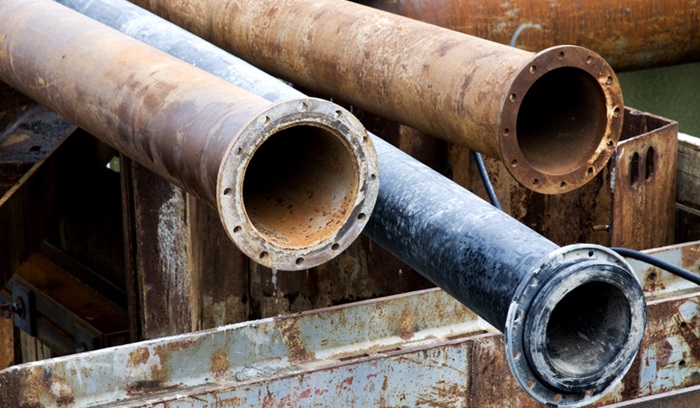
Metal pipes

U.S. announces 10-year deadline to remove all lead pipes nationwide

President Biden has announced $2.6 billion in funding to replace all lead pipes in the United States as part of a new EPA rule that will require lead pipes to be identified and replaced within 10 years using the new funding from the Bipartisan Infrastructure Act. The EPA estimates that nine million homes in the U.S. still have lead pipes. “Studies show … communities of color have been the hardest hit,” Mr. Biden said. “One study showed Black children were at least two times more likely to have elevated levels of lead in their blood than children of other racial groups. We have an obligation to make things right.”

Pollution from industrial facility

Study finds mercury pollution from human activities is declining

In a new study from the Massachusetts Institute of Technology, researchers analyzed measurements from all available monitoring stations in the Northern Hemisphere and found that atmospheric concentrations of mercury declined by about 10% between 2005 and 2020. They used two separate modeling methods to determine what is driving that trend. Both techniques pointed to a decline in mercury emissions from human activity as the most likely cause.

Good news for marine protection

Australia to protect 52% of its oceans, more than any other country

The country’s environment minister, Tanya Plibersek, has declared Australia will soon protect more ocean than any other country after the government finalizes a more than 300,000 square kilometer expansion of a sub-Antarctic marine park. Speaking ahead of what was billed as a global nature-positive summit in Sydney, Plibersek confirmed the Heard Island and McDonald Islands Marine Reserve about 4,000 km south-west of Perth would quadruple in size.