Good News Links

Solar panels

Australia to invest $125m in Pacific island off-grid and community scale renewables

The funding, which comprises a $75 million investment through the REnew Pacific program and $50 million through the Australia-Pacific Partnership for Energy Transition, was announced at the COP29 United Nations climate summit. The REnew Pacific program will help deliver off-grid and community-scale renewable energy in remote and rural parts of the Pacific, enabling lighting, access to water, improved agriculture, better food security, quality education and health services, reliable communications connectivity and enhanced incomes. The $50 million Partnership for Energy Transition funding will capture renewable energy investment benefits such as energy transition modelling, grid studies, feasibility studies and university collaborations.


Eiffel Tower in Paris City

Paris to replace 60,000 parking spaces with trees 

Paris aims to replace 60,000 parking spaces across the city with trees by the end of this decade, according to its newly released climate plan. The plan, which must still be approved by the Council of Paris, lays out steps to help the city prepare for more extreme heat. The goal of ripping up parking spaces is part of a larger aim to create more than 700 acres of green space by 2030. The plan also calls for setting up more cooling centers, creating more car-free zones, and installing reflective roofs on 1,000 public buildings.

Dongying floating solar farm

China activates world’s largest offshore floating solar installation

China’s state-owned CHN Energy has begun generating electricity at a 1 gigawatt offshore floating solar park, 5 miles off the coast of the city of Dongying in Shandong province. The park can generate 1.78 billion kilowatt-hours of power each year — enough to meet the energy needs of 2.6 million city dwellers. The offshore floating solar installation consists of 2,934 PV platforms installed using large-scale steel truss platforms affixed to foundations made of pilings.

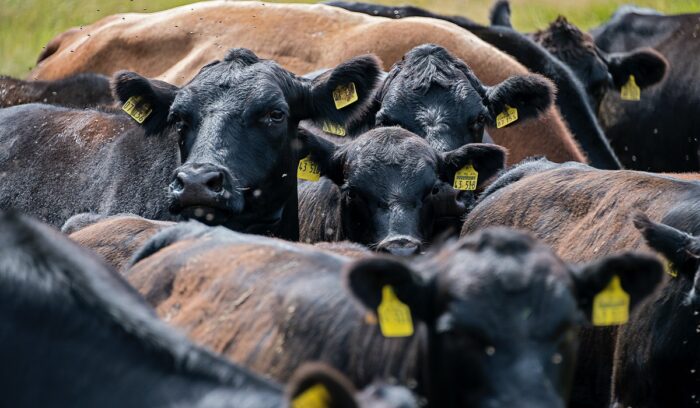
Cattle

Brazil to adopt full beef traceability by 2032

Brazil will soon begin tracing individual cattle from birth to slaughter, aiming to make the sector 100% traceable by 2032, Agriculture and Livestock Minister Carlos Fávaro has indicated. The announcement comes amid growing international demand for transparency, especially as the EUDR, a new European Union regulation requiring proof that certain imported commodities aren’t adding to recent deforestation, is set to come into force at the end of 2025. Fávaro stated that a tracing platform would be working by 2027.

Colombia flag

Colombia outlaws child marriage after 17-year campaign

There are currently 4.5 million girls and women in Colombia who married before 18 – about one in four. Of these, a million were married before they were 15. Now, Colombian lawmakers have approved a bill to eradicate child marriage in the South American country after 17 years of campaigning by advocacy groups and eight failed attempts to push legislation through the house and senate. Colombia is now one of 12 countries out of the 33 in Latin America and the Caribbean to have entirely banned marriage under the age of 18, following Honduras, Puerto Rico, Mexico, and the Dominican Republic.

Teepees under the northern lights

Indigenous governments in the Canada’s Northwest Territories sign $375M deal to protect their land

Canada’s federal government contributed $300 million to the initiative, while private donors contributed $75 million. Funds are expected to be received starting in mid-2025 and flow for 10 years after that. The funds can be used to establish new protected and conservation areas as identified by Indigenous governments and to support guardian and stewardship programs. The money can also be used for things like eco-tourism and traditional economic activities, climate research, and on-the-land language and culture programs . It’s one of the largest Indigenous-led conservation efforts in the world, according to a news release.

Breakthrough genomic test identifies virtually any infection in one go

Researchers at University of California San Francisco (UCSF) have developed a single genomic test that can quickly detect virtually any kind of pathogen in a patient. This allows for much quicker diagnoses, enables targeted treatment to begin sooner, and could lower healthcare costs. Over the course of 7 years, researchers led by UCSF professor Charles Chiu tested 4,828 patients’ samples with its clinical mNGS method. The mNGS test accurately identified 86% of neurological infections.

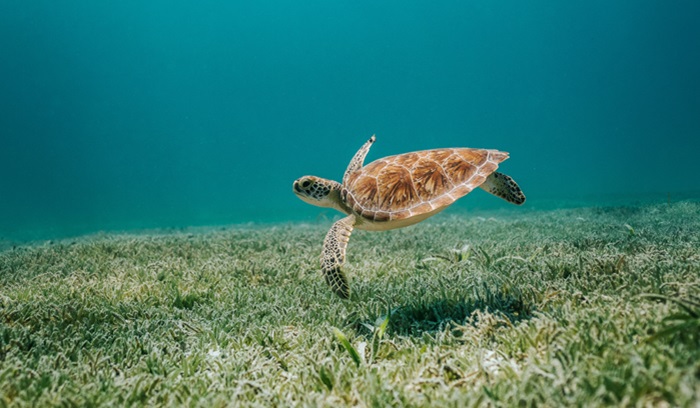
Sea turtle swimming

Local groups drive creation of new Puerto Rico marine protected area

The marine protected area (MPA), named Jardines Submarinos de Vega Baja y Manatí or the Vega Baja and Manatí Underwater Gardens, spans 77 square miles and is the culmination of a 16-year effort by ­­a coalition of local communities and NGOs. It’s comprised of several critically important ecosystems, including coral reefs, mangrove forests, and seagrass beds, and is home to more than a dozen threatened species, including the greater Caribbean manatee and several species of sea turtles.

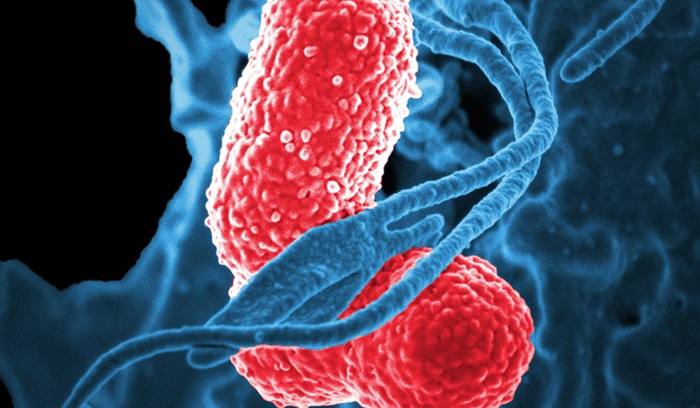
digitally colorized scanning electron microscopic (SEM) image, depicts a blue-colored, human white blood cell, (WBC) known specifically as a neutrophil, interacting with two pink-colored, rod shaped, multidrug-resistant (MDR), Klebsiella pneumoniae bacteria

Global child deaths from pneumonia have been cut in half since 2009

Pneumonia kills 2,000 children under five worldwide every day, making it the world’s biggest infectious cause of death in children. The introduction of pneumococcal conjugate vaccines (PCVs) has significantly lowered the burden of death and disease from pneumonia, but millions of children remain unvaccinated. Since the public-private global health partnership Gavi supported the first roll-out of the PCV vaccine in 2009, 438 million children of all ages have been vaccinated in 64 countries, averting an estimated total of 1.2 million deaths by the end of 2023.

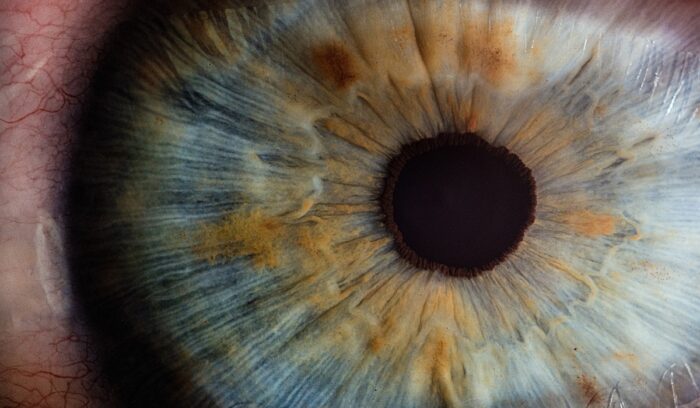
Human eye up close

Japanese researchers develop world-first stem-cell treatment that restores vision in humans

Kohji Nishida, an ophthalmologist at Osaka University in Japan, and his colleagues used an alternative source of cells — induced pluripotent stem (iPS) cells — to make the corneal transplants. They took blood cells from a healthy donor and reprogrammed them into an embryonic-like state, then transformed them into a thin, transparent sheet of cobblestone-shaped corneal epithelial cells. After the transplants, all four recipients showed immediate improvements in their vision and a reduction in the area of the cornea affected by limbal stem-cell deficiency. The improvements persisted in all but one recipient, who showed slight reversals during a one-year observation period.