Good News Links

Prison cell

Zimbabwe abolishes the death penalty

Zimbabwe’s President Emmerson Mnangagwa has approved a law that abolishes the death penalty in the southern African state with immediate effect. Mnangagwa’s move comes after Zimbabwe’s parliament voted earlier in December to scrap the death penalty. Zimbabwe last carried out an execution by hanging in 2005, but its courts continued to hand down the death sentence for serious crimes like murder.
Snow leopard

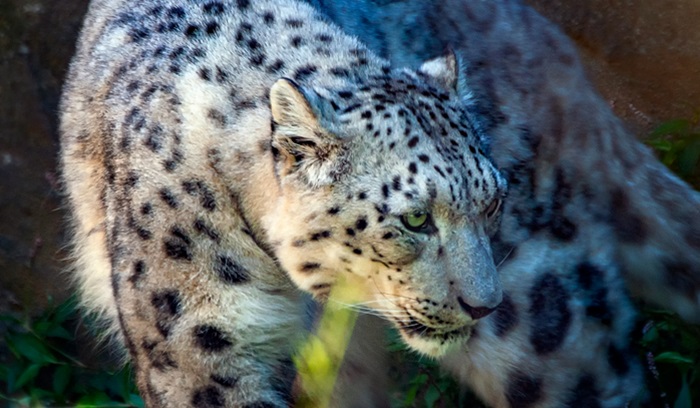
Kazakhstan’s snow leopard population reaches near-historic levels

The snow leopard population in Kazakhstan has rebounded to near-historic levels, with an estimated 152 to 189 individuals now residing in the country. This marks a significant achievement in conservation efforts, as such numbers were last observed in the 1980s. Since 2018, Kazakhstan has implemented a snow leopard conservation project under the United Nations Development Program (UNDP). UNDP initiatives have improved protection in 14 natural areas across the country through the use of advanced technologies, including camera traps, drones, and thermal imaging devices. As a result, the snow leopard population has increased by more than 26% since 2019.

Power plant polluting

New York to fine fossil fuel companies $75 billion under new climate law

New York state will fine fossil fuel companies a total of $75 billion over the next 25 years to pay for damage caused to the climate under a bill Governor Kathy Hochul signed into law at the end of 2024.
New York state will fine fossil fuel companies $75 billion over the next 25 years to pay for damage caused to the climate. The new law is intended to shift some of the recovery and adaptation costs of climate change from individual taxpayers to oil, gas, and coal companies. The money raised will be spent on mitigating the impacts of climate change, including adapting roads, transit, water and sewage systems, buildings and other infrastructure. Fossil fuel companies will be fined based on the amount of greenhouse gases they emitted between 2000 and 2018.

Depiction of intestines

“100% successful” cancer drug gets landmark U.S. FDA approval

Hugely promising cancer drug dostarlimab is one step closer to being widely available, after the U.S. Food and Drug Administration granted it Breakthrough Therapy Designation status. The drug, a programmed death receptor-1-blocking antibody, completely eradicated rectal cancer tumors without the need for surgery, radiation treatment, or chemotherapy. “Everyone on the clinical trial is doing great,” Memorial Sloan Kettering Cancer Center gastrointestinal oncologist Andrea Cercek said. “So far, 42 people have completed treatment, and all of them have no evidence of disease. Side effects were quite mild and well tolerated.”

International court rules against El Salvador in key abortion rights case

The Inter-American Court of Human Rights has ruled that El Salvador violated the human rights of a woman who was denied an abortion despite her high-risk pregnancy in 2013. The court has ordered the Central American country to adopt “all necessary regulatory measures” so that doctors are authorized to terminate “pregnancies that pose a risk to the woman’s life and health.” The country has one of the world’s most restrictive anti-abortion laws: the procedure is prohibited under all circumstances, and women can even be charged with aggravated homicide, carrying sentences of 30 to 50 years in prison.

Aerial view of river

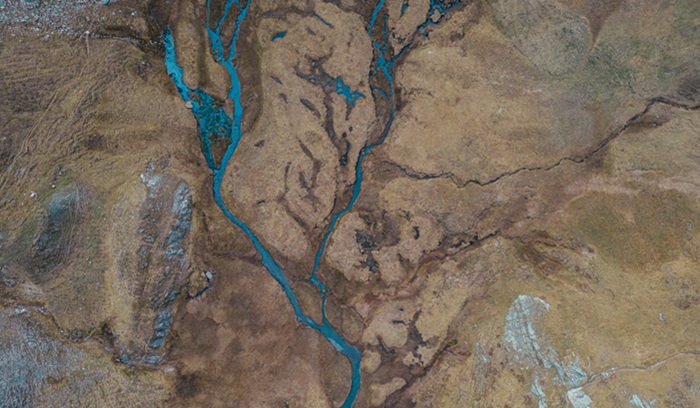
250 miles of New Mexico’s rivers get toughest safeguards against pollution

In a unanimous decision, New Mexico’s Water Quality Control Commission has voted to protect 250 miles of stream and river segments with the state’s highest water quality safeguards. This historic decision recognizes stretches of the Rio Grande, Rio Chama, Cimarron, Pecos, and Jemez rivers as Outstanding National Resource Waters, ensuring that these lifelines remain uncontaminated by pollution. The 10-0 vote shields these critical ecosystems from degradation caused by pollutants, heavy metals, temperature changes, and other environmental threats.

Dominique Pelicot sentenced to 20 years in prison in historic French rape trial

A French judge has found the former husband of Gisèle Pelicot, who admitted to drugging and raping her repeatedly over the course of almost a decade and inviting dozens of other men to assault her as well, guilty of aggravated rape. Forty-nine men whom Dominique Pelicot brought into his home to assault his wife were also convicted as part of the same trial. Over the course of the trial, Gisèle Pelicot was praised for her courage and became a symbol of the fight against sexual violence in France and around the world.

child and autumn leaves

Tokyo to make daycare free for all preschool children

The world’s most populous city plans to make daycare free for all preschool children starting in September, the city governor has announced. The move aims to reduce the financial burden on families by expanding a policy of free daycare for second-born and subsequent children to first-borns as well. While many developed countries are struggling with low birth rates, the problem is particularly acute in Japan where the population has been declining for years.

Quebec city

Quebec passes bill that bans gas-powered vehicle sales by 2035

The ban, which is part of the province’s plan to reduce greenhouse gas emissions, will take place in two phases. First, as of Jan. 31, 2034, it will be prohibited to advertise the sale of a light combustion vehicle of the 2035 model year or later, whether it’s a new or used vehicle, including hybrid and plug-in hybrid models. Then, beginning Dec. 31, 2035, selling and leasing new light combustion vehicles of 2034 model year and earlier will be banned.

Onager

Asiatic wild asses return to Saudi Arabia after 100 years

It’s been a century since an onager or Asiatic wild ass was last seen in Saudi Arabia. But in April this year, seven onagers were relocated from neighboring Jordan into one of Saudi Arabia’s nature reserves. One of the onagers has even birthed a female foal since then. Saudi Arabia was historically home to the Syrian wild ass , an onager subspecies that was hunted into extinction in the 1920s. But with the Syrian onager gone forever, it’s closest living relative, the Persian onager from Jordan, “was deemed the best alternative sub-species with which to re-populate the Middle East.”