United Kingdom

Illustration of the concept of nuclear fusion

U.K. to offer fusion energy industry $3.3 billion funding boost over next five years

More than £2.5bn of investment into fusion energy over the next five years has been announced as part of the British government’s Spending Review. It said the money would “cement” Oxfordshire’s role as a “world-leading hub” for the technology, while funds would also be invested into plans to build a fusion power plant in Nottinghamshire. Nuclear fusion is the same energy process that powers the stars, which scientists say has the potential of virtually unlimited supplies of low-carbon, low-radiation energy and is often called the “holy grail” of clean energy.

School meal

Free school meals to be extended to half a million more of England’s poorest children

Since 2018, children in England have only been eligible for free school meals if their household income is less than £7,400 per year, meaning hundreds of thousands of children living in poverty have been unable to access them. Now, from the start of the 2026 school year, every child whose household is on universal credit will be entitled to free school meals. The major policy expansion is expected to offer free meals to an additional 500,000 children across, lift 100,000 children out of poverty, and put an extra £500 in parents’ pockets.

Rooftop solar

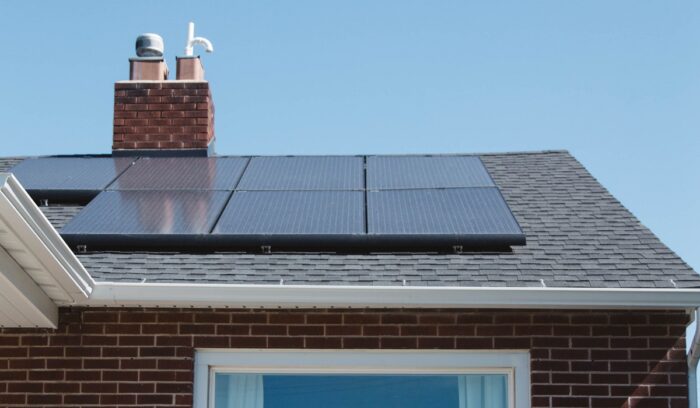
Solar panels to be fitted on all new-build homes in England by 2027

Almost all new homes in England will be fitted with solar panels during construction within two years. Under the plans, housebuilders will be legally required to install solar panels on the roofs of new properties by 2027. The policy is estimated to add between £3,000 and £4,000 to building a home, but homeowners would save more than £1,000 on their annual energy bills, according to the Times.

Ukraine flag

Ukraine allies pledge €21 billion in fresh military aid

The announcement came as members of the Ukraine Defence Contact Group met at Nato’s headquarters in Brussels to pledge air defences, missiles, and other gear as Europe sought to fill the gap left by the changed priorities of the U.S. under Donald Trump. More than half of the aid – €11 billion over four years – is coming from Germany. Support also includes a $590m package from the U.K. and Norway to fund radar systems, anti-tank mines, vehicle repairs, and hundreds of thousands of drones as the nation faces a brutal, unlawful invasion from Russia.

Pharmacy

England to make the morning-after pill free over the counter in pharmacies

Currently, women can get the emergency contraception pill for free from sexual health clinics run by the National Health Service (NHS). However, the pill can cost up to £30 ($62) at pharmacies in the UK. Starting this year, the pill will be available for free at pharmacies, aiming to “reduce inequalities”, according to a Department of Health and Social Care (DHSC) statement. The move will also help free up general practitioners by reducing the need for women to make appointments to access the pill, the DHSC said.

Man and woman embracing

Prostate cancer surgery breakthrough offers hope for erectile function

A new form of prostate cancer surgery nearly doubles the chances of men retaining erectile function, according to a new trial conducted by University College London. Known as NeuroSafe, the procedure checks tissue removed during the operation. If the tumor appears to have been removed, the nerve-containing outer layer of the prostate is left intact. The trial assessed 344 men with prostate cancer and no history of erectile dysfunction. 56% of men who had standard surgery reported severe erectile dysfunction, compared with 38% who had NeuroSafe surgery.

Big Ben

U.K. emissions fall to lowest level since 1872

In a major win for climate action, a new analysis from Carbon Brief has found that the country’s planet-warming emissions fell by 3.6% to 371 million tons of carbon dioxide equivalent in 2024, the lowest since Queen Victoria’s reign. Last year’s decrease was largely driven by a drop in coal use, led by the closure of the UK’s last coal-fired power station and one of its last blast furnaces. Other contributors included a drop in demand for oil and gas and a nearly 40% rise in electric vehicles on the road.

Empty office desk and chairs

Two hundred U.K. companies sign up for permanent four-day working week

Two hundred U.K. companies have signed up for a permanent four-day working week for all their employees with no loss of pay, in the latest landmark in the campaign to reinvent Britain’s working week. Together, the companies employ more than 5,000 people, with charities, marketing, and technology firms among the best-represented. Supporters say the four-day week is a useful way of attracting and retaining employees while improving productivity by creating the same output over fewer hours and fostering a more fulfilled, happy, and engaged workforce.

Good news for British climate action

Renewable power set to overtake fossil fuels in the U.K. this year for the first time

While particularly windy periods have meant certain days in the last few years have been dominated by renewable power as turbines lit up the grid, this is the first time through an entire calendar year that renewable energy will be greater than power generated from burning oil, gas and coal. The shift is driven largely by a decline in production from coal, gas, and oil, as well as growing wind, solar, and biomass power, according to think tank Ember.

sidharth bhatia QstzxTWnXY unsplash scaled e

77% of universities have now pledged to divest from fossil fuels

115 U.K. universities have now pledged to exclude fossil fuel companies from their investment portfolios, following Birmingham City University, Glasgow School of Art, Royal Northern College of Music, and the University of Bradford all incorporating fossil fuel industry exclusions into their Ethical Investment Policies. The divested universities represent 77% of the U.K. Higher Education sector and more than $22 billion USD worth of endowments.