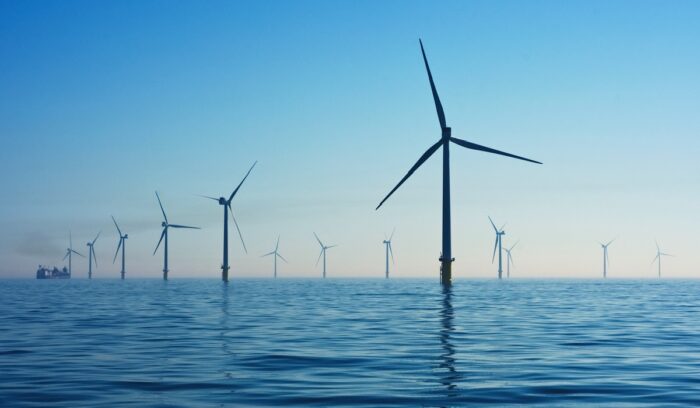
The year 2042 marks a triumphant moment in U.S. energy history as the nation’s cumulative offshore wind capacity crests the remarkable 100 GW (gigawatt) threshold. This achievement establishes the United States as a global leader in harnessing ocean renewable resources, fundamentally transforming the national electricity grid.
This massive clean energy injection represents an approximately 25-fold increase over early 2030s capacity. It provides reliable, non-fossil power sufficient to serve tens of millions of homes along the coasts.
The initial projections of slow growth were decisively overturned by a combination of government ambition, groundbreaking engineering solutions, and market certainty established by the Offshore Wind Deployment Goal set decades prior. This strategic commitment stimulated massive private investment, which totaled over half a trillion dollars across manufacturing, port infrastructure, and deep-water technology.
The 100 GW milestone is a definitive affirmation of the nation’s ability to execute complex, large-scale infrastructure projects necessary to address climate change.
Ingenuity in Deep Waters
Reaching the 100 GW mark required substantial technological ingenuity, particularly in moving beyond shallow-water constraints. While early projects relied on fixed-bottom foundations, the bulk of the new capacity comes from floating offshore wind (FLOW) platforms deployed in the deep waters of the Pacific and Gulf of Maine.
These innovative designs, utilizing sophisticated mooring systems and dynamic cables, unlocked access to vast wind resources previously deemed inaccessible. Engineers perfected modular construction techniques, allowing massive 20+ MW turbines to be assembled quickly at specialized port facilities before being towed and connected far out to sea.
This industrialized approach drastically reduced installation time and cost, directly addressing previous bottlenecks in the supply chain. The development of high-voltage direct current (HVDC) transmission lines became critical, efficiently transporting massive amounts of power over hundreds of miles from the floating offshore farms to major metropolitan load centers along the coast (learn about floating offshore wind technology).
Economic Transformation and Workforce Equity
The realization of the 100 GW goal fueled an unprecedented economic boom in coastal and industrial regions that suffered previous economic declines. The development catalyzed the creation of hundreds of thousands of high-quality, unionized jobs in manufacturing, installation, maintenance, and supply chain logistics.
Early federal estimates projected the need for over 77,000 new workers in offshore wind alone, a target that was substantially surpassed as the industry scaled up. The domestic manufacturing sector saw a resurgence, specializing in high-strength composite blades, advanced gearboxes, and power electronics, establishing resilient local supply chains.
Furthermore, targeted federal and state programs ensured that marginalized communities, particularly those transitioning away from fossil fuel sectors, received priority access to training and apprenticeships, building a diverse and equitable energy workforce (explore US Department of Energy offshore wind goals). This deliberate focus on workforce development ensured the economic benefits were broadly shared across the nation.
Resilience and Environmental Stewardship
The widespread integration of 100 GW of offshore wind significantly enhanced the resilience and stability of the U.S. electricity grid. Offshore farms, benefiting from stronger, steadier winds, provide highly predictable power generation that perfectly complements solar power resources located inland.
This diversification drastically reduces reliance on volatile natural gas markets and insulates large coastal population centers from localized weather disruptions. Furthermore, environmental impact mitigation became an integral part of deployment.
Advancements in acoustic dampening technologies protected marine mammals during construction, and sophisticated radar systems now guide vessels to avoid critical migration pathways. Research also confirmed the “reef effect” of the turbine foundations, which, when properly sited, created diverse new habitats and boosted local fisheries (understand offshore wind environmental impact).
A Legacy of Climate Action
Surpassing 100 GW provides a massive, non-emitting power source that contributes powerfully to meeting national and global climate commitments. The displacement of older, less efficient fossil fuel generation prevents the release of hundreds of millions of tons of carbon dioxide and harmful air pollutants annually.
The success of this massive undertaking validates the power of ambitious policy coupled with engineering excellence to solve complex environmental and economic challenges. The United States now stands as a powerful example of how large industrialized economies can rapidly transition to clean energy using domestic resources.
The legacy of the 100 GW accomplishment is not just about the turbines built, but about the societal trust and political will demonstrated, securing a cleaner and more prosperous future for generations (read more about global energy transition pathways). The success story inspires further investment in adjacent clean energy sectors, maintaining the momentum of the clean energy revolution.