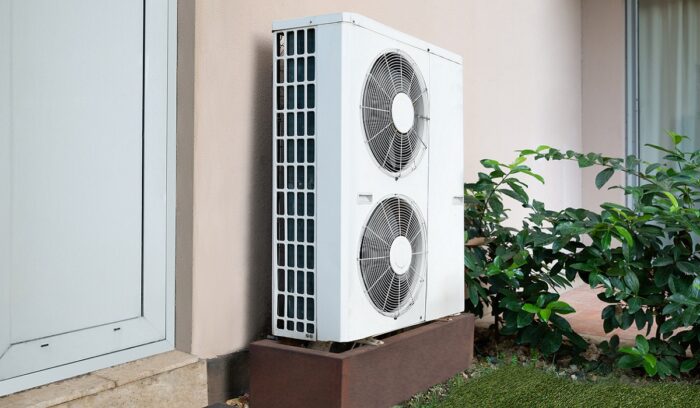
The numbers are in, and they are remarkable. As of 2040, more than 80 million American homes rely on heat pumps as their primary heating source — a majority for the first time in the country’s history. Twenty years ago, that milestone seemed ambitious at best.
The shift didn’t happen overnight. It took two decades of policy changes, grid upgrades, falling equipment costs, and a steady wave of homeowners deciding that a smarter, cleaner option was finally within reach.
- In 2021, heat pumps covered just 10% of global heating needs; U.S. adoption has since outpaced the global average by a significant margin.
- Modern heat pumps transfer up to 4.5 units of heat for every one unit of electricity used, making them far more efficient than gas furnaces.
- U.S. residential heating emissions have dropped an estimated 40% since 2020, driven largely by the heat pump transition.
How heat pumps do what furnaces couldn’t
A heat pump doesn’t burn anything. Instead, it moves heat — pulling warmth from outdoor air, even in cold climates, and transferring it inside. In summer, the process reverses, and the same device cools your home.
This simple physics has enormous consequences. According to the International Energy Agency, heat pumps could satisfy more than 80% of global space and water heating needs with a lower carbon footprint than conventional gas boilers. The technology existed for decades. What took time was making it affordable and accessible.
By 2040, the average cost of a heat pump installation has fallen by more than 50% compared to 2020 levels. Competition, manufacturing scale, and federal incentives did their work.
The policy backbone behind the shift
The Inflation Reduction Act of 2022 planted the first major seeds. It offered households up to $8,000 in rebates for heat pump installations — and it worked. Installation rates spiked within two years.
States followed with their own programs. Utilities began offering on-bill financing, letting homeowners spread costs over time. Some states banned new gas furnace installations in new construction as early as 2026.
None of these policies worked in isolation. The combination of federal incentives, state mandates, and utility financing created a pipeline that the U.S. Department of Energy estimates drove installations to triple between 2025 and 2032 alone.
What a cleaner grid made possible
Heat pumps are only as clean as the electricity that powers them. This is where the story gets better.
By 2040, renewable energy sources — wind, solar, and hydropower — account for more than 60% of U.S. electricity generation. That means a heat pump running today emits a fraction of what it would have in 2020, even before efficiency gains are factored in.
Our World in Data tracks the declining carbon intensity of electricity grids worldwide. The U.S. trajectory is among the steepest in the developed world. As the grid cleaned up, heat pumps became cleaner too — automatically, without any action required from homeowners.
This is the quiet power of electrification. The investment you make today keeps getting better as the grid improves around it.
What American families are actually feeling
For most households, the switch came with a smaller utility bill. Because heat pumps transfer heat rather than generate it, they use significantly less energy than resistance heating or gas furnaces to achieve the same result.
A family in Minneapolis — long considered too cold for heat pump adoption — now heats their home through February with a cold-climate heat pump designed to operate efficiently well below zero. A retired teacher in Georgia hasn’t paid a gas bill in six years.
The American Council for an Energy-Efficient Economy documented consistent household savings across climate zones once heat pumps replaced aging gas systems. The savings varied by region and home size, but the direction was consistent: down.
The work that remains
Crossing 50% is significant. It is not finished.
Roughly 60 million American homes still rely on gas furnaces, oil boilers, or electric resistance heating. Many sit in lower-income households that couldn’t access incentives or financing. Rural communities remain underserved by installers and contractors trained in the technology.
The industry faces a real workforce gap. Estimates suggest the U.S. needs tens of thousands more certified heat pump installers to meet demand over the next decade. Training pipelines are growing, but they haven’t caught up yet.
Reaching 80 or 90% adoption will require closing those gaps — in access, in training, and in policy reach. The first majority was the hardest milestone to hit. The next ones demand a different kind of work.
More from the Archive of Human Genius
-

31 countries sign the Vienna Convention on Road Signs and Signals
In 1968, the United Nations adopted the Vienna Convention on Road Signs and Signals, marking a historic moment in international road safety. The treaty was designed to harmonize traffic signs, […]
-

Humans invent dancing
Cave paintings in India and Europe dating back roughly 35,000 years include some of the earliest known depictions of humans moving together in rhythm. Researchers believe dance is almost certainly older than any painting — a social tool that helped our ancestors build trust, form communities, and survive long before the first civilizations appeared.
-

Humans begin using flutes – perhaps first melodic musical instruments ever – in modern-day Germany
Roughly 42,000 years ago in modern-day Germany, early humans crafted the world’s first known flutes from bird bone and mammoth ivory. This artistic leap reveals profound ancient ingenuity, suggesting our ancestors used melody as a powerful “social glue” to strengthen community bonds and thrive during the harsh Ice Age.
-

Humans in the Levant invent the mortar and pestle to grind ingredients for food or medicine
The invention of the mortar and pestle 35,000 years ago gave early humans an efficient way to process wild grains and medicinal herbs. This brilliant tool unlocked hidden calories within tough seeds, allowing communities to thrive in harsh environments. Ultimately, this simple engineering feat sparked the global transition to agriculture.
-

First known cave art created in modern-day Spain
One motif – a faint red dot – at El Castillo Cave in Spain is said to be more than 40,000 years old.