
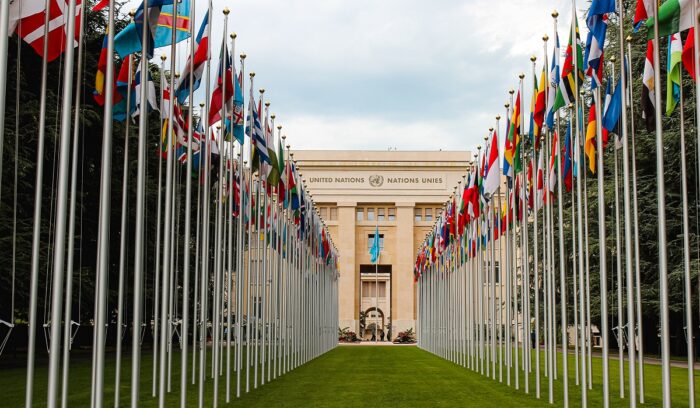
In the year 2042, the international community has achieved a feat once deemed impossible by signing the Fossil Fuel Non-Proliferation Treaty. This historic accord marks the first time every sovereign state has committed to a legally binding framework to phase out coal, oil, and gas production entirely. The final signatures were collected during a global summit in Santa Marta, signaling a definitive transition from decades of fossil fuel reliance toward a planned and equitable energy future.
This treaty mirrors the successful international efforts of the twentieth century that managed nuclear weapons and ozone-depleting substances. By creating a definitive roadmap for supply-side management, nations have moved beyond just targeting emissions to addressing the root cause of the climate crisis. The consensus achieved in 2042 reflects a profound shift in global priorities, placing long-term planetary health above short-term extractive gains.
The formal adoption of this treaty has stabilized global markets by providing a clear, predictable timeline for the energy transition. Investors and energy companies now have the regulatory certainty needed to redirect trillions of dollars into renewable infrastructure. This collective agreement ensures that no nation is left behind or economically disadvantaged by acting alone in the transition.
The Mechanism of Global Cooperation
The treaty is built upon three fundamental pillars: non-proliferation, a fair phase-out, and a just transition. The first pillar immediately ends all new exploration and production of fossil fuels, ensuring that no more carbon-intensive infrastructure is built. This decisive action prevents the stranding of assets and protects biodiversity in regions previously earmarked for drilling.
Under the second pillar, nations have agreed to a differentiated timeline for winding down existing production. Wealthier nations with less economic dependency on extraction have committed to faster phase-outs to allow developing countries more time to adjust. This strategy acknowledges the historical responsibility of industrialized states while fostering a spirit of global solidarity.
The third pillar establishes a global fund to support workers and communities heavily reliant on the fossil fuel industry. This fund facilitates the retraining of millions of people for roles in the green economy, such as offshore wind maintenance and geothermal engineering. You can find more details on these specific mechanisms at the official site for the Fossil Fuel Non-Proliferation Treaty.
Economic Renewal and Technical Ingenuity
The signing of the treaty has sparked an unprecedented surge in technical innovation across the globe. With the era of fossil fuels officially concluding, the world’s brightest engineers have focused on perfecting long-duration energy storage and grid-scale efficiency. We have seen a massive leap in the efficiency of green hydrogen production, which now powers heavy industries like steel and cement
According to data tracked by the International Renewable Energy Agency, global renewable capacity has tripled since the early 2020s. This growth has led to the creation of over thirty million new jobs in the clean energy sector worldwide. The economic benefits are particularly visible in the Global South, where abundant solar and wind resources are driving a new era of industrialization.
The treaty has also empowered local governments to implement decentralized energy systems. Many cities now operate on microgrids that utilize local renewable sources, reducing the vulnerability of the central power infrastructure. This shift has democratized energy access, bringing reliable power to hundreds of millions of people for the first time.
A Legacy of Health and Restoration
The environmental and public health impacts of the treaty are already becoming visible in urban centers and industrial corridors. With the decline of coal and oil combustion, air quality indices in major cities have improved by nearly sixty percent. This change has led to a significant drop in respiratory and cardiovascular diseases, as noted in recent reports by the World Health Organization.
Ecological restoration projects are now underway in former mining and drilling sites across the planet. These areas are being returned to their natural states, allowing for the recovery of local flora and fauna. The cessation of seismic testing and offshore drilling has also led to a resurgence in marine life health in the world’s oceans.
The successful signing of this treaty serves as a testament to human resilience and our capacity for collective action. It demonstrates that when faced with an existential threat, humanity can choose cooperation over competition. The global community can monitor the ongoing progress of these commitments through the Climate Action Tracker, which provides real-time data on national compliance.
The Path Forward for a Sustainable Civilization
As we move past 2042, the Fossil Fuel Non-Proliferation Treaty stands as a pillar of a new global civilization. We have proved that we can provide for the energy needs of ten billion people without compromising the stability of our atmosphere. This victory belongs to the activists, scientists, and diplomats who refused to accept the inevitability of climate collapse.
The treaty has fostered a new era of international trust that is being applied to other global challenges, such as plastic pollution and biodiversity loss. It has fundamentally changed our relationship with the natural world, shifting our perspective from one of exploitation to one of stewardship. The sun, the wind, and the earth’s heat are now the primary engines of human progress.
Looking back, the signing of the treaty was the moment the world finally chose a future of abundance and peace. By leaving the fossil fuels of the past in the ground, we have cleared the air for the innovations of the future. The transition is no longer a distant goal but a living, breathing reality for every person on Earth.
