Nations

Solar farm from above

India adds record 24.5 GW of solar in 2024

India added 24.5 GW of solar and 3.4 GW of wind capacity in 2024, doubling solar installations and increasing wind capacity by 21% from 2023, according to JMK Research & Analytics. These additions brought India’s total renewable energy capacity to 209.44 GW, with solar accounting for 47%. Utility-scale additions nearly tripled from 2023, while rooftop and off-grid installations rose 53% and 197%, respectively, driven by the PM Surya Ghar: Muft Bijli Yojana program, which spurred 700,000 rooftop installations in 10 months.

Landfill. A lot of plastic garbage. Environmental problems.

Thailand bans imports of plastic waste to curb toxic pollution

A law banning imports of plastic waste came into force in Thailand, after years of campaigning by activists. Thailand is one of several south-east Asian countries that has historically been paid to receive plastic waste from developed nations. Thai customs officials said more than 1.1 million tons of plastic scraps were imported between 2018 and 2021. Imports of plastic were often mismanaged, with many factories burning the waste rather than recycling it, leading to damage to human health and the environment.

American money

The U.S. Consumer Financial Protection Bureau finalizes rule banning inclusion of medical debt on credit reports

Americans’ unpaid medical bills will no longer appear on credit reports, where they can block people from mortgages, car loans, or small business loans, according to a final rule announced by the Biden administration. The Consumer Financial Protection Bureau rule will remove $49 billion in medical debt from the credit reports of more than 15 million Americans, which means lenders will no longer be able to take that into consideration when deciding to issue a loan. The change is estimated to raise the credit scores by an average of 20 points.

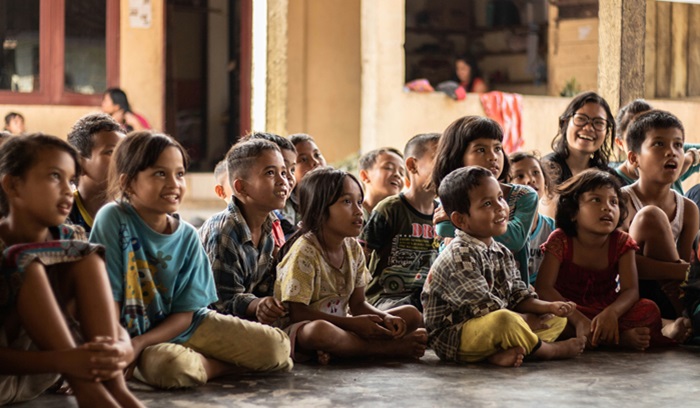
Indonesian children smiling

Indonesia launches free meals program to feed millions of children and pregnant women

The Free Nutritious Meal program delivers on a campaign promise by President Prabowo Subianto, who was elected last year to lead the nation of more than 282 million people and Southeast Asia’s largest economy. It aims to fight the stunting of growth that afflicts 21.5% of Indonesian children younger than 5 and help raise income for the nation’s farmers. The government’s target is to reach an initial 19.5 million schoolchildren and pregnant women in 2025 with a budget of $4.3 billion USD, and more than 80 million people at a cost of $28 billion USD by 2029.

Facility releasing air pollution|google

China has reduced sulphur dioxide emissions by more than two-thirds in the last 15 years

China has dramatically reduced local air pollution levels — particularly in its biggest cities — in the last decade. One rapidly declining pollutant is sulphur dioxide (SO2), which generates smog, causes ecologically-damaging acid rain, and is associated with higher rates of lung cancer and other respiratory issues. China has been able to make remarkable gains in curbing S02 emissions by putting emissions limits on coal plants and introducing desulphurization technologies that remove SO2 from smokestacks.

Offshore oil rig at sunset

Biden permanently bans offshore drilling in 625 million acres of ocean

President Biden has announced an executive action that will permanently ban future offshore oil and gas development in parts of the Atlantic and Pacific oceans in a way that could be especially difficult for the incoming Trump administration to undo. The ban will prevent oil companies from leasing waters for new drilling along the entire East Coast; the eastern Gulf of Mexico; the coasts of Washington, Oregon, and California; and portions of Alaska’s Northern Bering Sea.

Prison cell

Zimbabwe abolishes the death penalty

Zimbabwe’s President Emmerson Mnangagwa has approved a law that abolishes the death penalty in the southern African state with immediate effect. Mnangagwa’s move comes after Zimbabwe’s parliament voted earlier in December to scrap the death penalty. Zimbabwe last carried out an execution by hanging in 2005, but its courts continued to hand down the death sentence for serious crimes like murder.

Snow leopard

Kazakhstan’s snow leopard population reaches near-historic levels

The snow leopard population in Kazakhstan has rebounded to near-historic levels, with an estimated 152 to 189 individuals now residing in the country. This marks a significant achievement in conservation efforts, as such numbers were last observed in the 1980s. Since 2018, Kazakhstan has implemented a snow leopard conservation project under the United Nations Development Program (UNDP). UNDP initiatives have improved protection in 14 natural areas across the country through the use of advanced technologies, including camera traps, drones, and thermal imaging devices. As a result, the snow leopard population has increased by more than 26% since 2019.

Onager

Asiatic wild asses return to Saudi Arabia after 100 years

It’s been a century since an onager or Asiatic wild ass was last seen in Saudi Arabia. But in April this year, seven onagers were relocated from neighboring Jordan into one of Saudi Arabia’s nature reserves. One of the onagers has even birthed a female foal since then. Saudi Arabia was historically home to the Syrian wild ass , an onager subspecies that was hunted into extinction in the 1920s. But with the Syrian onager gone forever, it’s closest living relative, the Persian onager from Jordan, “was deemed the best alternative sub-species with which to re-populate the Middle East.”

Brazilian flag

Brazil passes law to cap emissions and regulate carbon market

Brazil will join the short list of countries, which includes China, Mexico, and Kazakhstan, and most E.U. member states, with a nationwide regulated carbon emissions system. The Brazilian government and the law’s proponents in the industrial sector say a regulated market will encourage companies to adopt low-carbon technologies and innovate toward greener production methods. Fines for not complying will be largely rerouted toward Brazil’s national climate change fund and administrative costs, with 5% of the fines destined to compensate Indigenous communities.