Civil society

Bacteria under microscope

Cholera vaccination campaign launched in Darfur to protect over 1.8 million people

A vital cholera vaccination campaign has been launched in Darfur, Sudan, aiming to protect over 1.86 million people. This urgent intervention is a major victory for global health, achieved despite the ongoing conflict and insecurity in the region. Humanitarian teams, led by the WHO and UNICEF, overcame immense logistical challenges to deliver millions of vaccine doses. This proactive measure is crucial for halting the spread of the country’s longest-recorded cholera outbreak and safeguarding the lives of highly vulnerable populations, especially young children.

Horses running

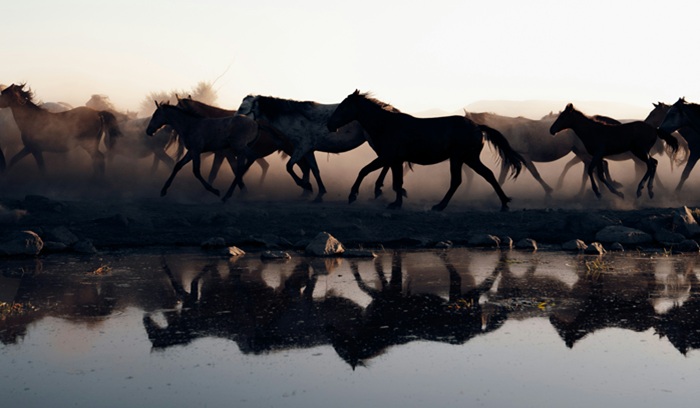
Wild horses return to Spain’s Iberian highlands after 10,000 years

A groundbreaking ecological project is underway in Spain’s Iberian Highlands, where wild horses are now roaming a landscape they haven’t inhabited in millennia. This collaborative effort, led by the Rewilding Europe Foundation, the International Union for Conservation of Nature, and Rewilding Spain, is a strategic move to restore the natural ecosystem. The project aims to reduce wildfire risk and promote biodiversity by reintroducing large herbivores, which act as “natural engineers” for the environment.

Amur leopard

Amur leopards, once nearly extinct, are making a comeback in Far East Asia

In the 20th century, poaching for its spotted fur, forest fires and conversion of land for farming caused the wildcat’s population to plummet to roughly 25 individuals in the wild. Today, there are approximately 130 in Russia alone, according to a recent Wildlife Conservation Society report. Efforts to save the species date back decades. Collaboration between conservationists and Russian government agencies helped establish protected areas in the Primorsky Krai region since 1979, which halted the leopard’s rapid decline, according to WWF.

Crowned gray crane

Rwanda’s endangered crowned crane population has tripled since 2017

Just 10 years ago, Rwanda’s gray crowned cranes were vanishing. Once a familiar sight in wetlands across East Africa, their numbers in Rwanda had collapsed, driven by habitat loss and capture for the exotic pet trade. That grim picture has now changed dramatically, thanks largely to the work of Olivier Nsengimana, a veterinarian and founder of the Rwanda Wildlife Conservation Association, which has led a national campaign to rescue, rehabilitate, and eventually reintroduce captive cranes to the wild.

Close-up of jaguar eyes

Once on the brink of local extinction, jaguars across the Brazil-Argentina border have more than doubled since 2010

In the 90s, the Green Corridor, a 457,000-acre stretch of protected land that links Argentina’s Iguazú National Park and Brazil’s Iguaçu, was home to between 400 and 800 jaguars. By 2005, that number had dropped to 40. Today, thanks to coordinated conservation efforts between the two countries, the population has grown to at least 105. Women-led economic initiatives and formal institutional support, like “Jaguar Friendly” certification for the local airport, have proven vital to strengthening human-wildlife connections and bolstering conservation efforts.

Wolf pack

Wolves continue remarkable comeback in Northern California with three new packs

Though native to California, after 1924, a gray wolf was not documented in California until 2011, when a wolf known as OR-7 famously crossed the state line from Oregon. Since then, wolves have steadily reclaimed a presence in the state. In 2015, wildlife officials documented the first pack in California in nearly 100 years. Now, three new packs have been discovered in a remote region where the Sierra Nevada meets the Cascades.

Leopard

Sri Lanka’s Kumana National Park emerges as a stronghold for vulnerable leopards

A new study reports a notably high density of Sri Lankan leopards in the country’s Kumana National Park. Using camera traps, the study recorded more than 90 leopard encounters, including 34 identified individual leopards, captured on film across a 16-month survey period. Since 2017, a citizen science program has also recorded 80 individual leopards in Kumana, using a naming system to identify each individual. The Sri Lankan leopard is tagged as a species “vulnerable” to extinction, according to the IUCN Red List criteria.

Baby sea turtles in the sand

Endangered sea turtles show signs of recovery in majority of places they’re found worldwide

Endangered sea turtles are making a comeback in many parts of the world, according to a newly published global survey from researchers at Stanford University and other institutions. The study, featured in Endangered Species Research, found that threats to the marine animals—such as hunting, pollution, and coastal development—are declining in more than half of the areas examined. Although the findings offer hope, researchers caution that not all turtle populations are rebounding equally. Leatherback turtles, in particular, remain under severe threat.

Two parrots flying

One of the rarest parrot species in Brazil doubles in population in last 20 years

Habitat loss and the illegal pet trade drove the red-tailed amazon, endemic to the southeastern Brazilian coast, to fewer than 5,000 individuals by the end of the 20th Century. Thanks to a project to install artificial nests on an island on the Paraná coast, the number of parrots has almost doubled in the last 20 years, taking the bird from “endangered” to “near threatened” status, the only case of its kind in Brazil. Although trafficking has decreased, it remains an active threat to the species’ survival.

Pangolin

Nigerian officials arrest Chinese pangolin trafficking ‘kingpin’

Nigerian officials have arrested a Chinese national suspected of masterminding a transnational smuggling operation of pangolin scales, according to Dutch nonprofit Wildlife Justice Commission (WJC). The arrest is linked to the seizure of more than 7 tons of pangolin scales in August 2024. The investigation is part of wider efforts to disrupt wildlife trafficking networks in Nigeria, the main illegal wildlife trade hub in West Africa. WJC says the collaboration has enabled 37 arrests, seizures of more than 21.5 metric tons of pangolin scales, and 12 convictions since July 2021.