Air pollution

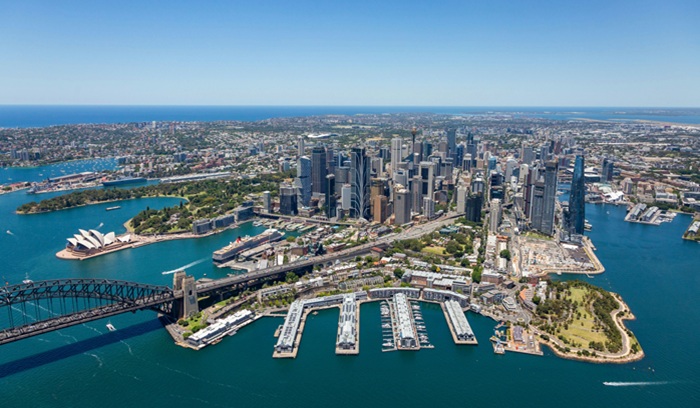
Aerial view of Sydney, Australia

Sydney to ban gas and electrify all new big buildings

The City of Sydney has taken a pioneering step toward eliminating fossil fuels from its buildings. The council voted to mandate that all new major buildings must be built all-electric, effectively banning natural gas connections. This major policy shift is critical for accelerating the city’s transition to net-zero emissions. By removing indoor gas pollution, the mandate also creates healthier, safer urban environments for its residents.

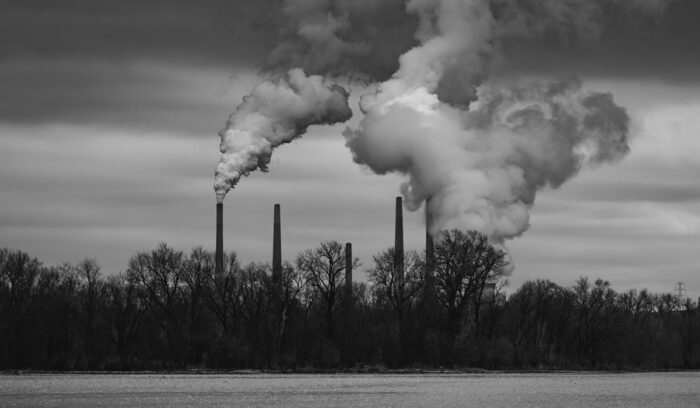
Air pollution from a coal plant

Global mercury emissions have fallen 70% over last four decades

Gold mining, coal burning, and cement and nonferrous metals production all release several thousand tons of mercury into the atmosphere every year, leading to tens of thousands of deaths worldwide. However, a team of Chinese scientists from schools in Tianjin, Beijing, Tibet, and Nanjing has found that mercury concentrations in the atmosphere have reduced by a staggering 70% since a peak in the year 2000.

Facility releasing air pollution|google

China has reduced sulphur dioxide emissions by more than two-thirds in the last 15 years

China has dramatically reduced local air pollution levels — particularly in its biggest cities — in the last decade. One rapidly declining pollutant is sulphur dioxide (SO2), which generates smog, causes ecologically-damaging acid rain, and is associated with higher rates of lung cancer and other respiratory issues. China has been able to make remarkable gains in curbing S02 emissions by putting emissions limits on coal plants and introducing desulphurization technologies that remove SO2 from smokestacks.

Brazilian flag

Brazil passes law to cap emissions and regulate carbon market

Brazil will join the short list of countries, which includes China, Mexico, and Kazakhstan, and most E.U. member states, with a nationwide regulated carbon emissions system. The Brazilian government and the law’s proponents in the industrial sector say a regulated market will encourage companies to adopt low-carbon technologies and innovate toward greener production methods. Fines for not complying will be largely rerouted toward Brazil’s national climate change fund and administrative costs, with 5% of the fines destined to compensate Indigenous communities.

03 ozone graphic

For the first time, researchers detect significant dip in global atmospheric levels of HCFCs

Almost 30 years after nations first agreed to phase out these chemicals, which were widely used for air conditioning and refrigeration, scientists say global concentrations peaked in 2021. Since then, the ozone-depleting potential of HCFCs in the atmosphere has fallen by about three-quarters of a percentage point. Though small, that decline comes sooner than expected and represents a significant milestone for the international effort to preserve the ozone layer.

Aral Sea time lapse 1989 2014

Uzbekistan plants millions of acres of forest where the Aral Sea once lay

Instead of trying to restore what used to be the world’s third largest lake, officials from the Uzbekistan Forestry Agency and locals are trying to plant a new forest where it once rested. The main purpose of the afforestation project it to curb the harmful sandstorms and improve the ecosystem by planting desert-tolerant plants. The initiative has so far planted 4.2 million acres of forest, with up to 494,000 acres of new forest planned for 2024.

Shipping liner

Global sulfur dioxide emissions from shipping dropped sharply with the introduction of new rules in 2020

In 2020, the International Maritime Organization introduced strict limits on marine fuels: the maximum percentage of sulfur allowed in fuels fell from 3.5% to 0.5%. All ships worldwide had to comply. As a result, there was a dramatic fall in global sulfur dioxide emissions from over 10 million tonnes a year in 2019 to 3 million tonnes a year later, helping abate local air pollution and acid rain.

space debris in Earth orbit

India aims to achieve debris-free space missions by 2030

Low Earth orbit is littered with about 30,000 objects larger than a softball and millions smaller than a centimeter. A bombshell study found unexpectedly high amounts of vaporized metals polluting Earth’s stratosphere, which is home to the fragile ozone layer, whose chemical makeup can be altered by satellite material. Another study posted to the preprint server arXiv suggested that debris from burning satellites could be altering our planet’s magnetic field.

Silhouette of person looking at stars

Oregon area named world’s largest dark sky sanctuary

The Oregon outback is now home to the world’s largest dark sky sanctuary, offering pristine views of the night sky across 2.5 million acres. The Oregon outback international dark sky sanctuary received the certification this week, becoming the largest of 19 sites around the world with the same designation. The sanctuary covers Lake County in south-eastern Oregon, a remote area roughly half the size of New Jersey, and could eventually expand to include more than 11 million acres.