The year 2044 marks a defining moment in industrial history as the global count of electric vehicles (EVs) officially surpasses that of internal combustion engine (ICE) vehicles. This milestone represents the successful culmination of a two-decade transition that began with the rapid scaling of battery production in the early 2020s. For the first time since the early twentieth century, the primary method of personal transport on the planet is no longer dependent on the combustion of fossil fuels.
In the mid-2020s, according to IEA global electric vehicle trends, electric car sales were already reaching nearly 14 million units annually. The momentum accelerated as cost parity was achieved across every major vehicle segment, from heavy-duty trucks to affordable compact cars. This shift has fundamentally reconfigured the global energy landscape, permanently reducing the demand for crude oil by millions of barrels every single day.
Ingenuity in Energy Storage and Infrastructure
The achievement of this milestone was made possible by a series of breakthroughs in solid-state battery technology and extreme fast-charging networks. These innovations effectively eliminated range anxiety and allowed EVs to operate in extreme climates that once hindered early lithium-ion models. The ingenuity of engineers allowed for a doubling of energy density while simultaneously reducing the use of critical minerals like cobalt and nickel.
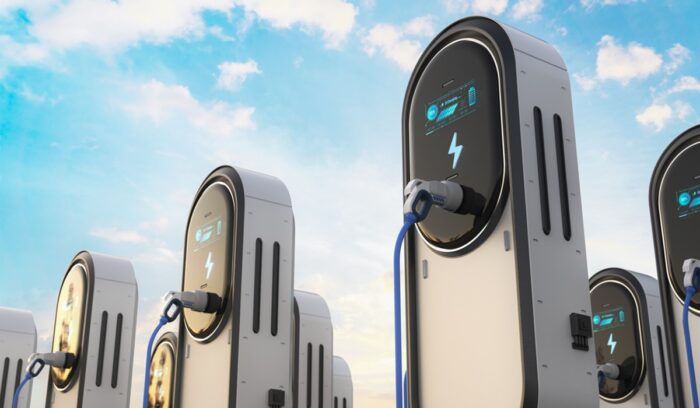
Global infrastructure also saw a radical transformation, with over 200 million public charging points integrated into smart grids worldwide. These systems utilize vehicle-to-grid technology, allowing cars to act as distributed battery storage for the world’s solar and wind farms. This symbiotic relationship has stabilized electricity grids and lowered the overall cost of energy for billions of consumers.
The transition was further supported by the standardization of battery recycling processes, which now recover over 95 percent of raw materials from retired packs. This circular economy has greatly reduced the environmental footprint of mining and ensured a sustainable supply chain for future generations. The world’s roads are now populated by vehicles that are not only cleaner to drive but also cleaner to manufacture.
Positive Impacts on Public Health and Environment
The most immediate and tangible benefit of EVs outnumbering gas cars is the dramatic improvement in urban air quality. Nitrogen dioxide and particulate matter levels in major metropolitan areas have plummeted, leading to a significant reduction in respiratory and cardiovascular illnesses. Public health organizations estimate that this transition is preventing hundreds of thousands of premature deaths annually across the globe.
Cities have also become notably quieter, as the roar of combustion engines is replaced by the near-silent hum of electric drivetrains. This reduction in noise pollution has been linked to improved mental well-being and higher quality of life for urban residents. The World Health Organization has noted that the environmental benefits of cleaner transport are most profound in developing nations where urban density is highest.
Furthermore, the total lifecycle carbon emissions of the global transport fleet have dropped by more than 70 percent compared to the 2020 baseline. This progress is a cornerstone of the broader effort to meet international climate targets and preserve biodiversity. The decoupling of mobility from atmospheric pollution is perhaps the greatest gift of this technological revolution to the natural world.
Economic Opportunity and Global Equity
The shift to electric mobility has acted as a powerful engine for global economic growth and job creation. Traditional automotive hubs successfully retooled their factories, while new manufacturing centers emerged in regions with abundant renewable energy resources. This transition has fostered a more equitable distribution of the automotive industry, providing high-tech employment opportunities in many emerging economies.
Advancements in affordable electric mobility have ensured that the benefits of this technology are not restricted to wealthy nations. Two and three-wheeled EVs in South Asia and Africa reached price parity even earlier than passenger cars, providing clean and low-cost transport for millions of workers. These small-scale electric solutions have revolutionized local logistics and increased economic participation for marginalized communities.
The milestone of EVs outnumbering gas cars in 2044 is a testament to the power of human persistence and collective vision. It serves as a reminder that the world can successfully navigate complex industrial transitions when policy, technology, and public will align. This victory on the world’s roads is a major step toward a more sustainable and prosperous future for all.