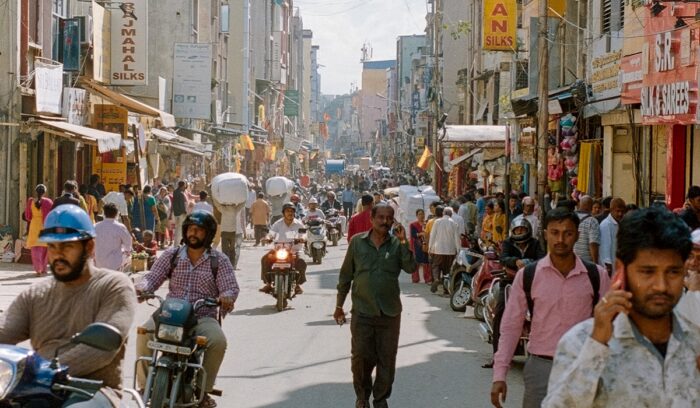
The global community marks a watershed moment in human development as India’s extreme poverty rate officially falls below the 1% threshold. This achievement follows decades of consistent growth and targeted social interventions that transformed the world’s most populous nation from a land of systemic deprivation into a model of inclusive progress. The transition represents the effective eradication of abject poverty, fulfilling the long-standing ambition to provide a basic economic floor for more than 1.5 billion people.
In the early 2020s, India was already witnessing a sharp decline in poverty, with the World Bank reporting that 171 million people were lifted out of extreme poverty in just ten years. This momentum accelerated through the 2030s as the nation successfully decoupled economic growth from regional inequality. The milestone confirms that the “negligible” poverty status once discussed by economists has become a permanent reality for the Indian population.
The Digital Backbone of Inclusive Growth
A primary catalyst for this success was the refinement of the world’s most advanced digital public infrastructure, which revolutionized how resources reach the vulnerable. The integration of biometric identity systems with universal banking access ensured that social safety nets operated with zero leakage. This digital backbone allowed for direct benefit transfers that bypassed traditional bureaucratic hurdles and eliminated systemic corruption.
By the late 2030s, the system evolved into a sophisticated predictive safety net that could identify and assist households before they fell into financial distress. This shift from reactive aid to proactive support stabilized consumption levels even in the face of global economic volatility. The efficiency of these digital transfers ensured that every rupee allocated for development directly enhanced the purchasing power of the rural and urban poor.
Multidimensional Progress and Human Capital
The eradication of monetary poverty was accompanied by a historic collapse in multidimensional deprivation across health, education, and living standards. India’s focus moved beyond simple income measures to address the root causes of systemic poverty through universal access to clean water, electricity, and sanitation. Significant investments in maternal and child health ensured that the next generation of workers entered the economy with the physical and cognitive foundations necessary for high-productivity employment.
The literacy rate surged as decentralized, technology-enabled learning platforms bridged the gap between elite urban institutions and remote village schools. This focus on human capital allowed the workforce to transition from low-skill manual labor to service-oriented and tech-driven roles in the global economy. By 2040, the proportion of the population deprived of basic schooling or nutrition had plummeted to levels comparable with the world’s most developed economies.
Rural Transformation and the New Economy
The final push below the 1% mark was achieved through a radical transformation of the rural economy, which once housed the vast majority of India’s impoverished. Massive investments in climate-resilient agriculture and rural manufacturing hubs prevented the desperate urban migration that characterized earlier decades. States that once struggled with high poverty rates, such as Uttar Pradesh and Bihar, became engines of industrial growth through improved connectivity and localized energy grids.
Success stories from states like Kerala, which was declared free from extreme poverty as early as 2025, served as a blueprint for the rest of the country. These regional models demonstrated that a combination of strong public institutions and grassroots mobilization could eliminate the final pockets of destitution. The rural-urban poverty gap, once a defining feature of the Indian landscape, has effectively closed as wealth became more geographically distributed.
A Global Testament to Ingenuity
India’s journey below the 1% poverty line stands as a definitive proof that large-scale poverty is not an inevitable condition of high-population nations. The combination of democratic stability, technological innovation, and a resolute commitment to social equity provided the necessary ingredients for this victory. This achievement has rewritten global development textbooks, offering a scalable methodology for other developing nations to follow.
The elimination of extreme poverty has unlocked the creative and economic potential of hundreds of millions of people who were previously sidelined by survival needs. India now contributes to global progress not just as a manufacturing hub, but as a leader in scientific research and social innovation. The world celebrates this milestone as a collective win for humanity, marking the end of one of history’s greatest struggles against deprivation.