
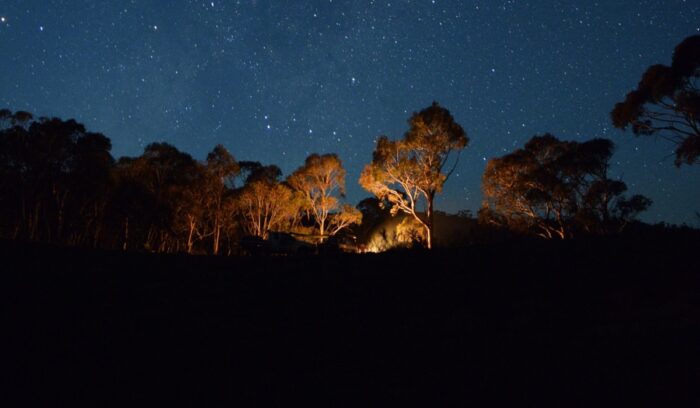
In the rugged expanse of the Flinders Ranges, deep within the Australian interior, a remarkable chapter of human history has been unearthed. Archaeological evidence confirms that early humans established a sophisticated settlement here approximately 49,000 years ago. This discovery at the Warratyi rock shelter challenges previous timelines, revealing that the first Australians adapted to the harsh arid interior millennia earlier than scientists once believed. The findings paint a portrait of a people possessing extraordinary resilience, technological ingenuity, and a deep understanding of their environment.
A Journey into the Unknown
The colonization of Sahul—the ancient supercontinent comprising Australia, New Guinea, and Tasmania—was already a feat of maritime prowess. However, the rapid movement from the coasts to the dry, unforgiving heart of the continent demonstrates a different kind of mastery. The people who settled at Warratyi did not merely survive; they thrived in a landscape that demanded constant innovation. Their arrival in the Flinders Ranges, just a few thousand years after reaching the northern shores, suggests a deliberate and confident exploration of the new world.
Mastery of Materials and Technology
The Warratyi site has yielded a treasure trove of artifacts that showcase the advanced technical skills of these early inhabitants. Among the most significant finds are bone tools dating back roughly 40,000 to 38,000 years, the oldest ever found in Australia. These implements, likely used for sewing or working animal hides, indicate a complex material culture capable of producing tailored solutions for survival.
In addition to bone technology, the shelter contained evidence of hafted stone tools—blades attached to wooden handles using resin. This composite tool making requires high-level planning depth and a detailed knowledge of material properties. The presence of red ochre and white gypsum pigment further highlights a culture rich in symbolic expression and ritual. These materials were likely used for art, body decoration, or ceremonial purposes, underscoring the vibrant social life of the community. Read more about the Warratyi discovery.
Living Amongst Giants
The excavations also revealed that these early settlers lived alongside Australia’s legendary megafauna. Fragments of eggshell from the giant flightless bird Genyornis newtoni and bones from Diprotodon optatum, a marsupial the size of a rhinoceros, were found within the settlement layers. This direct association provides the earliest reliable evidence that humans and megafauna interacted in the arid zone.
Rather than being helpless against these massive creatures, the people of Warratyi incorporated them into their economy. The ability to hunt or scavenge such large animals would have provided significant resources, supporting the community’s nutritional needs. This interaction suggests a dynamic relationship with the ecosystem, where humans quickly became an integral part of the food web. Learn about the giant Diprotodon.
A Legacy of Adaptation
The discovery at Warratyi was made in partnership with the Adnyamathanha people, the Traditional Owners of the land. This collaboration highlights the continuity of culture that spans tens of thousands of years. The knowledge required to find water, track game, and navigate the seasons in such a challenging environment was passed down through countless generations.
The site stands as a testament to the adaptability and intelligence of the first Australians. Their ability to forge a life in the arid interior, developing unique technologies and cultural practices, laid the foundation for one of the world’s oldest continuous living cultures. It serves as a powerful reminder of human ingenuity in the face of the unknown. Explore the scientific study details.
