
First known cave art created in modern-day Spain
One motif – a faint red dot – at El Castillo Cave in Spain is said to be more than 40,000 years old.
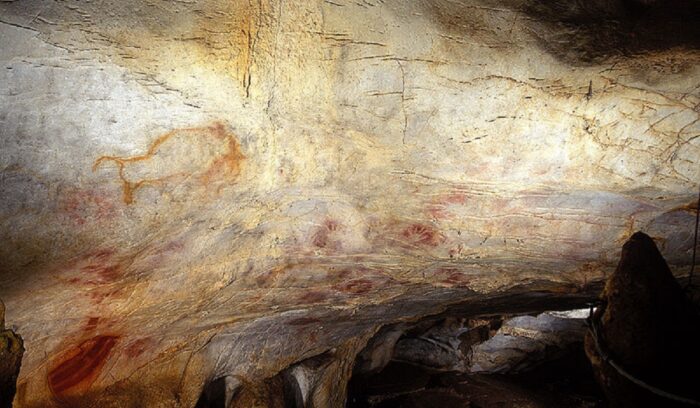
One motif – a faint red dot – at El Castillo Cave in Spain is said to be more than 40,000 years old.

The earliest direct evidence of Homo sapiens on Britain is a jaw fragment found in Kent’s Cavern, Devon estimated it to be at least 40,000 years old.

By around 30,000 years ago, Australo-Melanesians were present in all regions of Southeast Asia. In most lands they were eventually displaced from the coastal lowlands and pushed to the uplands and hinterlands by later immigrants.

Around 43,000 years ago, early humans carved the first tally marks into bone, inventing the earliest known numeral systems. This brilliant shift toward abstract mathematics allowed our ancestors to track lunar cycles and inventory resources. It laid the vital groundwork for modern mathematics, commerce, and advanced human societal planning.
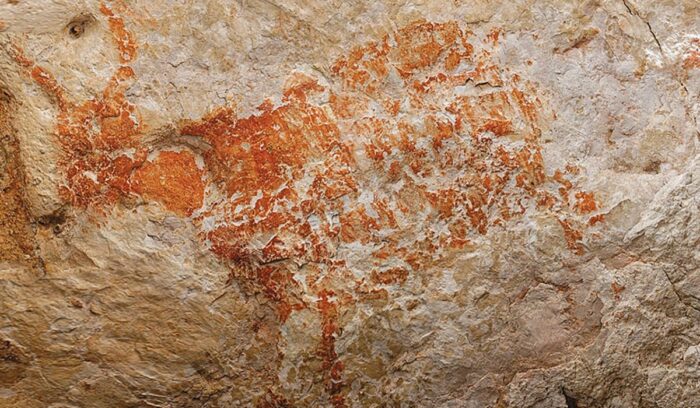
Deep in the limestone caves of Sulawesi, Indonesia, early humans created some of the world’s oldest art 39,900 years ago. By processing red ochre and blowing it over their hands to form stencils, they proved complex artistic expression wasn’t exclusive to Europe, representing a universal milestone in human consciousness.

Archaeological evidence suggests that human beings arrived in Sarawak – overland – at least 40,000 years ago.

The human presence on the island dates back at least 40,000 years, to the oldest homo sapiens migrations out of Africa.

The discovery of 42,000-year-old shell hooks in East Timor provides the first definitive proof that early humans had mastered deep-sea fishing. By targeting open-ocean species like tuna, these ancient mariners demonstrated a level of technological ingenuity and planning depth that transformed the ocean from a barrier into a vital highway for global expansion.

Evidence indicates the presence of Aborigines in Tasmania about 40,000 years ago. Rising sea levels cut Tasmania off from mainland Australia about 10,000 years ago and by the time of European contact, the Aboriginal people in Tasmania had nine major nations, or ethnic groups
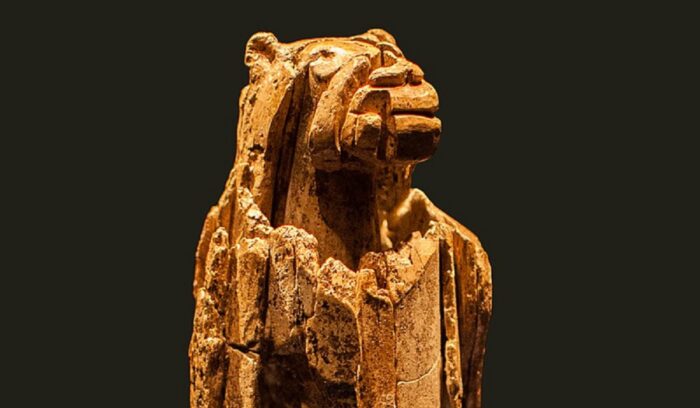
Discovered in 1939 at the Hohlenstein-Stadel cave in Germany, the 40,000-year-old “Lion-man” is the Aurignacian culture’s masterpiece. This ivory figure, requiring 400 hours to carve, proves early humans possessed the abstract imagination to create supernatural beings, marking the dawn of complex symbolism and mythology.