Transportation

Transportation shapes how people access jobs, healthcare, education, and each other. This archive tracks real progress in transit, infrastructure, electric vehicles, cycling, and more — from local wins to national policy shifts worth knowing about.

Ford E-Transit, for article on wireless EV charging roadway

Detroit becomes first city in the U.S. to install wireless-charging roadway

Wireless EV charging just made its U.S. public-road debut on a quarter-mile stretch of 14th Street in Detroit’s Corktown neighborhood. Copper coils embedded beneath the pavement send electricity through a magnetic field to receivers mounted under compatible vehicles, topping up batteries with no plug, no stop, and no waiting. A Ford E-Transit van will gather real-world data over a five-year pilot, with city buses and delivery fleets as especially promising candidates down the road. There’s a lovely symmetry in the city that birthed the auto industry helping reimagine how cars are powered — and a reminder that the shift to clean transportation tends to begin with exactly these kinds of modest, hopeful experiments.

Yara Eide clean ammonia-based ship, for article on ammonia-powered container ship

Yara announces world’s first clean ammonia-powered container ship

Clean ammonia shipping gets its first real-world test in 2026, when Norwegian chemicals company Yara launches the Yara Eyde — a container ship designed to run entirely on ammonia and cut about 11,000 tonnes of CO2 emissions each year. The vessel will sail a regular route between Norway and Germany, proving the technology under genuine commercial conditions rather than in a lab. Shipping moves roughly 90% of global trade and has long been considered one of the hardest sectors to decarbonize, since batteries and hydrogen still fall short for ocean-going vessels. Every big industrial shift needs someone willing to go first, and this one ship could help chart a credible path toward a cleaner future for global trade.

Small airplane, for article on sustainable aviation fuel

Gulfstream completes first-ever transatlantic flight with 100% Sustainable Aviation Fuel

Sustainable aviation fuel just crossed the Atlantic on its own, with no fossil jet fuel in the tank. A Gulfstream G600 flew from Savannah, Georgia to Farnborough, England in under seven hours, becoming the first aircraft to make the transatlantic journey on 100% SAF. The engines weren’t modified for the trip, hinting that existing planes could one day run on cleaner fuel without expensive retrofits. Gulfstream now plans to share the flight data with U.S. regulators to help certify full SAF use beyond today’s blended limits. For an industry where battery and hydrogen flight remain distant, this single crossing offers something rare: a glimpse of long-haul aviation that could actually clean up before 2050.

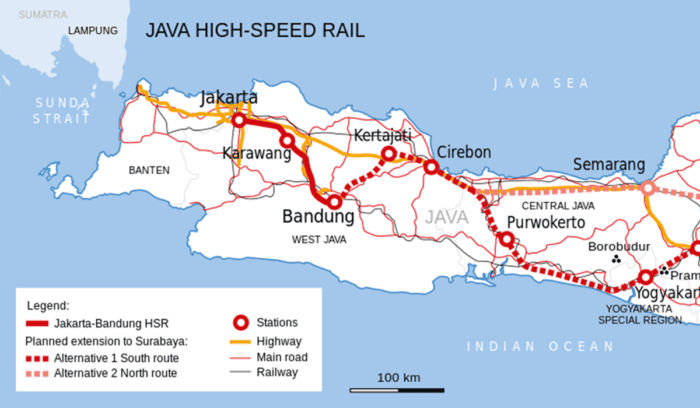
Java train map, for article on Indonesia high-speed rail

Indonesia opens Southern Hemisphere’s first high-speed train

High-speed rail just arrived in the Southern Hemisphere for the first time, with Indonesia’s new Jakarta–Bandung line cutting a three-hour trip down to 46 minutes. Trains glide along the 142-kilometer route at around 350 km/h, linking two cities home to nearly 14 million people on one of the most densely populated islands on Earth. Plans are already in motion to extend the corridor to Surabaya, which could turn an eight-hour journey across Java into a two- or three-hour ride. Beyond the convenience, electrified rail is the cleanest way to move people long distances, and tends to pull travelers off short-haul flights. For the wider Global South, it’s a hopeful sign that world-class low-carbon transport isn’t reserved for wealthier corners of the map.

Charging an EV, for article on Australia EV market share

EVs exceed 10% of monthly auto sales in Australia for first time ever

Australia’s EV market hit a milestone in September 2023, with plug-in vehicles making up 10.6% of new car sales — the first time the country has crossed double digits in a single month. That meant nearly 10,000 plug-in cars found new homes, led by the Tesla Model Y, which outsold every passenger car except two utes. The shift reflects more than new models on lots: salary sacrifice schemes, Chinese automakers expanding their reach, and access programs for public sector workers are bringing EVs to buyers who once found them out of reach. With transport responsible for nearly a fifth of Australia’s emissions, this kind of broad-based momentum is exactly what the climate transition looks like when it finally clicks into gear.