Public health & disease

Close-up of an injection syringe against a soft blue background for an article about benralizumab injection treating asthma and COPD attacks

Doctors hail first breakthrough in asthma and COPD treatment in 50 years

A trial from King’s College London found offering patients a new injection was more effective than the current care of steroid tablets, and cuts the need for further treatment by 30%. The results, published in the Lancet Respiratory Medicine journal, could be transformative for millions of people with asthma and COPD around the world. Lead investigator Professor Mona Bafadhel said: “This could be a gamechanger for people with asthma and COPD. Treatment for asthma and COPD exacerbations have not changed in 50 years, despite causing 3.8 million deaths worldwide a year combined.”

Surgeons in an operating room performing a complex procedure, for an article about bladder transplant surgery

Surgeons in California perform first-ever successful bladder transplant

Patients who have their bladder removed most often have a portion of intestine repurposed to pass urine, often resulting in a host of new complications, including infections and digestive issues. Those complications have led doctors around the world to seek bladder transplant techniques for years. The transplant performed in early May has so far succeeded, and doctors said they are “satisfied” with the patient’s recovery, though many unknowns remain.

A surgeon performing a minimally invasive procedure for an article about NeuroSafe prostate surgery

Prostate cancer surgery breakthrough offers hope for erectile function

A new form of prostate cancer surgery nearly doubles the chances of men retaining erectile function, according to a new trial conducted by University College London. Known as NeuroSafe, the procedure checks tissue removed during the operation. If the tumor appears to have been removed, the nerve-containing outer layer of the prostate is left intact. The trial assessed 344 men with prostate cancer and no history of erectile dysfunction. 56% of men who had standard surgery reported severe erectile dysfunction, compared with 38% who had NeuroSafe surgery.

A close-up illustration of a human eye with a clear, healthy cornea, representing stem-cell cornea transplant research for an article about stem-cell cornea transplant

Japanese researchers develop world-first stem-cell treatment that restores vision in humans

Kohji Nishida, an ophthalmologist at Osaka University in Japan, and his colleagues used an alternative source of cells — induced pluripotent stem (iPS) cells — to make the corneal transplants. They took blood cells from a healthy donor and reprogrammed them into an embryonic-like state, then transformed them into a thin, transparent sheet of cobblestone-shaped corneal epithelial cells. After the transplants, all four recipients showed immediate improvements in their vision and a reduction in the area of the cornea affected by limbal stem-cell deficiency. The improvements persisted in all but one recipient, who showed slight reversals during a one-year observation period.

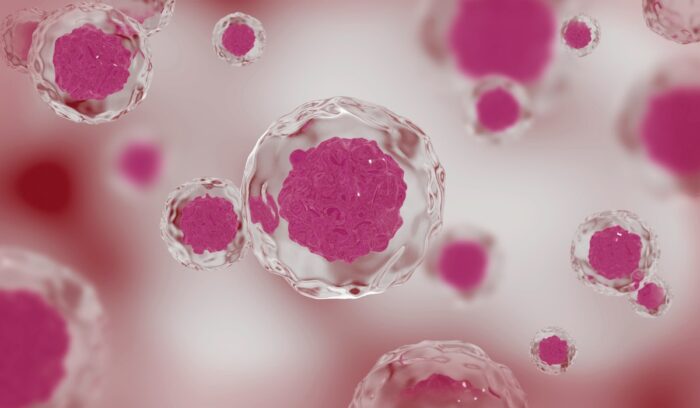
A microscopic illustration of stem cells being reprogrammed into insulin-producing beta cells for an article about type 1 diabetes stem cells

In world first, stem cells reverse woman’s diabetes

In the first trial of its kind, Deng Hongkui, a cell biologist at Peking University in Beijing, and his colleagues extracted cells from three people with type 1 diabetes and reverted them into a pluripotent state, from which they could be molded into any cell type in the body. Now, a 25-year-old woman with type 1 diabetes started producing her own insulin less than three months after receiving a transplant of reprogrammed stem cells. She is the first person with the disease to be treated using cells that were extracted from her own body.

Close-up of an injection syringe against a soft blue background for an article about benralizumab injection treating asthma and COPD attacks

World-first lung cancer vaccine trials launched across seven countries

Lung cancer is the world’s leading cause of cancer death, accounting for about 1.8 million deaths every year. Now experts are testing a new jab that instructs the body to hunt down and kill cancer cells – then prevents them from ever coming back. Known as BNT116 and made by BioNTech, the vaccine is designed to treat non-small cell lung cancer, the most common form of the disease. The phase 1 clinical trial, the first human study of BNT116, has launched across 34 research sites in seven countries: the U.K., U.S., Germany, Hungary, Poland, Spain, and Turkey.

A medical professional holds a vial and syringe representing a personalized cancer vaccine in a clinical trial setting for an article about the NHS cancer vaccine program

Thousands in the U.K. to trial breakthrough personalized cancer vaccines

Under the new scheme from the U.K. National Health Service, the first of its kind in the world, patients who meet the eligibility criteria and agree to have a blood test and sample of their cancer tissue analyzed will gain immediate access to clinical trials for the new vaccines that experts say represent a new dawn of treatments for cancer. While research into cancer vaccines is at an early stage, trials have already shown they can be effective at killing off any remaining tumor cells after surgery and dramatically cut the risk of cancer returning.

A medical professional holds a small vial of blood in a clinic setting for an article about dementia blood tests

Thousands of people in the U.K. to receive landmark trials for dementia blood tests

Thousands of people across the U.K. who are worried about their memory will receive blood tests for dementia in two trials that doctors hope will help to revolutionize the low diagnosis rate. Teams from the University of Oxford and University College London will lead the trials to research the use of cheap and simple tests to detect proteins for people with early stages of dementia or problems with cognition, with the hope of speeding up diagnosis and reaching more people.

A wide-angle photograph of a star-filled night sky over the dark, flat high desert of southeastern Oregon for an article about Oregon dark sky sanctuary

Oregon area named world’s largest dark sky sanctuary

The Oregon outback is now home to the world’s largest dark sky sanctuary, offering pristine views of the night sky across 2.5 million acres. The Oregon outback international dark sky sanctuary received the certification this week, becoming the largest of 19 sites around the world with the same designation. The sanctuary covers Lake County in south-eastern Oregon, a remote area roughly half the size of New Jersey, and could eventually expand to include more than 11 million acres.

A researcher in a laboratory examining cancer cell samples under a microscope for an article about mesothelioma treatment

New drug offers breakthrough in treatment of asbestos-linked cancer

Scientists at Queen Mary University of London have developed a drug to treat mesothelioma, a notoriously deadly and hard-to-treat cancer linked to asbestos, in the biggest breakthrough in two decades.
An international trial spanning five countries found that the new drug, ADI-PEG20, cuts off the tumor’s food supply and quadruples three-year survival rates. It is the first of its kind to be successfully combined with chemotherapy in 20 years.