New Jersey

New Jersey spans dense urban corridors, farmland, and 130 miles of Atlantic coastline — making it one of the most ecologically and socially complex states in the U.S. This archive collects progress stories from across the Garden State, covering environmental protection, public health, community investment, and civic innovation.

Houseless man on the street, for article on veteran homelessness, for article on veteran homelessness

New Jersey declares “functional zero” on veteran homelessness

Veteran homelessness in New Jersey is no longer a chronic reality — it’s now rare, brief, and recoverable, meeting the “functional zero” benchmark that only a handful of states have reached. Since launching the Bringing Veterans Home Initiative in 2024, a coordinated network of state, federal, and local agencies has permanently housed more than 2,500 veterans. Officials are candid that sustaining this takes ongoing funding and staffing — and that affordable housing supply remains a real pressure. Still, New Jersey has proven that ending veteran homelessness isn’t idealism. It’s an operational problem that coordination and political will can actually solve.

A student placing a smartphone in a storage pouch for an article about the student phone ban in New Jersey schools

New Jersey bans student phones all day in a landmark school law

New Jersey student smartphone ban affects nearly 1.4 million public school students under a sweeping new law requiring all K–12 schools to adopt phone-free policies before the 2025 school year begins. Students must store devices in pouches, lockers, or designated areas throughout the entire school day, with exceptions preserved for medical needs and individualized education programs. The legislation joins a growing national and international movement linking constant phone access to declining attention, anxiety, and depression among adolescents. Research consistently shows that phone-free school environments improve academic performance, with the greatest gains among lower-income students.

A forensic evidence collection kit on a medical table for an article about rape kit testing mandates — 14 words.

New Jersey requires testing of every rape kit under new survivor justice law

Rape kit testing is now mandatory in New Jersey under a new law requiring all sexual assault forensic evidence kits to be submitted to a lab within 45 days and tested within six months. The legislation directly targets a decades-long backlog that left thousands of survivors waiting years for answers while dangerous offenders went unidentified. Survivors also gain the right to track the status of their own evidence. New Jersey joins more than 40 states that have passed similar accountability laws, part of a national movement that has shown testing backlogs leads to identifying serial offenders and preventing future crimes.

A heat pump unit on a home exterior, representing U.S. heat pump sales growth supported by the Kigali Amendment, for article on heat pump agreement

Nine U.S. states, including California and New York, sign heat pump agreement to clean up air pollution

Heat pump adoption just got a major coordinated push, as nine states spanning roughly a third of the U.S. population aligned around shared targets to electrify residential heating at scale. Fossil-fueled heating equipment across these states releases more than 138,000 tons of nitrogen oxide annually — exceeding power plant emissions — with at least 40 percent of new investments directed toward low-income households. Because the agreement isn’t legally binding, each state must build its own policies to deliver. When large states move together, manufacturers and investors take notice — a market signal that can reshape supply chains before mandates arrive.

Landfill. A lot of plastic garbage. Environmental problems., for article on plastic waste ban, for article on plastic bag bans

Plastic bag bans in the U.S. have already prevented billions of bags from being used

Plastic bag bans are quietly working — researchers estimate they eliminate nearly 300 single-use bags per person each year in places that adopt them. A new report from three nonprofits looked at policies in New Jersey, Vermont, Philadelphia, Portland, and Santa Barbara, and found New Jersey’s statewide ban alone keeps more than 5.5 billion bags out of circulation every year. More than 500 U.S. cities and 12 states have now passed similar restrictions, with Georgia and Massachusetts possibly next. People adjust faster than skeptics expect, bringing their own bags or simply going without. It’s a small daily habit shift that, multiplied across millions of shoppers, shows how thoughtful policy can ripple outward into cleaner waterways and healthier communities.

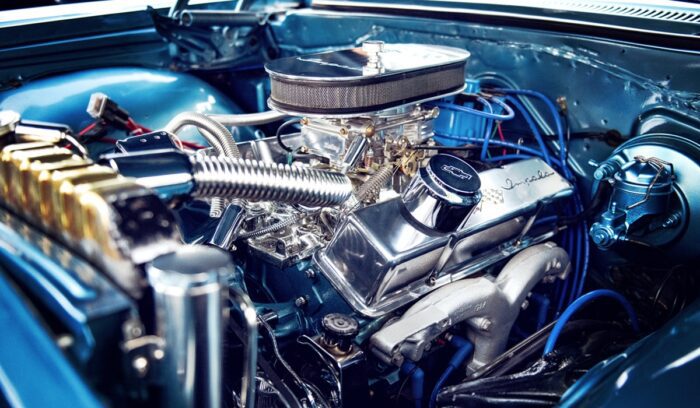
Car engine

New Jersey to ban sales of gas-powered cars by 2035

Under the state Department of Environmental Protection’s “Advanced Clean Cars II” rule, manufacturers must ensure that 43% of new light-duty vehicles they make in 2027 are electric, with the percentage rising annually to 100% by 2035. Most consumer cars and pickup trucks are considered light-duty.