
The Republic of Indonesia emerges as a unitary state
On 17 August 1950, the fifth anniversary of his declaration of Indonesian independence, Sukarno proclaimed the Republic of Indonesia as a unitary state.

On 17 August 1950, the fifth anniversary of his declaration of Indonesian independence, Sukarno proclaimed the Republic of Indonesia as a unitary state.

On 4 January 1948 at 4.20 am, the nation became an independent republic, named the Union of Burma. Unlike most other former British colonies and overseas territories, it did not become a member of the Commonwealth.

The Treaty of Manila of 1946 relinquished U.S. sovereignty over the Philippines and recognized the independence of the Republic of the Philippines.
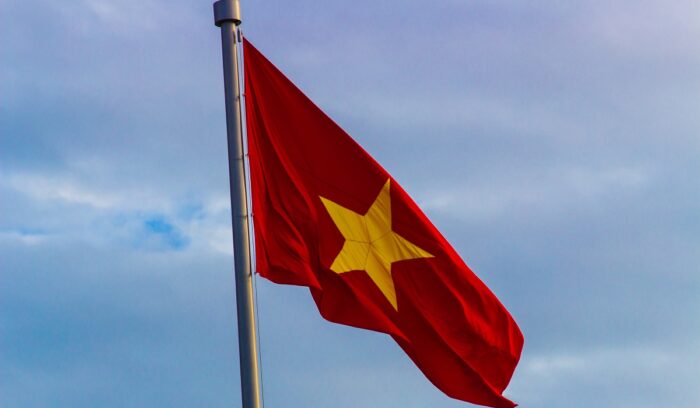
The Indochina Peninsula was colonised by the French in the mid-19th century. Modern Vietnam was born upon the Declaration of Independence from France in 1945.

The declaration marked the start of the diplomatic and armed resistance of the Indonesian National Revolution, fighting against the forces of the Netherlands and pro-Dutch civilians, until the latter officially acknowledged Indonesia’s independence in 1949.

The Pagoda is a historic temple in the city of Huế in Vietnam. Its iconic seven-story pagoda is regarded as the unofficial symbol of the city,[1] and the temple has often been the subject of folk rhymes and ca dao about Huế

Phnom Penh, formerly known as Krong Chaktomuk Serimongkul or shortly known as Krong Chaktomuk is now the capital and most populous city in Cambodia.

The Bruneian Empire or Sultanate of Brunei was a Malay sultanate, centered in Brunei on the northern coast of Borneo island in Southeast Asia.

The Majapahit Empire was a Hindu Empire and thalassocracy in Southeast Asia, based on the island of Java, that existed from 1293 to circa 1527.

The nation of Ma-i, a Buddhist pre-Hispanic Philippine island-state centered in Mindoro, flourished as an entrepôt, attracting traders and shipping from the Kingdom of Ryukyu to the Empire of Japan.