Buddhism emerges in the Indian subcontinent
The origin of Buddhism points to one man, Siddhartha Gautama, the historical Buddha, who was born in Lumbini (in present-day Nepal) during the 5th century B.C.E..
An ancient metropolis, the capital of the Republic of the Vaishali state and the capital of the Vajjian Confederacy (Vijji), Vaishali is prominently mentioned in Jain and Buddhist texts which emerged later.
The Sushruta Samhita is one of the most important treatises on medicine and herbalism to survive from the ancient world.
Jainsm has a set of five vows: nonviolence, truth-speaking, non-stealing, no sexual immorality and non-attachment to worldly things.
Vanga was an ancient kingdom and geopolitical division on the Ganges delta in the Indian subcontinent. It was located in southern Bengal, with the core region including present-day southern West Bengal (India) and southwestern Bangladesh.
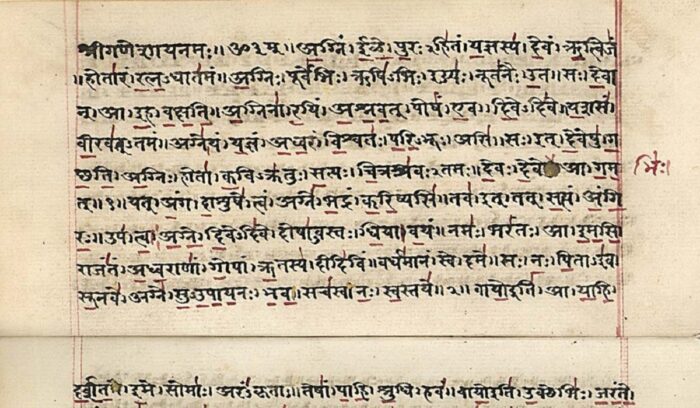
The Rigveda is one of the four canonical sacred texts of Hinduism known as the Vedas. It is one of the oldest extant texts in any Indo-European language.
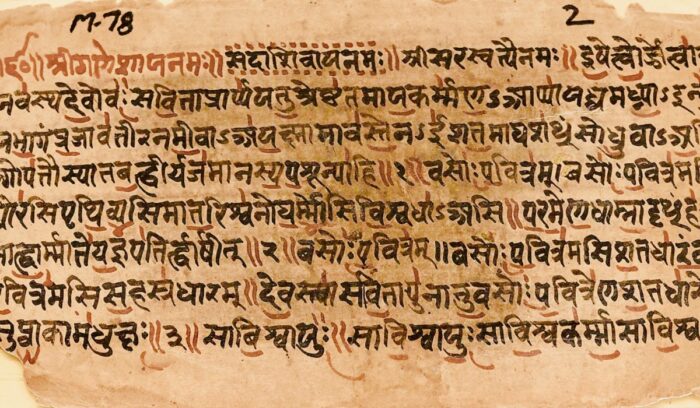
The Yajurveda is the Veda primarily of prose mantras for worship rituals. An ancient Vedic Sanskrit text, it is a compilation of ritual offering formulas.
Black pepper is native to Kerala in Southwestern India and is extensively cultivated there and elsewhere in tropica regions.
At least 130 million domestic water buffalo exist, and more people depend on them than on any other domestic animal.
The Indus Valley Civilisation was a Bronze Age civilisation in South Asia, lasting from 3300 B.C.E. to 1300 B.C.E. Along with ancient Egypt and Mesopotamia it was one of three early civilisations of West- and South Asia.