
The Constitution of India becomes the supreme law of India
The document lays down the framework demarcating fundamental political code, structure, procedures, powers, rights, principles, and duties.

The document lays down the framework demarcating fundamental political code, structure, procedures, powers, rights, principles, and duties.
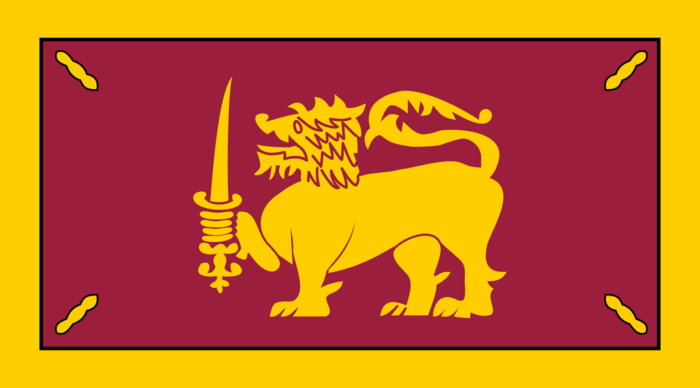
Following the Second World War, public pressure for independence increased in the British-ruled Colony of Ceylon, now known as Sri Lanka. Independence was formally granted under the Ceylon Independence Act 1947 and full independence was finally achieved independence on 4 February 1948, with an amended constitution taking effect on the same date.

The long-awaited agreement ended 200 years of British rule and was hailed by Indian independence leader Mohandas Gandhi as “the noblest act of the British nation.”

The twenty four day march lasted from 12 March 1930 to 5 April 1930 as a direct action campaign of tax resistance and nonviolent protest against the British salt monopoly.

Ugyen Wangchuck was the first Druk Gyalpo (King of Bhutan) from 1907–1926. In his lifetime he made great efforts to unite the country and gain the trust of the people.

The Bengali Renaissance was a cultural, social, intellectual and artistic movement in the eastern part of the Indian subcontinent during the period of the British Indian Empire, from the nineteenth century to the early twentieth century dominated by Bengalis.

Founded by King Prithvi Narayan Shah, a Gorkhali monarch of Rajput origin from medieval India,[6] it existed for 240 years until the abolition of the Nepalese monarchy in 2008.

The Taj Mahal complex is believed to have been completed in its entirety in 1653 at a cost estimated at the time to be around 32 million rupees, which in 2015 would be approximately 52.8 billion rupees (U.S. $827 million).

Punakha was the capital of Bhutan and the seat of government until 1955, when the capital was moved to Thimphu.

The Kingdom of Polonnaruwa was the Sinhalese kingdom from which Sri Lankan kings ruled the island from the 11th century until 1310 CE.