Europe

Fur coats

Norway permanently closes all fur farms

Once home to nearly 300 fur farms, the Scandinavian country has now phased out the industry entirely, with the last farmers shutting down operations ahead of a February 2025 deadline. The final decision to ban fur farming was made in 2018, with a phase-out period designed to help farmers transition to other livelihoods. Now, the country has officially made good on its promise, joining a growing list of nations that have decided fur farming belongs in the past.

Illustration of the concept of nuclear fusion

France runs fusion reactor for record 22 minutes

Achieving the dream of commercial fusion power is the Holy Grail of engineering and has been for 80 years. With a single gram of hydrogen isotopes yielding the energy equivalent of 11 tonnes of coal, a practical fusion reactor would hold the promise of unlimited, clean energy for humanity until the end of time. France has upped the ante in the quest for fusion power by maintaining a plasma reaction for over 22 minutes – 25% longer than the previous record set by China in January 2025.

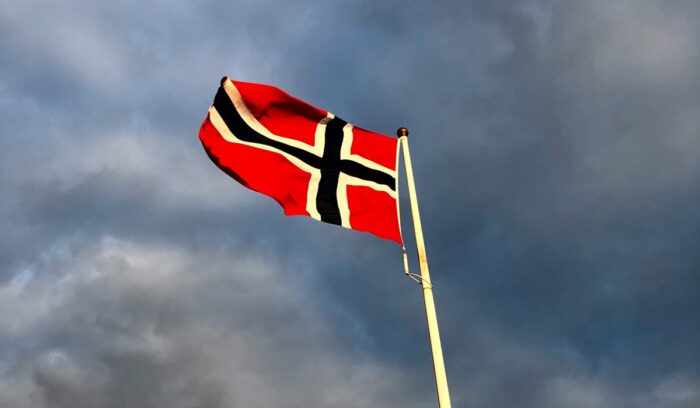
Norwegian flag|Norway fjord

Norway is set to become the first country to fully transition to electric vehicles

Despite its vast oil and gas reserves, the Nordic country has long been recognized as a global leader in sustainable transportation. Its EV sales have increased from less than 1% of total auto sales in 2010 to a whopping 88.9% last year — and this trend doesn’t show any sign of slowing. Data published by the Norwegian Public Roads Administration found EVs accounted for more than 96% of new cars sold in the first few weeks of this year. It puts Norway within touching distance of going fully electric — realizing a non-binding goal that was first established by lawmakers back in 2017.

Empty office desk and chairs

Two hundred U.K. companies sign up for permanent four-day working week

Two hundred U.K. companies have signed up for a permanent four-day working week for all their employees with no loss of pay, in the latest landmark in the campaign to reinvent Britain’s working week. Together, the companies employ more than 5,000 people, with charities, marketing, and technology firms among the best-represented. Supporters say the four-day week is a useful way of attracting and retaining employees while improving productivity by creating the same output over fewer hours and fostering a more fulfilled, happy, and engaged workforce.

Dominique Pelicot sentenced to 20 years in prison in historic French rape trial

A French judge has found the former husband of Gisèle Pelicot, who admitted to drugging and raping her repeatedly over the course of almost a decade and inviting dozens of other men to assault her as well, guilty of aggravated rape. Forty-nine men whom Dominique Pelicot brought into his home to assault his wife were also convicted as part of the same trial. Over the course of the trial, Gisèle Pelicot was praised for her courage and became a symbol of the fight against sexual violence in France and around the world.

Cargo ship from above

Finland becomes world’s first country to ban cargo ships from dumping wastewater

Ship sewage discharged into the Baltic Sea contains large amounts of fecal bacteria and solid waste. Moreover, it is nutrient-rich, exacerbating eutrophication and causing toxic algal blooms in the summer months. Passenger ships in Finnish waters have long been prohibited from dumping this sewage into the sea, instead sending it to on-shore wastewater facilities. But now cargo vessels will be held to the same standard. The new law, set to take effect in July, will make Finland the world’s first country to implement such comprehensive wastewater regulations.

Good news for British climate action

Renewable power set to overtake fossil fuels in the U.K. this year for the first time

While particularly windy periods have meant certain days in the last few years have been dominated by renewable power as turbines lit up the grid, this is the first time through an entire calendar year that renewable energy will be greater than power generated from burning oil, gas and coal. The shift is driven largely by a decline in production from coal, gas, and oil, as well as growing wind, solar, and biomass power, according to think tank Ember.

sidharth bhatia QstzxTWnXY unsplash scaled e

77% of universities have now pledged to divest from fossil fuels

115 U.K. universities have now pledged to exclude fossil fuel companies from their investment portfolios, following Birmingham City University, Glasgow School of Art, Royal Northern College of Music, and the University of Bradford all incorporating fossil fuel industry exclusions into their Ethical Investment Policies. The divested universities represent 77% of the U.K. Higher Education sector and more than $22 billion USD worth of endowments.

Model lungs

Doctors hail first breakthrough in asthma and COPD treatment in 50 years

A trial from King’s College London found offering patients a new injection was more effective than the current care of steroid tablets, and cuts the need for further treatment by 30%. The results, published in the Lancet Respiratory Medicine journal, could be transformative for millions of people with asthma and COPD around the world. Lead investigator Professor Mona Bafadhel said: “This could be a gamechanger for people with asthma and COPD. Treatment for asthma and COPD exacerbations have not changed in 50 years, despite causing 3.8 million deaths worldwide a year combined.”

Coastal farmland in Denmark

Denmark to plant one billion trees and return 15% of its land to nature

On farms in Denmark that grow crops like hay for animal feed, the government will soon pay farmers to turn some of their land into forests instead. In other areas, farm fields will revert to peatlands. In total, around 10% of the country will be restored to nature. The plan goes farther than any other country has so far to tackle emissions from the food chain, which is responsible for around a quarter of the world’s total carbon footprint.