East Asia

Fur coats

Chinese fast-fashion giant Shein bans fur and wild-animal skins across its online marketplace

Shein’s updated ban covers any items made from the skins or feathers of all animals considered to be “exotic”, including ostrich feathers, alligators, and snakes. The decision comes after PETA noticed several third-party vendors offering real fur products and accessories made from exotic animal skins on Shein’s marketplace platform in 2024. Shein previously maintained a no-fur policy for its in-house brands; however, this policy did not extend to third-party sellers operating on its marketplace platform.
Solar farm

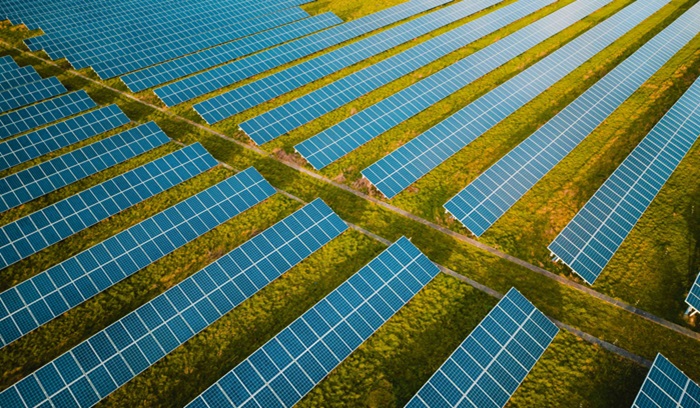
Renewable energy now handles 40% of global electricity needs

According to a new report from U.K. think tank Ember, clean energy accounted for 40.9% of electricity produced worldwide in 2024. The push past the 40% mark was fueled by an unprecedented growth in solar, significant contributions from wind, a recovery in hydropower, and a small rise in nuclear power. China and the E.U. demonstrated the most remarkable increases in clean electricity generation, meeting 81% and 71% of their new electricity demand from renewables in 2024, respectively.

Solar farm and wind turbines on sunny day

Renewables account for 92% of new power capacity worldwide in 2024

Countries added a record amount of renewable power in 2024, according to an analysis from the International Renewable Energy Agency. The analysis found that solar is by far the fastest-growing form of renewable power, amounting to 77% of new capacity, with wind in a distant second at 19%. Continuing its clean-energy dominance, China installed more renewable power than all other countries combined last year. Still, growth is not on pace to meet a global goal to triple renewable capacity by the end of this decade.

​Korean scientists develop technique that detects nearly 100% of bacterial infections in under 3 hours​

Scientists at the Ulsan National Institute of Science & Technology (UNIST) in South Korea have made a major breakthrough in the accuracy and speed at which often deadly pathogen infections can be identified and treated. In many cases, this accelerated process can save lives. The new technique, known as fluorescence in situ hybridization (FISH), detected seven species of bacteria that commonly infect humans. It proved to be more than 99% accurate for all but one – a pathogen that infects skin tissue – which had a still-impressive 96.3% success rate.

Battery illustration

Chinese researchers develop new battery recycling process that recovers 99.99% of lithium

The groundbreaking method, developed by researchers from Central South University, Guizhou Normal University, and the National Engineering Research Center of Advanced Energy Storage Materials, employs a unique ‘battery effect’ mechanism. The process achieves remarkable recovery rates: 99.99% of lithium, 96.8% of nickel, 92.35% of cobalt, and 90.59% of manganese, all within just 15 minutes. Unlike traditional methods, this approach avoids harsh chemicals and minimizes environmental harm, generating effluents suitable for use as fertilizer.

Indonesian children smiling

Nine Asian nations have cut child mortality by more than half since 2000

Child mortality in Asia has fallen sharply, especially in Afghanistan, Bangladesh, Cambodia, China, India, Indonesia, Laos, Myanmar, and Nepal, which have all seen a decline of at least 50% since 2000. This progress amounts to millions more children surviving through the crucial early years of life. Particularly noteworthy, India’s child mortality fell from 9% to 3% and China’s from 4% to just 1%. These huge strides have been made possible by improved nutrition, clean water, sanitation, vaccinations, and poverty reduction.

Illustration of the concept of nuclear fusion

China sets new fusion endurance record of over a thousand seconds

Fusion power is widely thought of as the holy grail of renewable, climate-friendly energy. Now, we are one step closer to realizing practical fusion power for the masses. The Experimental Advanced Superconducting Tokamak reactor in China’s Anhui Province has set a new record with a 1,066-second sustained fusion reaction. The new record builds on the previous record of 403 seconds set by EAST in 2023. The increase was made possible by a number of upgrades to the experimental system that have doubled the power output while keeping the reaction stable.

Facility releasing air pollution|google

China has reduced sulphur dioxide emissions by more than two-thirds in the last 15 years

China has dramatically reduced local air pollution levels — particularly in its biggest cities — in the last decade. One rapidly declining pollutant is sulphur dioxide (SO2), which generates smog, causes ecologically-damaging acid rain, and is associated with higher rates of lung cancer and other respiratory issues. China has been able to make remarkable gains in curbing S02 emissions by putting emissions limits on coal plants and introducing desulphurization technologies that remove SO2 from smokestacks.

child and autumn leaves

Tokyo to make daycare free for all preschool children

The world’s most populous city plans to make daycare free for all preschool children starting in September, the city governor has announced. The move aims to reduce the financial burden on families by expanding a policy of free daycare for second-born and subsequent children to first-borns as well. While many developed countries are struggling with low birth rates, the problem is particularly acute in Japan where the population has been declining for years.

Pride flag

Japanese court rules marriage equality ban unconstitutional

The Fukuoka High Court of Japan has become the third of Japan’s eight high courts to rule that the government’s policy against same-sex marriage is unconstitutional. High Court Judge Takeshi Okada ruled that civil laws forbidding same-sex marriages violate the nation’s constitution, saying, “There is no longer any reason to not legally recognize marriage between same-sex couples.” However, he noted that any change in national marriage laws must be decided by Japan’s legislature, known as the National Diet.