
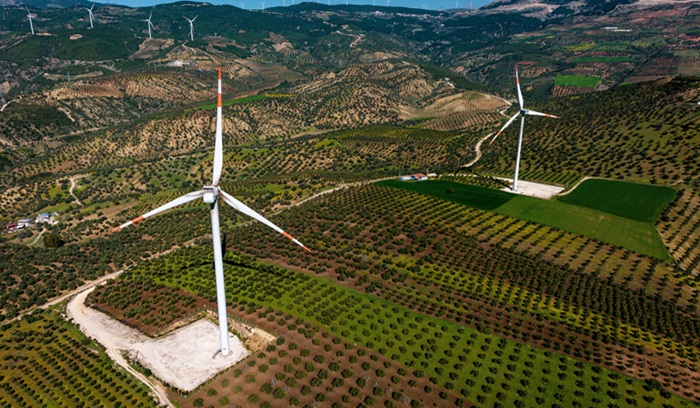
Brazil has reached a new renewable energy record: in August, wind and solar together generated more than one-third of the country’s electricity. Government data analyzed by the think tank Ember showed that these two sources provided about 34% of total supply, delivering nearly 19 terawatt-hours—enough to power millions of homes. This shift represents a big jump from 2024, when they made up only 24% of electricity generation, according to AP News.
Diversified power mix reduces risks
For decades, Brazil has depended on hydropower, which still supplies more than half the country’s electricity. But hydropower is increasingly vulnerable to drought, a problem intensified by climate change. In August, hydro output dropped to its lowest in four years, yet Brazil avoided blackouts thanks to wind and solar. Fossil fuels provided just 14% of electricity, helping limit carbon emissions. The International Energy Agency notes that such diversification makes grids more resilient and less dependent on single resources.
Rapid growth and positive ripple effects
Brazil’s expansion of solar energy is particularly striking. In 2019, solar made up just over 1% of electricity generation; by 2024 it was nearly 10%. Wind also grew from about 9% to 15% in the same period. These investments are paying off: emissions from Brazil’s power sector have fallen by about 31% since 2014, even as electricity demand has risen by 22%. The World Bank highlights Brazil as a leader in showing how renewable growth can support economic development while cutting emissions.
The transition is also boosting jobs and innovation. Solar and wind projects are creating thousands of local positions, particularly in rural areas. The International Renewable Energy Agency estimates that Brazil now ranks among the world’s top employers in renewable energy, further embedding the sector into its long-term development model.
Why this matters
Brazil’s milestone demonstrates that even large, energy-hungry economies can power growth with clean sources. It also shows how countries vulnerable to climate impacts can build resilience by diversifying their energy mix. Perhaps most importantly, Brazil is currently the only G20 nation on track to meet the renewable targets set at COP28.
While challenges remain—such as managing grid stability and ensuring fair pricing—the overall trajectory is clear. Brazil’s success story is not just about technology, but about political will, community support, and sustained investment. As other nations watch closely, Brazil provides evidence that clean energy can scale quickly and reliably, lowering the extinction-level risks posed by climate change and offering a model for a more sustainable world.
More Good News
-

Senegal launches all-electric bus network powered by renewable energy
Senegal has successfully launched a transformative Bus Rapid Transit system in Dakar, featuring a fleet of 121 fully electric buses. As the first network in Sub-Saharan Africa to operate entirely on renewable energy, the initiative utilizes local solar power to transport up to 300,000 passengers daily. By utilizing dedicated lanes, the clean energy fleet cuts cross-city commute times in half while preventing nearly 60,000 tons of carbon dioxide emissions annually. This monumental project dramatically improves urban air quality and establishes Senegal as a pioneering leader in sustainable, green public infrastructure.
-

Yangtze River showing remarkable ecological recovery following fishing ban
China’s Yangtze River is experiencing a remarkable ecological revival five years into a sweeping ten-year commercial fishing ban. Recent surveys reveal significant increases in overall fish biomass and the heartening return of critically endangered species in the world’s fifth largest river. Furthermore, thousands of former commercial fishers have been successfully transitioned into new roles as official river guardians. This massive conservation effort offers a hopeful, replicable model for global freshwater restoration.
-

Rob Jetten becomes The Netherland’s first openly gay prime minister
In a historic victory for representation and progressive politics, Rob Jetten has been sworn in as the first openly gay Prime Minister of the Netherlands. At 38 years old, the centrist Democrats 66 leader is also the youngest head of government in Dutch history. Jetten successfully formed a minority coalition government following a tense election that defeated far-right populist opponents. His platform prioritizes climate investment, economic fairness, and strong international collaboration. Jetten’s premiership powerfully reaffirms the Netherlands’ global legacy as a pioneer of LGBTQ+ equality and inclusive, cooperative democratic leadership.
-

Millions of New York City workers gain additional time off through new law
Millions of workers in New York City are benefiting from a major expansion of the Protected Time Off Law, which officially took effect in late February 2026. The progressive legislation grants employees an additional 32 hours of unpaid, protected leave that is available immediately upon hire or at the start of the calendar year. This ensures workers do not have to wait to accrue hours before addressing sudden medical emergencies or family crises. The law also vastly expands permitted uses to include mental health care, public disaster recovery, and caring for disabled loved ones.
-

Malaysia bans electronic waste imports to protect the environment and public health
In a monumental victory for public health and environmental justice, Malaysia has enacted an immediate and absolute ban on the importation of electronic waste. By removing regulatory loopholes and launching a strict enforcement campaign, the nation is successfully preventing toxic heavy metals from polluting its soil and waterways. Authorities have already intercepted hundreds of thousands of kilograms of illegal e-waste at major ports, vowing to return the hazardous materials to their countries of origin. This decisive action establishes Malaysia as a leading force in Southeast Asia’s growing movement to reject global waste and prioritize ecological sustainability.