
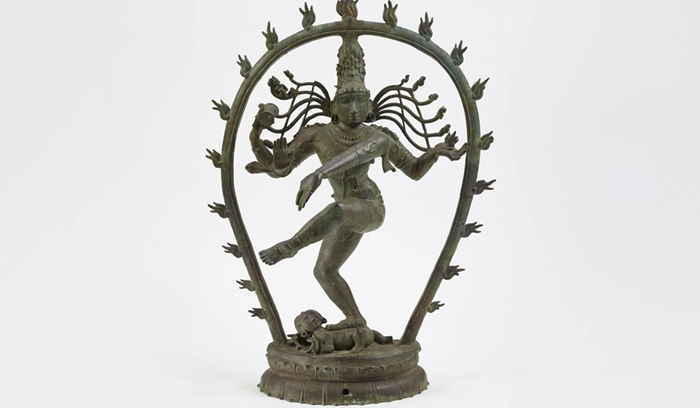
The Smithsonian National Museum of Asian Art has announced a major restitution agreement to return three ancient bronze sculptures to the Government of India. This decision is the direct result of a rigorous internal provenance review initiated by the museum to investigate the origins of its South Asian collection. The collaborative effort highlights a growing, positive trend among global institutions to correct historical wrongs and prioritize ethical stewardship over retaining looted artifacts.
Uncovering the Artifacts’ True Origins
The three returned sculptures represent some of the finest surviving examples of South Indian bronze casting techniques from the medieval era. They include a tenth-century Shiva Nataraja, a twelfth-century Somaskanda, and a sixteenth-century depiction of the poet-saint Sundarar with his consort Paravai. To uncover the true history of these sacred objects, museum researchers collaborated with the French Institute of Pondicherry to comb through extensive photographic archives.
Through this meticulous research, the team found photographic evidence proving all three bronzes were still located inside active temples in the southern Indian state of Tamil Nadu between 1956 and 1959. For instance, the Shiva Nataraja was photographed at the Sri Bhava Aushadesvara Temple in 1957 before eventually surfacing on the New York art market decades later. The Archaeological Survey of India subsequently reviewed these archival findings and confirmed that the artifacts had been exported in direct violation of Indian law.
The investigation shed light on the deceptive practices used by twentieth-century art dealers to move stolen artifacts into prestigious collections. The museum discovered that the Doris Wiener Gallery, from which it purchased the Shiva Nataraja in 2002, had provided completely falsified documentation to facilitate the sale. The other two bronzes had entered the museum collection earlier in 1987 as part of a massive one-thousand-object gift from a private collector.
Advancing the Decolonization of Museums
This restitution is part of a much larger, global movement toward decolonizing museum spaces. For centuries, Western institutions operated under an imperial mindset that justified extracting and hoarding the cultural heritage of other nations. By voluntarily returning these sacred bronzes, the Smithsonian is actively working to dismantle these deeply rooted historical power dynamics.
The return acknowledges that true authority over these artifacts belongs to their communities of origin rather than foreign curators. It represents a vital shift away from the legacy of the traditional encyclopedic museum, which frequently prioritized Western access over local cultural rights. This proactive approach to repatriation helps heal historical wounds and establishes a more equitable, respectful relationship between global institutions and formerly colonized nations.
A Unique Cross-Cultural Partnership
By publicly acknowledging these problematic acquisition histories, the Smithsonian is setting a powerful precedent for transparency in the museum sector. The institution is moving away from the secretive practices of the past and embracing a model of open, honest scholarship. This shift is empowering nations like India to reclaim their cultural heritage through mutual legal assistance and shared historical evidence.
In a remarkable gesture of goodwill, the Indian government has agreed to place the Shiva Nataraja back on long-term loan to the Smithsonian. This unique arrangement allows the Washington institution to keep the masterpiece on public display while legally acknowledging India’s rightful ownership. The museum will use this opportunity to educate its twenty to thirty million annual visitors about the complex history of art looting and restitution.
The sculpture will be featured in an ongoing exhibition with updated signage that transparently explains how it was removed from its temple and eventually returned. The Somaskanda and Saint Sundarar figures will be formally handed over to the Indian embassy to make their journey back to Tamil Nadu. Museum officials and heritage advocates alike have praised this outcome as a major milestone in international cultural recovery.
A Blueprint for Future Restitutions
This successful repatriation provides a workable blueprint for other museums grappling with contested artifacts in their collections. The reliance on clear archival photography demonstrates that with sufficient dedication, institutions can successfully trace the origins of undocumented antiquities. Volunteer organizations and heritage recovery groups hope this high-profile case will encourage other auction houses and galleries to scrutinize their own inventories.
The return of these bronzes celebrates a deep respect for the sacred and cultural significance of these objects to their communities of origin. They were originally crafted as living deities meant to be carried in vibrant temple processions, not static displays in foreign galleries. Bringing them home represents a profound restoration of cultural identity and a triumph of collaborative, modern justice.
More Good News
-
U.S.’s Smithsonian Institution to return stolen medieval sculptures to India
The Smithsonian National Museum of Asian Art is officially returning three ancient bronze sculptures to India after an internal investigation confirmed they were illegally removed from Tamil Nadu temples in the mid-twentieth century. In a unique collaborative agreement, the Indian government will allow one returned sculpture, a tenth-century Shiva Nataraja, to remain at the Washington museum on a long-term loan for educational display. This arrangement highlights a growing international commitment to decolonizing museum spaces, prioritizing transparent provenance research, and fostering cross-cultural cooperation to correct historical wrongs.
-

Sierra Leone opens its first-ever NICU in historic milestone for maternal health
In a historic milestone for global health, Sierra Leone has opened its first-ever neonatal intensive care unit (NICU) at the new Maternal Center of Excellence in Kono District. This state-of-the-art facility, built by Partners In Health and the local government, was largely funded by the “Nerdfighteria” community led by Hank and John Green, who raised over $50 million. The center aims to drastically reduce maternal and infant mortality by providing advanced care, including piped oxygen and surgical suites, while serving as a teaching hospital for the next generation of local clinicians.
-

Indonesia bans elephant riding in landmark welfare move
Following years of campaigning by animal welfare organizations, Indonesia has officially banned elephant riding at all tourism and conservation facilities. This landmark directive from the Ministry of Environment and Forestry ends a cruel practice that relies on brutal training and causes long-term harm to endangered elephants. Facilities must now transition to ethical, observation-based tourism models. This major policy shift prioritizes animal welfare over entertainment, setting a powerful example for responsible wildlife tourism across Southeast Asia.
-

Wild bison return to Illinois prairie after nearly 200 years
In a historic moment for conservation, wild bison have returned to the Illinois prairie for the first time in nearly two centuries. The Nature Conservancy has successfully reintroduced a genetically pure herd to the Nachusa Grasslands, marking the first time wild bison have roamed east of the Mississippi since the 1830s. This ecological milestone aims to restore the health of the tallgrass prairie, as the bison’s natural grazing habits boost biodiversity and support other native species. The project offers a powerful model for rewilding and connecting communities with their natural heritage.
-

Electric car sales outpace gas-powered cars in the E.U. for the first time
In a historic shift for the automotive industry, fully electric vehicles (EVs) have outsold petrol cars in the European Union for the first time. Data from the European Automobile Manufacturers Association shows that EVs captured 23.6 percent of the market in December 2025, surpassing petrol registrations. This milestone confirms that the transition to zero-emission transport is accelerating rapidly, driven by strong climate policies, falling costs, and growing consumer confidence. The achievement marks the beginning of the end for fossil fuel dominance on European roads.