
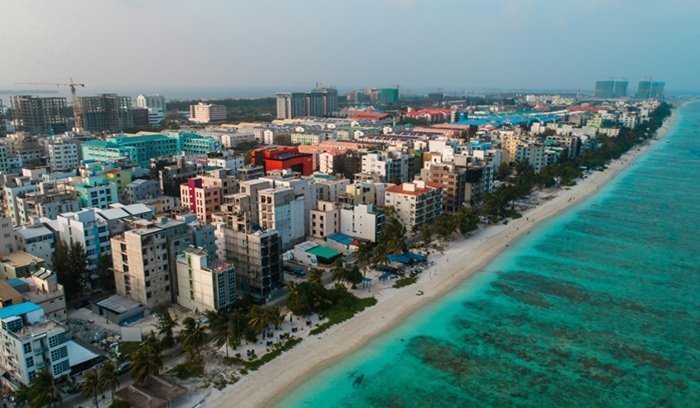
The Maldives has reached a monumental public health milestone, becoming the first country to eliminate mother-to-child transmission (EMTCT) of three major diseases. The World Health Organization (WHO) verified the nation as free of EMTCT for HIV, syphilis, and Hepatitis B (HBV). This success is a powerful demonstration of focused national healthcare investment and universal access to preventative care. This achievement secures a healthier future for entire generations of children.
The successful elimination of these three diseases sets a new standard for maternal and child health initiatives globally. The outcome proves that the elimination of complex infections is entirely achievable with the right strategy.
The Power of Integrated Public Health
The success is rooted in the Maldives’ commitment to universal healthcare coverage. The nation integrated screening and treatment for all three diseases into its standard antenatal care protocols. This comprehensive, integrated approach ensures that every pregnant woman receives the necessary testing and treatment to protect her child. Maintaining high rates of participation in these services was a critical factor in achieving elimination.
The WHO requires countries to maintain infection rates below specific thresholds for validation. The Maldives achieved an HIV mother-to-child transmission rate below 2% and a syphilis rate below 5 per 1,000 live births. Furthermore, the country successfully ensured that over 90% of newborns received the Hepatitis B vaccine at birth. This consistent performance across multiple health metrics highlights the strength of the public health system. You can read more about the WHO’s criteria for validating elimination status here.
A Victory for Equity and Access
The Maldives’ victory is a triumph for equity and access in healthcare delivery. The country’s dispersed island geography presents immense logistical challenges for delivering universal services. However, the national government prioritized making prenatal care, testing, and medication accessible to every citizen, regardless of location. This focused effort ensured that marginalized and hard-to-reach populations were fully included.
The successful EMTCT eliminates a major source of long-term suffering and economic strain. By preventing new infections, the Maldives has secured a massive health dividend for its society. This commitment to equitable access sets an inspirational model for other small island developing states.
A Model for Global Disease Elimination
This triple elimination is a significant contribution to global health targets. It accelerates momentum toward the UN Sustainable Development Goal (SDG) 3. That goal aims to end the epidemics of AIDS, tuberculosis, and malaria by 2030. The Maldives’ success provides a practical, working model for integrated disease elimination. It shows that tackling multiple infections simultaneously is highly efficient.
The WHO and partner organizations are now actively studying the Maldives’ strategy. They are seeking to replicate this successful approach in other countries facing similar epidemiological challenges. The Maldives’ experience provides concrete proof that ambitious elimination goals are not just aspirational but fully achievable. The Joint United Nations Programme on HIV/AIDS (UNAIDS) has recognized this achievement as a major step toward global HIV elimination.
Securing the Health Infrastructure
The final years of the eradication campaign secured a lasting legacy of strong public health infrastructure. The intensive effort required building sophisticated disease surveillance networks and local laboratory capacity across vulnerable regions. These systems, developed specifically to track and contain infections, now form the backbone of modern public health systems in the Maldives.
This improved infrastructure enhances preparedness for future health threats. It ensures that local communities and national governments have the tools and training to rapidly detect and respond to any emerging pathogens. The successful deployment of public health programs also strengthened primary care systems by bringing health services directly to remote populations. The Ministry of Health of the Maldives continues to invest in maternal and child health initiatives. The UN Sustainable Development Goals (SDGs) on Health Targets highlight the global significance of this achievement.
Resources
- World Health Organization (WHO) on EMTCT Validation Criteria
- Joint United Nations Programme on HIV/AIDS (UNAIDS) on Maldives Elimination Status
- Ministry of Health of the Maldives on Public Health Initiatives
- UN Sustainable Development Goals (SDGs) Global Health Targets
More Good News
-

Senegal launches all-electric bus network powered by renewable energy
Senegal has successfully launched a transformative Bus Rapid Transit system in Dakar, featuring a fleet of 121 fully electric buses. As the first network in Sub-Saharan Africa to operate entirely on renewable energy, the initiative utilizes local solar power to transport up to 300,000 passengers daily. By utilizing dedicated lanes, the clean energy fleet cuts cross-city commute times in half while preventing nearly 60,000 tons of carbon dioxide emissions annually. This monumental project dramatically improves urban air quality and establishes Senegal as a pioneering leader in sustainable, green public infrastructure.
-

Yangtze River showing remarkable ecological recovery following fishing ban
China’s Yangtze River is experiencing a remarkable ecological revival five years into a sweeping ten-year commercial fishing ban. Recent surveys reveal significant increases in overall fish biomass and the heartening return of critically endangered species in the world’s fifth largest river. Furthermore, thousands of former commercial fishers have been successfully transitioned into new roles as official river guardians. This massive conservation effort offers a hopeful, replicable model for global freshwater restoration.
-

Rob Jetten becomes The Netherland’s first openly gay prime minister
In a historic victory for representation and progressive politics, Rob Jetten has been sworn in as the first openly gay Prime Minister of the Netherlands. At 38 years old, the centrist Democrats 66 leader is also the youngest head of government in Dutch history. Jetten successfully formed a minority coalition government following a tense election that defeated far-right populist opponents. His platform prioritizes climate investment, economic fairness, and strong international collaboration. Jetten’s premiership powerfully reaffirms the Netherlands’ global legacy as a pioneer of LGBTQ+ equality and inclusive, cooperative democratic leadership.
-

Millions of New York City workers gain additional time off through new law
Millions of workers in New York City are benefiting from a major expansion of the Protected Time Off Law, which officially took effect in late February 2026. The progressive legislation grants employees an additional 32 hours of unpaid, protected leave that is available immediately upon hire or at the start of the calendar year. This ensures workers do not have to wait to accrue hours before addressing sudden medical emergencies or family crises. The law also vastly expands permitted uses to include mental health care, public disaster recovery, and caring for disabled loved ones.
-

Malaysia bans electronic waste imports to protect the environment and public health
In a monumental victory for public health and environmental justice, Malaysia has enacted an immediate and absolute ban on the importation of electronic waste. By removing regulatory loopholes and launching a strict enforcement campaign, the nation is successfully preventing toxic heavy metals from polluting its soil and waterways. Authorities have already intercepted hundreds of thousands of kilograms of illegal e-waste at major ports, vowing to return the hazardous materials to their countries of origin. This decisive action establishes Malaysia as a leading force in Southeast Asia’s growing movement to reject global waste and prioritize ecological sustainability.