
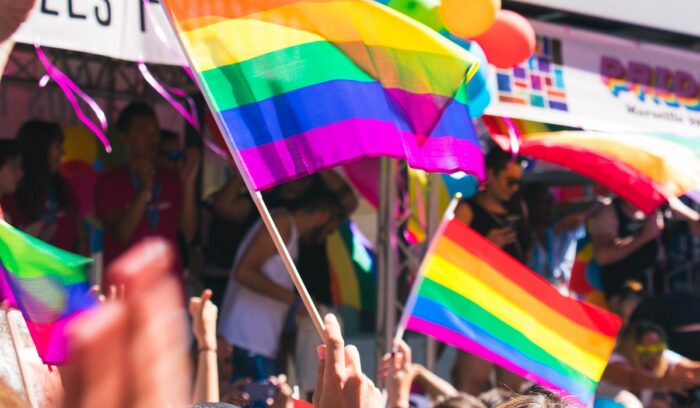
In a historic decision for LGBTQ+ rights, the Supreme Court of the Philippines has ruled that same-sex couples can be legally recognized as co-owners of property. This landmark judgment, released in February 2026, marks the first time the country’s highest court has applied specific provisions of the Family Code to same-sex unions. It is a major victory for equality in a nation where same-sex marriage is not yet legal.
The ruling establishes a crucial legal precedent. It confirms that the absence of a marriage law does not strip same-sex couples of their property rights. This decision offers immediate financial security and legal recourse to thousands of couples who have built lives together.
Expanding the Definition of Co-Ownership
The case centered on a dispute between two women who had purchased a home together but later separated. The court applied Article 148 of the Family Code, which governs property relations for couples who cannot legally marry. By interpreting this article to include same-sex partners, the court affirmed that contributions to a shared life—whether monetary or through caregiving—must be legally recognized.
Senior Associate Justice Marvic Leonen emphasized that failing to apply this law would render legitimate intimate relationships “legally invisible.” This interpretation is a significant move toward inclusivity within the existing legal framework. It ensures that the law adapts to the reality of modern Filipino families. You can read more about the details of the ruling from the Philippine News Agency.
A Step Toward Broader Recognition
While this ruling does not legalize same-sex marriage, it is seen by advocates as a vital stepping stone. By recognizing the economic partnership of same-sex couples, the court has validated the legitimacy of these relationships. This judicial acknowledgment builds momentum for further legislative action.
The court explicitly stated that Congress must address the rights of same-sex couples more comprehensively. This call to action places pressure on lawmakers to pass bills that would provide full civil recognition. The ruling serves as a moral and legal foundation for future advocacy. The LGBTQ+ advocacy group Bahaghari welcomed the decision as a breakthrough for civil rights.
Financial Security and Justice
The immediate impact of this decision is the protection of financial assets for LGBTQ+ individuals. Previously, partners in same-sex relationships had little legal standing to claim a share of jointly acquired property if the relationship ended. This left many vulnerable to financial exploitation or loss.
Now, partners can prove co-ownership through evidence of contribution, such as receipts or signed agreements. This legal clarity reduces the risk of lengthy and costly disputes. It provides a sense of security that encourages couples to invest in their shared future without fear.
A Beacon for Southeast Asia
The Philippines’ decision stands out in a region where progress on LGBTQ+ rights has been mixed. As a predominantly Catholic nation, this ruling demonstrates that traditional values and modern human rights can coexist. It offers a hopeful model for other countries in Southeast Asia grappling with similar legal questions.
This victory reinforces the Philippines’ position as a relatively progressive voice on gender issues in the region. It signals that the judiciary is willing to protect the rights of marginalized communities even in the absence of specific legislation. The Human Rights Watch monitors the ongoing struggle for equality in the country. Furthermore, the Supreme Court of the Philippines publishes updates on its gender-responsive justice initiatives.
Resources
- Philippine News Agency on Supreme Court Decision Details
- Inquirer.net on Advocacy Group Reactions
- Human Rights Watch on Philippines Human Rights
- Supreme Court of the Philippines on Gender Corner
More Good News
-

Senegal launches all-electric bus network powered by renewable energy
Senegal has successfully launched a transformative Bus Rapid Transit system in Dakar, featuring a fleet of 121 fully electric buses. As the first network in Sub-Saharan Africa to operate entirely on renewable energy, the initiative utilizes local solar power to transport up to 300,000 passengers daily. By utilizing dedicated lanes, the clean energy fleet cuts cross-city commute times in half while preventing nearly 60,000 tons of carbon dioxide emissions annually. This monumental project dramatically improves urban air quality and establishes Senegal as a pioneering leader in sustainable, green public infrastructure.
-

Yangtze River showing remarkable ecological recovery following fishing ban
China’s Yangtze River is experiencing a remarkable ecological revival five years into a sweeping ten-year commercial fishing ban. Recent surveys reveal significant increases in overall fish biomass and the heartening return of critically endangered species in the world’s fifth largest river. Furthermore, thousands of former commercial fishers have been successfully transitioned into new roles as official river guardians. This massive conservation effort offers a hopeful, replicable model for global freshwater restoration.
-

Rob Jetten becomes The Netherland’s first openly gay prime minister
In a historic victory for representation and progressive politics, Rob Jetten has been sworn in as the first openly gay Prime Minister of the Netherlands. At 38 years old, the centrist Democrats 66 leader is also the youngest head of government in Dutch history. Jetten successfully formed a minority coalition government following a tense election that defeated far-right populist opponents. His platform prioritizes climate investment, economic fairness, and strong international collaboration. Jetten’s premiership powerfully reaffirms the Netherlands’ global legacy as a pioneer of LGBTQ+ equality and inclusive, cooperative democratic leadership.
-

Millions of New York City workers gain additional time off through new law
Millions of workers in New York City are benefiting from a major expansion of the Protected Time Off Law, which officially took effect in late February 2026. The progressive legislation grants employees an additional 32 hours of unpaid, protected leave that is available immediately upon hire or at the start of the calendar year. This ensures workers do not have to wait to accrue hours before addressing sudden medical emergencies or family crises. The law also vastly expands permitted uses to include mental health care, public disaster recovery, and caring for disabled loved ones.
-

Malaysia bans electronic waste imports to protect the environment and public health
In a monumental victory for public health and environmental justice, Malaysia has enacted an immediate and absolute ban on the importation of electronic waste. By removing regulatory loopholes and launching a strict enforcement campaign, the nation is successfully preventing toxic heavy metals from polluting its soil and waterways. Authorities have already intercepted hundreds of thousands of kilograms of illegal e-waste at major ports, vowing to return the hazardous materials to their countries of origin. This decisive action establishes Malaysia as a leading force in Southeast Asia’s growing movement to reject global waste and prioritize ecological sustainability.