
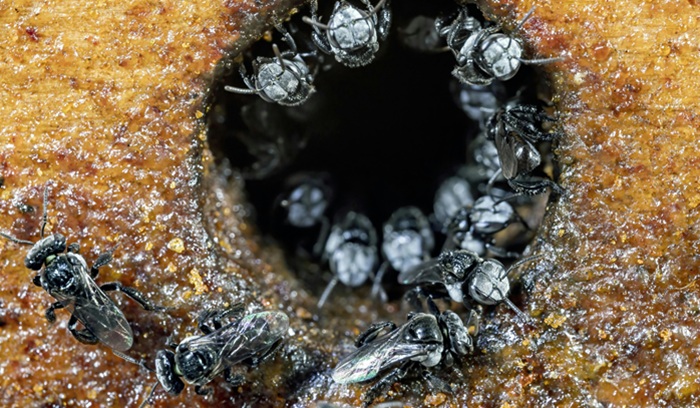
In a world-first for environmental law, two municipalities in the Peruvian Amazon have granted legal rights to native stingless bees. The municipalities of Satipo and Nauta passed landmark ordinances recognizing these insects as subjects of rights. This breakthrough legislation gives the bees the right to exist, flourish, and maintain healthy populations within the rainforest. It represents a paradigm shift in conservation, moving beyond human-centric property laws to a model that respects the intrinsic value of nature.
These ordinances are the first of their kind globally to extend legal personhood specifically to insects. They were driven by a coalition of scientists, lawyers, and Indigenous leaders who recognized the urgent threat facing these vital pollinators.
Protecting the Guardians of the Rainforest
Stingless bees are the planet’s oldest bee species and are critical to the health of the Amazon. They are responsible for pollinating over 80% of the region’s native flora, including essential crops like avocado, coffee, and cacao. Unlike the more common European honeybee, these native species have evolved alongside the rainforest for millions of years. Their decline would have catastrophic cascading effects on the entire ecosystem’s biodiversity.
The new laws aim to protect the bees from a deadly combination of threats. These include deforestation, the indiscriminate use of pesticides, and climate change. Crucially, the ordinances also address the threat posed by invasive Africanized honeybees, which have begun displacing and outcompeting the gentler native species in their own habitats.
A Recognition of Indigenous Knowledge
The legislation is deeply rooted in the cultural and spiritual traditions of the Asháninka and Kukama-Kukamiria peoples. For these Indigenous communities, the stingless bee is more than just an insect; it is a source of traditional medicine and a symbol of their coexistence with the forest. The laws validate this ancestral knowledge, integrating it into the modern legal framework.
By formally recognizing the bees, the municipalities are also honoring the lived experience of Indigenous peoples. Leaders like Apu Cesar Ramos of the Asháninka Communal Reserve have highlighted that the bees hold traditional knowledge passed down through generations. This legal move ensures that Indigenous stewardship is central to future conservation strategies.
A New Legal Framework for Survival
The ordinances establish a clear mandate for the local governments to actively protect the bees. This includes requirements for habitat reforestation and the strict regulation of agrochemicals that harm pollinator populations. Most significantly, the laws allow the bees to be legally represented in court in cases of harm or threat.
This “guardianship” model empowers human representatives to sue on behalf of the bees. It provides a powerful new tool to stop environmentally destructive projects that would otherwise ignore the impact on small organisms. The Earth Law Center played a key role in drafting these frameworks, emphasizing that making nature a rights-bearing subject is essential for its survival.
Inspiring a Global Movement
The success in Satipo and Nauta has already sparked international interest. A global petition calling for these protections to be made nationwide in Peru has gathered hundreds of thousands of signatures. Groups in Bolivia, the Netherlands, and the United States are looking to these ordinances as a blueprint for protecting their own wild bee populations.
This victory demonstrates that local governments can lead the way in solving global environmental crises. It proves that legal innovation, driven by scientific research and Indigenous wisdom, can create tangible protections for the natural world. The International Union for Conservation of Nature (IUCN) has been engaged in the process, recognizing the critical need for data to support these conservation lists. The work of researchers like Rosa Vásquez Espinoza was instrumental in providing the scientific evidence needed to pass these laws.
Resources
- Earth Law Center on Rights of Nature Frameworks
- International Union for Conservation of Nature (IUCN) on Pollinator Conservation
- Amazon Research Internacional on Stingless Bee Research
- Food and Agriculture Organization (FAO) on Indigenous Food Systems
More Good News
-

Senegal launches all-electric bus network powered by renewable energy
Senegal has successfully launched a transformative Bus Rapid Transit system in Dakar, featuring a fleet of 121 fully electric buses. As the first network in Sub-Saharan Africa to operate entirely on renewable energy, the initiative utilizes local solar power to transport up to 300,000 passengers daily. By utilizing dedicated lanes, the clean energy fleet cuts cross-city commute times in half while preventing nearly 60,000 tons of carbon dioxide emissions annually. This monumental project dramatically improves urban air quality and establishes Senegal as a pioneering leader in sustainable, green public infrastructure.
-

Yangtze River showing remarkable ecological recovery following fishing ban
China’s Yangtze River is experiencing a remarkable ecological revival five years into a sweeping ten-year commercial fishing ban. Recent surveys reveal significant increases in overall fish biomass and the heartening return of critically endangered species in the world’s fifth largest river. Furthermore, thousands of former commercial fishers have been successfully transitioned into new roles as official river guardians. This massive conservation effort offers a hopeful, replicable model for global freshwater restoration.
-

Rob Jetten becomes The Netherland’s first openly gay prime minister
In a historic victory for representation and progressive politics, Rob Jetten has been sworn in as the first openly gay Prime Minister of the Netherlands. At 38 years old, the centrist Democrats 66 leader is also the youngest head of government in Dutch history. Jetten successfully formed a minority coalition government following a tense election that defeated far-right populist opponents. His platform prioritizes climate investment, economic fairness, and strong international collaboration. Jetten’s premiership powerfully reaffirms the Netherlands’ global legacy as a pioneer of LGBTQ+ equality and inclusive, cooperative democratic leadership.
-

Millions of New York City workers gain additional time off through new law
Millions of workers in New York City are benefiting from a major expansion of the Protected Time Off Law, which officially took effect in late February 2026. The progressive legislation grants employees an additional 32 hours of unpaid, protected leave that is available immediately upon hire or at the start of the calendar year. This ensures workers do not have to wait to accrue hours before addressing sudden medical emergencies or family crises. The law also vastly expands permitted uses to include mental health care, public disaster recovery, and caring for disabled loved ones.
-

Malaysia bans electronic waste imports to protect the environment and public health
In a monumental victory for public health and environmental justice, Malaysia has enacted an immediate and absolute ban on the importation of electronic waste. By removing regulatory loopholes and launching a strict enforcement campaign, the nation is successfully preventing toxic heavy metals from polluting its soil and waterways. Authorities have already intercepted hundreds of thousands of kilograms of illegal e-waste at major ports, vowing to return the hazardous materials to their countries of origin. This decisive action establishes Malaysia as a leading force in Southeast Asia’s growing movement to reject global waste and prioritize ecological sustainability.