
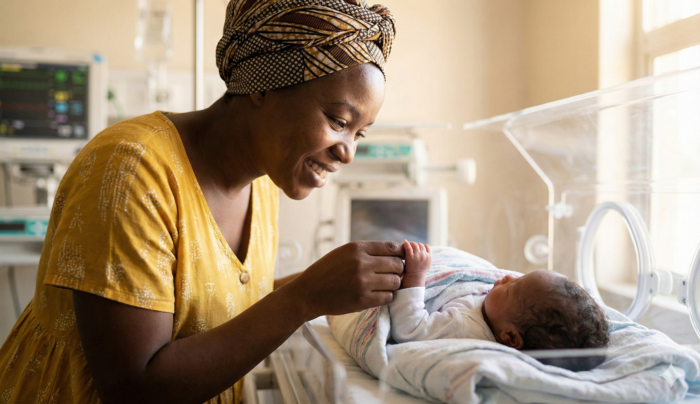
Sierra Leone has achieved a monumental victory for maternal and infant health with the opening of its first-ever dedicated neonatal intensive care unit (NICU). Located within the new Maternal Center of Excellence (MCOE) in Kono District, this facility represents a transformative leap forward for a nation that has historically faced some of the world’s highest maternal and infant mortality rates. The center’s opening on February 14, 2026, was a moment of national celebration, signaling a new era of dignified, high-quality care for mothers and newborns.
The facility is the result of a powerful partnership between the government of Sierra Leone, the non-profit Partners In Health (PIH), and a global community of supporters. It stands as tangible proof that radical improvements in healthcare are possible, even in the most resource-constrained settings.
A Beacon of Hope in Kono District
The MCOE is a state-of-the-art facility designed to address the critical gaps in Sierra Leone’s healthcare system. It features 120 beds, modern surgical suites, and the country’s first piped medical oxygen system outside the capital, Freetown. This infrastructure is essential for treating complex cases that previously would have required a dangerous, hours-long journey to the capital.
The center’s design prioritizes patient dignity and comfort, with open courtyards and private birthing spaces. This focus on the patient experience helps build trust in the healthcare system, encouraging more women to seek professional care during childbirth. The successful delivery of the first baby—a girl—just moments after opening symbolizes the immediate impact of this investment.
The Power of “Nerdfighteria” and Grassroots Giving
A driving force behind the center’s funding was the “Nerdfighteria” online community, led by authors and creators John and Hank Green. Through their annual “Project for Awesome” charity livestream and sustained advocacy, this community raised over $50 million to support PIH’s work in Sierra Leone. Their grassroots campaign demonstrated the immense power of collective action and small-dollar donations.
This unique partnership between online creators and a global health organization highlights a new model for philanthropy. It proves that engaged communities can directly fund large-scale infrastructure projects that save lives. The Greens’ involvement helped shine a spotlight on the urgent need for maternal health equity.
Training the Next Generation of Healers
Beyond immediate patient care, the MCOE serves as a teaching hospital for the next generation of Sierra Leonean healthcare workers. The facility includes a dedicated training center and dormitories for clinicians. It aims to build a sustainable pipeline of skilled midwives, nurses, and doctors who can provide high-quality care across the country.
This investment in human capital is crucial for the long-term resilience of Sierra Leone’s health system. By training local staff in advanced neonatal and maternal care, the center ensures that expertise remains within the community. This strategy moves beyond aid to empowerment and self-sufficiency. The Partners In Health Sierra Leone website details the training programs and long-term vision.
A Global Model for Health Equity
The opening of the MCOE offers a hopeful blueprint for other nations struggling with high maternal mortality. It demonstrates that with the right partners and a commitment to “staff, stuff, space, and systems,” it is possible to build world-class healthcare infrastructure anywhere. The center is a powerful statement that geography should not determine a mother’s survival.
This achievement reinforces the global goal of ending preventable maternal and child deaths. It serves as a reminder that health care is a human right. The Healthy Newborn Network tracks the progress of newborn health indicators in the region. Furthermore, the UNICEF Sierra Leone office provides context on the broader national strategy for maternal health.
Resources
- Partners In Health on Maternal Center of Excellence
- Good Good Good on Project for Awesome Impact
- Healthy Newborn Network on Sierra Leone Health Data
- UNICEF Sierra Leone on Maternal Health Strategy
More Good News
-
U.S.’s Smithsonian Institution to return stolen medieval sculptures to India
The Smithsonian National Museum of Asian Art is officially returning three ancient bronze sculptures to India after an internal investigation confirmed they were illegally removed from Tamil Nadu temples in the mid-twentieth century. In a unique collaborative agreement, the Indian government will allow one returned sculpture, a tenth-century Shiva Nataraja, to remain at the Washington museum on a long-term loan for educational display. This arrangement highlights a growing international commitment to decolonizing museum spaces, prioritizing transparent provenance research, and fostering cross-cultural cooperation to correct historical wrongs.
-
Sierra Leone opens its first-ever NICU in historic milestone for maternal health
In a historic milestone for global health, Sierra Leone has opened its first-ever neonatal intensive care unit (NICU) at the new Maternal Center of Excellence in Kono District. This state-of-the-art facility, built by Partners In Health and the local government, was largely funded by the “Nerdfighteria” community led by Hank and John Green, who raised over $50 million. The center aims to drastically reduce maternal and infant mortality by providing advanced care, including piped oxygen and surgical suites, while serving as a teaching hospital for the next generation of local clinicians.
-
Indonesia bans elephant riding in landmark welfare move
Following years of campaigning by animal welfare organizations, Indonesia has officially banned elephant riding at all tourism and conservation facilities. This landmark directive from the Ministry of Environment and Forestry ends a cruel practice that relies on brutal training and causes long-term harm to endangered elephants. Facilities must now transition to ethical, observation-based tourism models. This major policy shift prioritizes animal welfare over entertainment, setting a powerful example for responsible wildlife tourism across Southeast Asia.
-
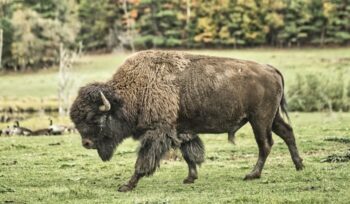
Wild bison return to Illinois prairie after nearly 200 years
In a historic moment for conservation, wild bison have returned to the Illinois prairie for the first time in nearly two centuries. The Nature Conservancy has successfully reintroduced a genetically pure herd to the Nachusa Grasslands, marking the first time wild bison have roamed east of the Mississippi since the 1830s. This ecological milestone aims to restore the health of the tallgrass prairie, as the bison’s natural grazing habits boost biodiversity and support other native species. The project offers a powerful model for rewilding and connecting communities with their natural heritage.
-

Electric car sales outpace gas-powered cars in the E.U. for the first time
In a historic shift for the automotive industry, fully electric vehicles (EVs) have outsold petrol cars in the European Union for the first time. Data from the European Automobile Manufacturers Association shows that EVs captured 23.6 percent of the market in December 2025, surpassing petrol registrations. This milestone confirms that the transition to zero-emission transport is accelerating rapidly, driven by strong climate policies, falling costs, and growing consumer confidence. The achievement marks the beginning of the end for fossil fuel dominance on European roads.