
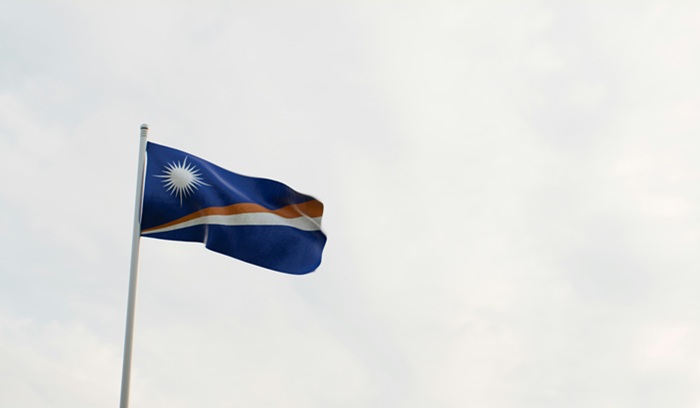
The Republic of the Marshall Islands has officially launched a groundbreaking economic initiative that could reshape social welfare strategies globally. The island nation has introduced the Sovereign (SOV), the world’s first digital legal tender issued by a sovereign government. Crucially, the currency’s algorithmic design includes a built-in mechanism to distribute a Universal Basic Income (UBI) to all eligible citizens. This launch marks the first time a national digital currency has been explicitly engineered to provide a direct, recurring financial dividend to its population.
This move addresses long-standing economic challenges faced by the remote Pacific nation. By leveraging blockchain technology, the government is bypassing traditional banking hurdles to deliver funds directly to residents. The initiative represents a bold experiment in using financial technology to foster social equity and economic resilience.
A New Model for Monetary Sovereignty
The introduction of the SOV allows the Marshall Islands to assert greater independence over its financial system. Historically, the nation has relied on the United States dollar and foreign aid, which limited its economic flexibility. The new digital currency operates alongside the dollar but provides the government with a new tool for domestic value creation.
The SOV is distinct from private cryptocurrencies because it is state-backed and fully compliant with global financial regulations. This legal status provides the stability necessary for everyday use by citizens and local businesses. It transforms the concept of money from a passive medium of exchange into an active tool for social support.
The Mechanics of the UBI Distribution
The hallmark of the SOV system is its pre-programmed monetary policy. The supply of the currency creates new units at a fixed growth rate of 4% per year to prevent hyperinflation while ensuring liquidity. A significant percentage of this new supply is automatically allocated to the UBI fund for distribution to verified citizens.
This system ensures that the wealth generated by the currency’s existence is shared collectively rather than concentrated in the hands of a few. It provides a supplemental income stream that helps families cover essential needs like food, energy, and education. This automatic distribution mechanism reduces the administrative costs typically associated with social welfare programs. The International Monetary Fund has analyzed the implications of digital currencies for small economies.
Addressing Climate Resilience and Inequality
The additional income provided by the SOV is vital for a nation on the front lines of climate change. Rising sea levels and extreme weather events pose an existential threat to the low-lying atolls of the Marshall Islands. The UBI provides households with the financial buffer needed to adapt to these environmental pressures.
By placing resources directly in the hands of citizens, the program empowers local decision-making regarding climate adaptation. It reduces the economic inequality that often exacerbates vulnerability during natural disasters. This approach aligns financial innovation with the urgent need for climate justice. The World Bank tracks how social safety nets improve climate resilience in vulnerable regions.
Digital Identity and Financial Inclusion
To implement the scheme securely, the government has rolled out a robust digital identity system. This technology verifies the identity of recipients to ensure that the UBI is delivered only to eligible citizens. It effectively solves the problem of the “unbanked” population by giving every citizen a digital wallet.
This system connects remote outer islands to the national economy in a way that physical cash never could. It facilitates instant, low-cost transactions between islands, stimulating local commerce. The successful deployment of this technology serves as a case study for other nations struggling with financial inclusion. The United Nations Capital Development Fund outlines the benefits of digital finance for island nations.
A Blueprint for the Future
The Marshall Islands’ experiment is being watched closely by economists and policymakers worldwide. It challenges the traditional assumptions about how central banks and national currencies should operate. By embedding social welfare into the very code of its money, the nation is testing a new social contract for the digital age.
If successful, the SOV could provide a scalable model for other developing nations seeking to harness the digital economy for public good. It demonstrates that small nations can lead the way in global financial innovation. This initiative proves that technology can be harnessed to prioritize human well-being and economic rights. The SOV Foundation provides official documentation on the currency’s white paper and goals.
Resources
- International Monetary Fund on Digital Currencies in Pacific Islands
- World Bank on Social Safety Nets and Climate Change
- United Nations Capital Development Fund on Digital Economies
- SOV Foundation on The Sovereign Currency
More Good News
-

Senegal launches all-electric bus network powered by renewable energy
Senegal has successfully launched a transformative Bus Rapid Transit system in Dakar, featuring a fleet of 121 fully electric buses. As the first network in Sub-Saharan Africa to operate entirely on renewable energy, the initiative utilizes local solar power to transport up to 300,000 passengers daily. By utilizing dedicated lanes, the clean energy fleet cuts cross-city commute times in half while preventing nearly 60,000 tons of carbon dioxide emissions annually. This monumental project dramatically improves urban air quality and establishes Senegal as a pioneering leader in sustainable, green public infrastructure.
-
Yangtze River showing remarkable ecological recovery following fishing ban
China’s Yangtze River is experiencing a remarkable ecological revival five years into a sweeping ten-year commercial fishing ban. Recent surveys reveal significant increases in overall fish biomass and the heartening return of critically endangered species in the world’s fifth largest river. Furthermore, thousands of former commercial fishers have been successfully transitioned into new roles as official river guardians. This massive conservation effort offers a hopeful, replicable model for global freshwater restoration.
-

Rob Jetten becomes The Netherland’s first openly gay prime minister
In a historic victory for representation and progressive politics, Rob Jetten has been sworn in as the first openly gay Prime Minister of the Netherlands. At 38 years old, the centrist Democrats 66 leader is also the youngest head of government in Dutch history. Jetten successfully formed a minority coalition government following a tense election that defeated far-right populist opponents. His platform prioritizes climate investment, economic fairness, and strong international collaboration. Jetten’s premiership powerfully reaffirms the Netherlands’ global legacy as a pioneer of LGBTQ+ equality and inclusive, cooperative democratic leadership.
-

Millions of New York City workers gain additional time off through new law
Millions of workers in New York City are benefiting from a major expansion of the Protected Time Off Law, which officially took effect in late February 2026. The progressive legislation grants employees an additional 32 hours of unpaid, protected leave that is available immediately upon hire or at the start of the calendar year. This ensures workers do not have to wait to accrue hours before addressing sudden medical emergencies or family crises. The law also vastly expands permitted uses to include mental health care, public disaster recovery, and caring for disabled loved ones.
-
Malaysia bans electronic waste imports to protect the environment and public health
In a monumental victory for public health and environmental justice, Malaysia has enacted an immediate and absolute ban on the importation of electronic waste. By removing regulatory loopholes and launching a strict enforcement campaign, the nation is successfully preventing toxic heavy metals from polluting its soil and waterways. Authorities have already intercepted hundreds of thousands of kilograms of illegal e-waste at major ports, vowing to return the hazardous materials to their countries of origin. This decisive action establishes Malaysia as a leading force in Southeast Asia’s growing movement to reject global waste and prioritize ecological sustainability.