
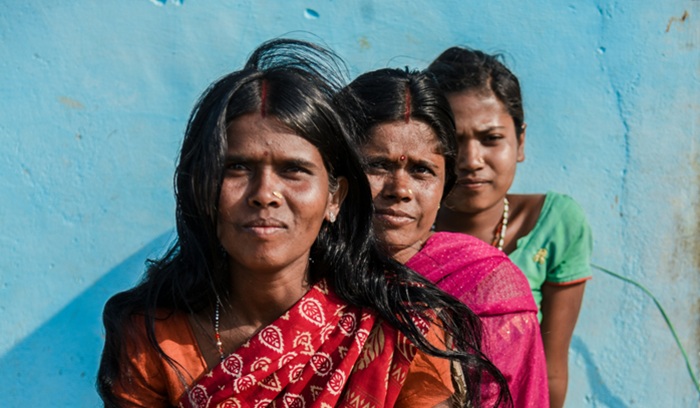
India is witnessing a significant social shift as multiple state governments launch groundbreaking initiatives to provide financial compensation to homemakers. These programs have now expanded to cover over 118 million women across the country, offering direct monthly cash transfers to heads of households. This massive policy innovation recognizes the immense economic value of unpaid domestic labor, which has traditionally been invisible in national accounts.
Participating states now include Tamil Nadu, Karnataka, Madhya Pradesh, West Bengal, Himachal Pradesh, Punjab, and Delhi. By providing a guaranteed income, these governments are empowering millions of women with greater financial independence. This move challenges deep-seated gender norms and sets a new global standard for social welfare.
Economic Empowerment for Millions
The primary positive impact of these schemes is the direct economic empowerment of women. In Tamil Nadu alone, the Kalaignar Magalir Urimai Thogai scheme reaches over 10 million beneficiaries. Similar massive outreach is seen in Karnataka’s Gruha Lakshmi and Madhya Pradesh’s Ladli Behna schemes. This steady income allows women to meet essential household expenses, purchase medicines, and invest in their children’s education without depending entirely on male family members.
Reports indicate that beneficiaries are using these funds to improve their families’ nutrition by purchasing better quality food. This financial autonomy boosts self-esteem and decision-making power within the household. It creates a safety net that protects the most vulnerable families from extreme poverty. You can read more about the specific benefits of these schemes from The Hindu’s report on state planning commission findings.
Validating Unpaid Care Work
These initiatives represent a profound validation of unpaid care work. For generations, the labor of managing a home—cooking, cleaning, and caring for the elderly and children—has gone unrecognized and uncompensated. By assigning a monetary value to this work, state governments are acknowledging its critical role in sustaining the economy and society.
This recognition helps to dismantle the social stigma that often devalues domestic labor. It sends a powerful message that caregiving is work and deserves tangible support. This shift in perspective is essential for achieving broader gender equality. UN Women advocates for policies that recognize and redistribute unpaid care work as a key to women’s economic empowerment.
Boosting Local Economies
The injection of cash directly into the hands of women has a multiplier effect on local economies. Women are more likely to spend their income on goods and services within their immediate communities. This increased consumption stimulates demand for local businesses, from small grocery stores to textile shops.
Furthermore, the financial stability provided by these schemes encourages some women to start small businesses or join self-help groups. Schemes like the Lakhpati Didi initiative complement these direct transfers by offering skills training for entrepreneurship. This holistic approach fosters a vibrant, grassroots economic ecosystem. The Observer Research Foundation analyzes how accounting for care work can transform economic measurement and policy.
A Model for the Global South
India’s state-level experiments with homemaker income are providing a valuable model for the Global South. They demonstrate that large-scale direct benefit transfers are logistically feasible and socially transformative. The use of digital infrastructure to deliver payments directly to bank accounts ensures transparency and reduces leakage.
This success offers a blueprint for other developing nations seeking to improve gender equity and social security. It proves that social protection systems can be designed to specifically target and uplift women. The International Labour Organization provides extensive research on the link between unpaid care work and economic development.
Resources
- The Hindu on Kalaignar Magalir Urimai Thogai Impact
- UN Women on Recognizing Unpaid Work
- Observer Research Foundation on Care Economy
- International Labour Organization (ILO) on Care Work and Employment
More Good News
-

Senegal launches all-electric bus network powered by renewable energy
Senegal has successfully launched a transformative Bus Rapid Transit system in Dakar, featuring a fleet of 121 fully electric buses. As the first network in Sub-Saharan Africa to operate entirely on renewable energy, the initiative utilizes local solar power to transport up to 300,000 passengers daily. By utilizing dedicated lanes, the clean energy fleet cuts cross-city commute times in half while preventing nearly 60,000 tons of carbon dioxide emissions annually. This monumental project dramatically improves urban air quality and establishes Senegal as a pioneering leader in sustainable, green public infrastructure.
-

Yangtze River showing remarkable ecological recovery following fishing ban
China’s Yangtze River is experiencing a remarkable ecological revival five years into a sweeping ten-year commercial fishing ban. Recent surveys reveal significant increases in overall fish biomass and the heartening return of critically endangered species in the world’s fifth largest river. Furthermore, thousands of former commercial fishers have been successfully transitioned into new roles as official river guardians. This massive conservation effort offers a hopeful, replicable model for global freshwater restoration.
-

Rob Jetten becomes The Netherland’s first openly gay prime minister
In a historic victory for representation and progressive politics, Rob Jetten has been sworn in as the first openly gay Prime Minister of the Netherlands. At 38 years old, the centrist Democrats 66 leader is also the youngest head of government in Dutch history. Jetten successfully formed a minority coalition government following a tense election that defeated far-right populist opponents. His platform prioritizes climate investment, economic fairness, and strong international collaboration. Jetten’s premiership powerfully reaffirms the Netherlands’ global legacy as a pioneer of LGBTQ+ equality and inclusive, cooperative democratic leadership.
-

Millions of New York City workers gain additional time off through new law
Millions of workers in New York City are benefiting from a major expansion of the Protected Time Off Law, which officially took effect in late February 2026. The progressive legislation grants employees an additional 32 hours of unpaid, protected leave that is available immediately upon hire or at the start of the calendar year. This ensures workers do not have to wait to accrue hours before addressing sudden medical emergencies or family crises. The law also vastly expands permitted uses to include mental health care, public disaster recovery, and caring for disabled loved ones.
-

Malaysia bans electronic waste imports to protect the environment and public health
In a monumental victory for public health and environmental justice, Malaysia has enacted an immediate and absolute ban on the importation of electronic waste. By removing regulatory loopholes and launching a strict enforcement campaign, the nation is successfully preventing toxic heavy metals from polluting its soil and waterways. Authorities have already intercepted hundreds of thousands of kilograms of illegal e-waste at major ports, vowing to return the hazardous materials to their countries of origin. This decisive action establishes Malaysia as a leading force in Southeast Asia’s growing movement to reject global waste and prioritize ecological sustainability.