
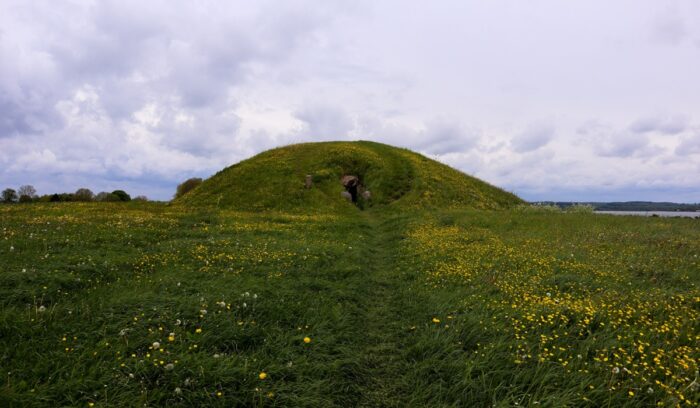
The moment humans began burying their dead marked one of the most profound transitions in our history. This act, traceable to sites like Qafzeh Cave in modern-day Israel as far back as 90,000 B.C.E., was not merely practical. It was the birth of ritual, compassion, and abstract thought. This new practice demonstrated an evolving consciousness that looked beyond immediate survival. It affirmed a deep commitment to social bonds and the value of the individual within the community.
Burial signifies a revolutionary intellectual leap. It requires abstract reasoning: recognizing death as a final, irreversible state and deliberately preparing for a non-material future. This complex ingenuity became a foundation for all later human civilization.
The Birth of Community and Culture
The positive impact of the first human burials on social structures was immense. The organized, deliberate interment of the dead transformed disparate family groups into cohesive, enduring communities. This ritual provided a central, shared experience for processing grief, which strengthened social cohesion and empathy. Burying the dead in a shared space created the first ancestral territories. This physical connection to a place fostered a sense of belonging and territorial unity that was critical for the survival of the group.
The act of burial often involved placing grave goods alongside the deceased. These artifacts—tools, shells, or flowers—suggest a belief in an afterlife or a spiritual existence. This practice provided the basis for complex religious and symbolic thought, marking the origins of shared human culture and narrative. This shift from transient grief to meaningful ritual offered psychological stability to early human societies. You can find more information on the archaeological significance of these sites in this overview of the history of human burial.
A Scientific Achievement of Ingenuity
Executing the first burials was a significant logistical and technological achievement. It required intentional planning, complex coordination, and the use of tools. Early hominins had to select appropriate sites, often caves or shelters, and meticulously dig pits in challenging soil conditions. This demonstrated advanced spatial planning and foresight. The preservation of many of these early sites, such as the Neanderthal burials found in Shanidar Cave, shows a deliberate, caring application of physical effort.
This deliberate effort contrasts sharply with the practices of other primates, whose relationship with death is temporary and lacks ritual. The systematic nature of human burial proves an intellectual mastery of both environment and emotion. This capability for complex planning and cooperative execution laid the groundwork for large-scale engineering and construction projects in later eras.
A Legacy of Empathy and Human Value
The legacy of these early burials is a profound and positive one. It establishes the concept of inherent human value that extends beyond economic utility or physical strength. The act of caring for the dead, even when resources were scarce, affirmed the dignity of every individual, regardless of age or contribution. This foundational empathy is a distinguishing trait of our species.
The continuity of burial practices over tens of thousands of years highlights the powerful, enduring nature of this cultural invention. It is the single longest-lasting ritual in human history. It serves as a continuous reminder of our shared humanity and interconnectedness. Scholars in anthropology and bioarchaeology continue to study these early sites. They continue to gain deep insights into the early spiritual and social lives of our ancestors. The study of these early burials provides crucial evidence for the timing of the cognitive revolution that propelled Homo sapiens forward.
Resources
- American Association of Physical Anthropologists on Early Burial Practices
- The Smithsonian Magazine on Neanderthal and Early Human Ritual
- Archaeology News Network on Qafzeh Cave Discoveries
- Wikipedia on The History of Burial