
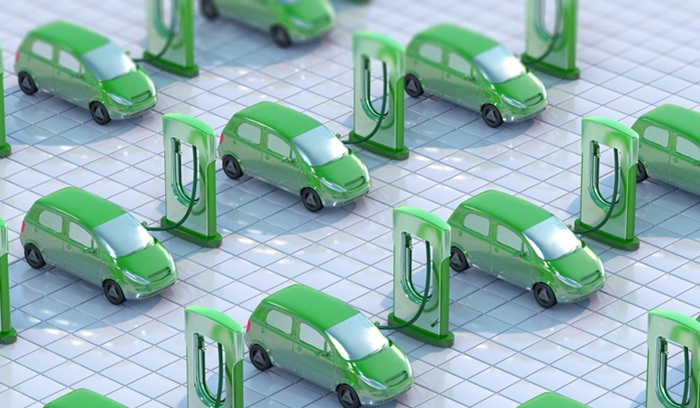
The European Union has reached a historic milestone in the transition to sustainable transportation. For the first time ever, sales of fully electric vehicles (EVs) have surpassed those of petrol-driven cars across the bloc. According to new data from the European Automobile Manufacturers Association (ACEA), battery-electric vehicles accounted for a larger market share than petrol cars in December 2025. This achievement signals a decisive shift in consumer preference and the success of long-term environmental policies.+2
The figures reveal that electric cars made up 22.6 percent of all new car registrations in December. Petrol cars, which have dominated the market for decades, fell to 22.5 percent. This tipping point demonstrates that the era of the internal combustion engine is rapidly drawing to a close in Europe.
Hybrids Dominate as Transition Technology
While EVs have overtaken petrol, the market is currently led by hybrid vehicles. Hybrids accounted for 44 percent of all new car sales in December 2025. This indicates that while consumers are moving away from pure fossil fuels, many are opting for a transitional technology that combines electric power with a traditional engine.+1
This dominance of hybrids suggests a pragmatic shift. Buyers are seeking fuel efficiency and lower emissions but may still be bridging the gap to full electrification. The combined market share of all electrified vehicles (EVs, hybrids, and plug-in hybrids) now represents the vast majority of new car sales. This trend confirms that the European market has decisively turned a corner toward electrification.+1
A Rapidly Changing Market
The surge in EV sales is driven by a combination of factors, including falling prices, improved range, and government incentives. Manufacturers have ramped up production of affordable electric models, making them accessible to a wider range of consumers. This increased availability has helped overcome the initial barriers of cost and anxiety about charging infrastructure.
The decline of petrol cars has been equally stark. Just a few years ago, petrol vehicles accounted for the majority of new car sales. Their market share has now dropped significantly as consumers opt for cleaner, more efficient alternatives. This trend is expected to accelerate as more nations implement bans on the sale of new fossil fuel vehicles. The European Automobile Manufacturers Association (ACEA) provides detailed monthly data on these registration trends.
Policy Success and Consumer Confidence
This milestone validates the European Union’s aggressive climate policies. The “Fit for 55” package, which aims to reduce net greenhouse gas emissions by at least 55 percent by 2030, has set clear targets for the automotive sector. These regulations have forced automakers to prioritize electrification or face heavy fines.
The result is a market that is aligning with climate goals faster than anticipated. Consumer confidence in electric technology has grown alongside the expansion of the charging network. As charging stations become as common as gas pumps, the practicality of owning an EV continues to improve. The European Environment Agency tracks the progress of this infrastructure rollout.
Economic and Environmental Benefits
The shift to electric vehicles offers profound environmental benefits. By replacing petrol cars with zero-emission alternatives, Europe is reducing its carbon footprint and improving urban air quality. This transition is essential for meeting the continent’s commitment to becoming climate-neutral by 2050.
Economically, the move secures the future of the European automotive industry. By leading in EV technology, European manufacturers remain competitive in a global market that is increasingly turning away from fossil fuels. This industrial pivot creates new high-tech jobs in battery manufacturing and software development. The International Council on Clean Transportation (ICCT) analyzes the economic impacts of these vehicle standards.
Resources
- European Automobile Manufacturers Association (ACEA) on Vehicle Registration Data
- European Environment Agency on Electric Vehicle Trends
- International Council on Clean Transportation (ICCT) on Market Analysis
- International Energy Agency (IEA) on Global EV Outlook
More Good News
-

U.S.’s Smithsonian Institution to return stolen medieval sculptures to India
The Smithsonian National Museum of Asian Art is officially returning three ancient bronze sculptures to India after an internal investigation confirmed they were illegally removed from Tamil Nadu temples in the mid-twentieth century. In a unique collaborative agreement, the Indian government will allow one returned sculpture, a tenth-century Shiva Nataraja, to remain at the Washington museum on a long-term loan for educational display. This arrangement highlights a growing international commitment to decolonizing museum spaces, prioritizing transparent provenance research, and fostering cross-cultural cooperation to correct historical wrongs.
-

Sierra Leone opens its first-ever NICU in historic milestone for maternal health
In a historic milestone for global health, Sierra Leone has opened its first-ever neonatal intensive care unit (NICU) at the new Maternal Center of Excellence in Kono District. This state-of-the-art facility, built by Partners In Health and the local government, was largely funded by the “Nerdfighteria” community led by Hank and John Green, who raised over $50 million. The center aims to drastically reduce maternal and infant mortality by providing advanced care, including piped oxygen and surgical suites, while serving as a teaching hospital for the next generation of local clinicians.
-

Indonesia bans elephant riding in landmark welfare move
Following years of campaigning by animal welfare organizations, Indonesia has officially banned elephant riding at all tourism and conservation facilities. This landmark directive from the Ministry of Environment and Forestry ends a cruel practice that relies on brutal training and causes long-term harm to endangered elephants. Facilities must now transition to ethical, observation-based tourism models. This major policy shift prioritizes animal welfare over entertainment, setting a powerful example for responsible wildlife tourism across Southeast Asia.
-

Wild bison return to Illinois prairie after nearly 200 years
In a historic moment for conservation, wild bison have returned to the Illinois prairie for the first time in nearly two centuries. The Nature Conservancy has successfully reintroduced a genetically pure herd to the Nachusa Grasslands, marking the first time wild bison have roamed east of the Mississippi since the 1830s. This ecological milestone aims to restore the health of the tallgrass prairie, as the bison’s natural grazing habits boost biodiversity and support other native species. The project offers a powerful model for rewilding and connecting communities with their natural heritage.
-
Electric car sales outpace gas-powered cars in the E.U. for the first time
In a historic shift for the automotive industry, fully electric vehicles (EVs) have outsold petrol cars in the European Union for the first time. Data from the European Automobile Manufacturers Association shows that EVs captured 23.6 percent of the market in December 2025, surpassing petrol registrations. This milestone confirms that the transition to zero-emission transport is accelerating rapidly, driven by strong climate policies, falling costs, and growing consumer confidence. The achievement marks the beginning of the end for fossil fuel dominance on European roads.