
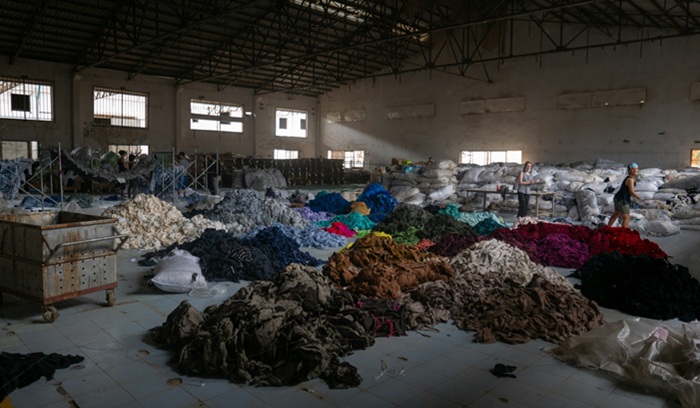
The European Union has taken a massive step toward a circular economy by officially banning the destruction of unsold clothing and footwear. This sweeping legislation is part of the broader Ecodesign for Sustainable Products Regulation framework. It aims to put an end to the wasteful fast fashion practice of incinerating or shredding perfectly good, unsold apparel.
Every year, the European Union generates approximately 12.6 million tonnes of textile waste. Clothing and footwear account for the vast majority of this consumption, with the average European throwing away 11 kilograms of textiles annually. By stopping the destruction of these goods at the source, the new rules will significantly reduce the environmental footprint of the fashion industry.
A Victory for the Environment
The legislation represents a major victory for environmental advocates and sustainable businesses alike. It forces large fashion retailers and manufacturers to completely rethink their overproduction strategies and inventory management. Instead of destroying excess inventory to maintain brand exclusivity, companies will now be required to reuse, recycle, or donate their unsold stock.
The rules are designed to be implemented thoughtfully to avoid overwhelming smaller businesses. Large corporations will have a two-year transition period to fully comply with the ban on destroying unsold textiles. Medium-sized enterprises will be given a six-year exemption to adapt their supply chains, while micro and small companies will be completely exempt from the ban.
This phased approach ensures that the regulatory burden falls primarily on the massive fast fashion conglomerates responsible for the bulk of overproduction. The European Commission has also outlined that these regulations will soon expand to cover other product categories beyond textiles. You can read more about the implementation timeline on the official European Commission website.
Driving Transparency in Fashion
Transparency is another key component of this new environmental initiative. Large companies will now be legally required to publicly disclose the number of unsold consumer products they discard each year. They must also report their reasons for discarding these items and detail the volume of discarded goods they have sent for reuse, remanufacturing, or recycling.
This public reporting requirement is expected to create strong social pressure on brands to optimize their inventory management. When companies are forced to be honest about their waste, consumers can make more informed, ethical purchasing decisions. The European Environment Agency provides extensive research on how this transparency can drive the transition to a sustainable textile industry.
Building on National Successes
While the European Union is implementing this on a massive scale, it builds upon the successful groundwork laid by individual nations. France pioneered a similar national policy in 2020 with its anti-waste law, which prohibited the destruction of unsold non-food products. Scaling this policy across all 27 member states of the European Union amplifies its positive environmental impact exponentially.
The fashion industry is responsible for up to ten percent of global greenhouse gas emissions and is a major consumer of water resources. By curbing overproduction and waste, the new rules will directly reduce the carbon emissions and resource depletion associated with manufacturing new textiles. You can find comprehensive data on the fashion industry’s environmental impact through the United Nations Environment Programme.
A New Circular Economy
The legislation also incentivizes the development of a robust textile recycling infrastructure across Europe. With millions of garments no longer heading to the incinerator, there will be a massive new supply of materials for the circular fashion market. This creates exciting opportunities for green innovation and new jobs in the recycling and upcycling sectors.
Ultimately, this policy shift signals the end of the traditional linear economic model for clothing in Europe. It establishes a new global standard for how governments can regulate industrial waste and promote true sustainability. Organizations like the Ellen MacArthur Foundation have long advocated for this exact type of systemic policy change to redesign the future of fashion.
More Good News
-
E.U. bans the destruction of unsold clothing in bid to reduce waste and emissions
The European Union has officially adopted groundbreaking legislation banning the destruction of unsold clothing, apparel accessories, and footwear to drastically reduce waste and emissions. As part of the Ecodesign for Sustainable Products Regulation, this new ban directly targets the massive environmental impact of fast fashion overproduction. Following France’s lead as the first country to implement such a ban, the E.U. is forcing large corporations to reuse, donate, or recycle excess inventory instead of incinerating it. This policy sets a powerful global precedent for transitioning the fashion industry toward a truly circular economy.
-

U.S.’s Smithsonian Institution to return stolen medieval sculptures to India
The Smithsonian National Museum of Asian Art is officially returning three ancient bronze sculptures to India after an internal investigation confirmed they were illegally removed from Tamil Nadu temples in the mid-twentieth century. In a unique collaborative agreement, the Indian government will allow one returned sculpture, a tenth-century Shiva Nataraja, to remain at the Washington museum on a long-term loan for educational display. This arrangement highlights a growing international commitment to decolonizing museum spaces, prioritizing transparent provenance research, and fostering cross-cultural cooperation to correct historical wrongs.
-

Sierra Leone opens its first-ever NICU in historic milestone for maternal health
In a historic milestone for global health, Sierra Leone has opened its first-ever neonatal intensive care unit (NICU) at the new Maternal Center of Excellence in Kono District. This state-of-the-art facility, built by Partners In Health and the local government, was largely funded by the “Nerdfighteria” community led by Hank and John Green, who raised over $50 million. The center aims to drastically reduce maternal and infant mortality by providing advanced care, including piped oxygen and surgical suites, while serving as a teaching hospital for the next generation of local clinicians.
-

Indonesia bans elephant riding in landmark welfare move
Following years of campaigning by animal welfare organizations, Indonesia has officially banned elephant riding at all tourism and conservation facilities. This landmark directive from the Ministry of Environment and Forestry ends a cruel practice that relies on brutal training and causes long-term harm to endangered elephants. Facilities must now transition to ethical, observation-based tourism models. This major policy shift prioritizes animal welfare over entertainment, setting a powerful example for responsible wildlife tourism across Southeast Asia.
-

Wild bison return to Illinois prairie after nearly 200 years
In a historic moment for conservation, wild bison have returned to the Illinois prairie for the first time in nearly two centuries. The Nature Conservancy has successfully reintroduced a genetically pure herd to the Nachusa Grasslands, marking the first time wild bison have roamed east of the Mississippi since the 1830s. This ecological milestone aims to restore the health of the tallgrass prairie, as the bison’s natural grazing habits boost biodiversity and support other native species. The project offers a powerful model for rewilding and connecting communities with their natural heritage.