
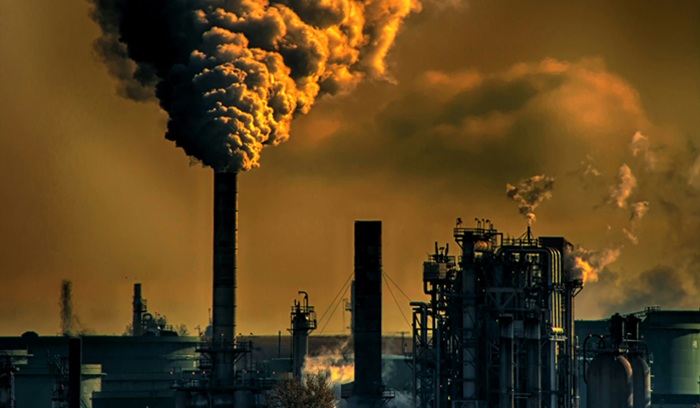
China, the world’s largest emitter of greenhouse gases, is showing that massive clean energy investment can successfully reduce its reliance on fossil fuels. Recent data confirms a significant and sustained drop in the nation’s carbon dioxide (CO2) output. In the first half of 2025, CO2 emissions fell by 1% year-on-year, extending a downward trend that began in March 2024. This notable shift is primarily driven by an unprecedented surge in solar and wind power, establishing a tangible foundation for future climate action.
Record Clean Energy Outpaces Demand
The most powerful driver of this trend is the exponential growth of clean electricity. In the first half of 2025, clean power generation, led by solar and wind, outstripped the nation’s rising electricity demand. China added a massive 212 gigawatts (GW) of solar capacity in the first six months of the year, setting a new annual record for growth. This phenomenal pace meant that this clean generation surge provided enough power to cut fossil fuel use in the power sector by 2% compared with the previous year. This rapid energy buildout is a major accomplishment, demonstrating that rapid installation can directly translate into lower emissions in the energy sector.
A Commitment Met with Skepticism
This clean energy momentum provided the basis for a key policy announcement. For the first time, China has committed to an absolute target to cut its greenhouse gas emissions. President Xi Jinping pledged that China would reduce its greenhouse gas emissions across the economy by 7-10% below peak levels by 2035. While this is a significant move away from targets based only on economic intensity, the pledge has been met with criticism. Many experts and climate analysts argue that the target is too conservative. They state that the reduction is achievable with policies already in place and does not represent a true increase in ambition necessary to limit global warming to 1.5∘C.
The Challenge of Industrial Expansion
The main reason for this criticism lies in the continued growth of emissions outside the power sector. While CO2 from electricity generation is declining, the industrial sector, particularly coal-to-chemicals, continues to pose challenges. New coal power capacity is still being added, and the use of coal for synthetic fuels and chemicals is expanding rapidly. Analysts point out that to align with global climate goals, China would need to cut emissions by 30% or more from recent peak levels, making the 7-10% target appear insufficient. This ongoing industrial expansion complicates China’s goal to peak emissions before 2030 and reach net zero by 2060.
Global Supply Chain Dominance
Despite the criticism of its targets, China’s role as the global powerhouse of clean technology remains a massive positive. The nation manufactures over 90% of the world’s solar modules and 80% of its wind turbines. This scale has drastically lowered the cost of solar and wind power worldwide, directly accelerating the energy transition in other countries. This industrial might provides security and affordability for clean energy projects globally. Recognizing the need to manage its domestic infrastructure, China is also strategically strengthening its national power grid, with investment increasing by 22% in the first half of 2025. This focus on grid modernization is essential for safely integrating the growing influx of variable clean power.
A Call for Greater Ambition
China’s ability to achieve a decline in CO2 emissions through market forces and clean energy deployment is an inspiring signal for emerging economies. It proves that decarbonization can accompany economic growth. However, experts from the Climate Action Tracker emphasize that the current target is an opportunity lost to set a genuinely transformative goal. The announced target should be viewed as a floor, not a ceiling. The true measure of success will be whether policymakers use the current market momentum to set significantly more ambitious goals in their next Nationally Determined Contribution, rather than relying on targets that are already being met.
- This commitment is viewed as an important development for global climate action. You can find more information on this new direction from Carbon Brief.
- You can review detailed data on this manufacturing dominance from reports by the International Energy Agency (IEA).
- Further details on the country’s economic and energy planning can be found in the IEA’s overview of China’s Five-Year Plan.
- You can monitor the rapid energy changes in China through analysis from the energy think tank Ember.
More Good News
-

Senegal launches all-electric bus network powered by renewable energy
Senegal has successfully launched a transformative Bus Rapid Transit system in Dakar, featuring a fleet of 121 fully electric buses. As the first network in Sub-Saharan Africa to operate entirely on renewable energy, the initiative utilizes local solar power to transport up to 300,000 passengers daily. By utilizing dedicated lanes, the clean energy fleet cuts cross-city commute times in half while preventing nearly 60,000 tons of carbon dioxide emissions annually. This monumental project dramatically improves urban air quality and establishes Senegal as a pioneering leader in sustainable, green public infrastructure.
-

Yangtze River showing remarkable ecological recovery following fishing ban
China’s Yangtze River is experiencing a remarkable ecological revival five years into a sweeping ten-year commercial fishing ban. Recent surveys reveal significant increases in overall fish biomass and the heartening return of critically endangered species in the world’s fifth largest river. Furthermore, thousands of former commercial fishers have been successfully transitioned into new roles as official river guardians. This massive conservation effort offers a hopeful, replicable model for global freshwater restoration.
-

Rob Jetten becomes The Netherland’s first openly gay prime minister
In a historic victory for representation and progressive politics, Rob Jetten has been sworn in as the first openly gay Prime Minister of the Netherlands. At 38 years old, the centrist Democrats 66 leader is also the youngest head of government in Dutch history. Jetten successfully formed a minority coalition government following a tense election that defeated far-right populist opponents. His platform prioritizes climate investment, economic fairness, and strong international collaboration. Jetten’s premiership powerfully reaffirms the Netherlands’ global legacy as a pioneer of LGBTQ+ equality and inclusive, cooperative democratic leadership.
-

Millions of New York City workers gain additional time off through new law
Millions of workers in New York City are benefiting from a major expansion of the Protected Time Off Law, which officially took effect in late February 2026. The progressive legislation grants employees an additional 32 hours of unpaid, protected leave that is available immediately upon hire or at the start of the calendar year. This ensures workers do not have to wait to accrue hours before addressing sudden medical emergencies or family crises. The law also vastly expands permitted uses to include mental health care, public disaster recovery, and caring for disabled loved ones.
-

Malaysia bans electronic waste imports to protect the environment and public health
In a monumental victory for public health and environmental justice, Malaysia has enacted an immediate and absolute ban on the importation of electronic waste. By removing regulatory loopholes and launching a strict enforcement campaign, the nation is successfully preventing toxic heavy metals from polluting its soil and waterways. Authorities have already intercepted hundreds of thousands of kilograms of illegal e-waste at major ports, vowing to return the hazardous materials to their countries of origin. This decisive action establishes Malaysia as a leading force in Southeast Asia’s growing movement to reject global waste and prioritize ecological sustainability.