
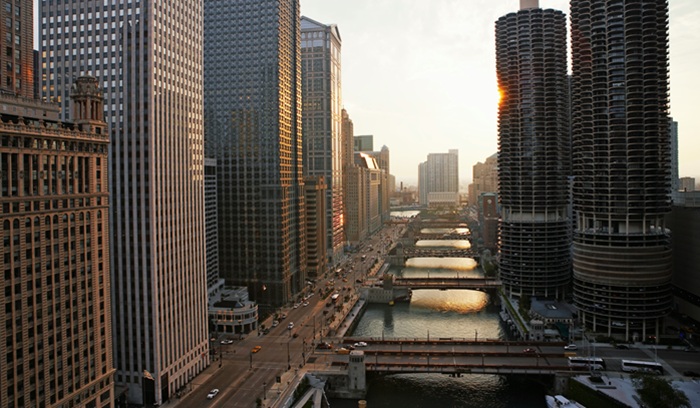
Chicago’s once-polluted river is finally showing signs of vibrant life and renewed public trust. Long associated with industrial waste and neglect, the Chicago River has been transformed through decades of cleanup, policy changes, and community action. Kayakers who once avoided the water now report spotting wildlife and enjoying clearer, healthier waterways.
Signs of a Healthier Ecosystem
Conservation teams from the Shedd Aquarium regularly kayak the river to document changes. They’ve observed an increasing number of fish species, turtles, and birds, along with social media-famous residents like “Chonkosaurus,” a massive snapping turtle that has become a symbol of recovery. These sightings underscore improvements in water quality and habitat restoration that have allowed wildlife to thrive in an urban setting.
Chicago Prepares for First Open-Water Swim in a Century
One of the clearest signs of renewed public confidence is the planned 2025 open-water swim in downtown Chicago—the first such event in nearly 100 years. Organized by the nonprofit A Long Swim, the event will take participants from the Dearborn Street Bridge to Lake Street. It also doubles as a fundraiser for swim education programs for underrepresented youth. As Axios Chicago reported, Mayor Brandon Johnson described the swim as proof of the city’s decades-long environmental work paying off.
What Sparked the Cleanup
The revival has been powered by several key forces:
- National policies like the Clean Water Act curbed industrial pollution.
- Local groups such as Friends of the Chicago River organized volunteer cleanups, riverbank restoration, and advocacy for stricter standards.
- Infrastructure upgrades, including improved sewage treatment, cut harmful runoff.
- Innovative projects like the “Wild Mile” floating wetlands added new habitat and green space in the river corridor.
These efforts combined to make the river safer, healthier, and more accessible.
A Model for Urban Waterway Renewal
Chicago’s transformation is inspiring other cities to reimagine their waterways. Groups like American Rivers highlight the Chicago River’s revival as a case study in how long-term planning and civic partnerships can turn degraded rivers into community assets. The return of fish, turtles, and beavers—along with the upcoming public swim—shows that the river is no longer simply a backdrop to the city but a vital part of its future.
Looking Forward
Challenges remain, especially during heavy rains when stormwater can overflow into the river. Yet the trajectory is clear: the Chicago River has shifted from being one of the nation’s most polluted waterways to a recovering urban ecosystem. Its story is a reminder that with persistence, investment, and imagination, even the most damaged rivers can be brought back to life.
More Good News
-

Senegal launches all-electric bus network powered by renewable energy
Senegal has successfully launched a transformative Bus Rapid Transit system in Dakar, featuring a fleet of 121 fully electric buses. As the first network in Sub-Saharan Africa to operate entirely on renewable energy, the initiative utilizes local solar power to transport up to 300,000 passengers daily. By utilizing dedicated lanes, the clean energy fleet cuts cross-city commute times in half while preventing nearly 60,000 tons of carbon dioxide emissions annually. This monumental project dramatically improves urban air quality and establishes Senegal as a pioneering leader in sustainable, green public infrastructure.
-

Yangtze River showing remarkable ecological recovery following fishing ban
China’s Yangtze River is experiencing a remarkable ecological revival five years into a sweeping ten-year commercial fishing ban. Recent surveys reveal significant increases in overall fish biomass and the heartening return of critically endangered species in the world’s fifth largest river. Furthermore, thousands of former commercial fishers have been successfully transitioned into new roles as official river guardians. This massive conservation effort offers a hopeful, replicable model for global freshwater restoration.
-

Rob Jetten becomes The Netherland’s first openly gay prime minister
In a historic victory for representation and progressive politics, Rob Jetten has been sworn in as the first openly gay Prime Minister of the Netherlands. At 38 years old, the centrist Democrats 66 leader is also the youngest head of government in Dutch history. Jetten successfully formed a minority coalition government following a tense election that defeated far-right populist opponents. His platform prioritizes climate investment, economic fairness, and strong international collaboration. Jetten’s premiership powerfully reaffirms the Netherlands’ global legacy as a pioneer of LGBTQ+ equality and inclusive, cooperative democratic leadership.
-
Millions of New York City workers gain additional time off through new law
Millions of workers in New York City are benefiting from a major expansion of the Protected Time Off Law, which officially took effect in late February 2026. The progressive legislation grants employees an additional 32 hours of unpaid, protected leave that is available immediately upon hire or at the start of the calendar year. This ensures workers do not have to wait to accrue hours before addressing sudden medical emergencies or family crises. The law also vastly expands permitted uses to include mental health care, public disaster recovery, and caring for disabled loved ones.
-

Malaysia bans electronic waste imports to protect the environment and public health
In a monumental victory for public health and environmental justice, Malaysia has enacted an immediate and absolute ban on the importation of electronic waste. By removing regulatory loopholes and launching a strict enforcement campaign, the nation is successfully preventing toxic heavy metals from polluting its soil and waterways. Authorities have already intercepted hundreds of thousands of kilograms of illegal e-waste at major ports, vowing to return the hazardous materials to their countries of origin. This decisive action establishes Malaysia as a leading force in Southeast Asia’s growing movement to reject global waste and prioritize ecological sustainability.