
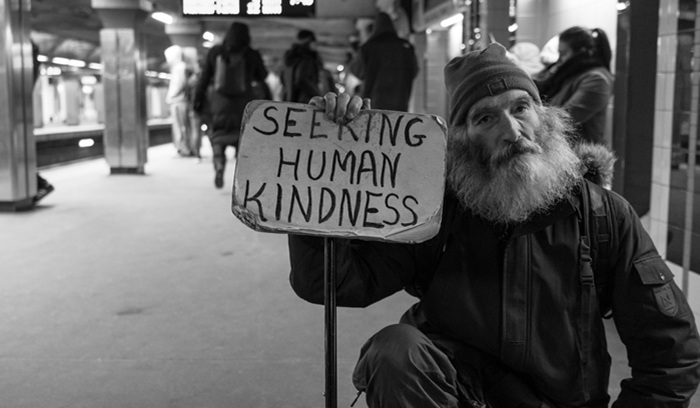
California has become the first state in the nation to ban cities from penalizing citizens who provide aid to the homeless. Governor Gavin Newsom signed the new legislation, which prohibits local governments from fining or arresting individuals and organizations for distributing food, water, and other essential supplies to unhoused residents. This landmark law, Senate Bill 634, overrides local ordinances that have been used to crack down on charitable acts. It marks a significant victory for civil liberties and community-led support systems.
This legislation ensures that compassion is not treated as a crime. It empowers mutual aid groups, religious organizations, and individual volunteers to continue their vital work without the threat of legal retribution.
Blocking Punitive Local Ordinances
The core function of the new law is to preempt restrictive local policies. In recent years, several California cities have used zoning laws, food safety regulations, and permit requirements to effectively ban the distribution of food in public spaces. These ordinances were often used as tools to disperse homeless populations and discourage visible aid.
SB 634 explicitly blocks these tactics. It declares that providing life-sustaining aid is a protected activity that cannot be subjected to arbitrary municipal fines. This legal shield provides clarity and security for aid workers who have faced harassment and citations for simple acts of charity. The law affirms that the state’s priority is supporting vulnerable populations, not punishing those who help them.
Strengthening the Safety Net
The bill’s passage is a major boost for the state’s patchwork safety net. Grassroots organizations and mutual aid networks often fill the critical gaps left by formal government services. They provide immediate, barrier-free access to food and hygiene supplies that many unhoused people rely on for survival.
By protecting these groups, the state ensures that this essential layer of support remains intact. It recognizes that community-led initiatives are vital partners in the broader effort to address homelessness. This collaborative approach fosters a more resilient and responsive social service ecosystem. The Western Center on Law & Poverty provides detailed analysis on the legal implications of decriminalizing homelessness aid.
Upholding Fundamental Rights
The legislation is also seen as a victory for fundamental rights. Advocates argued that restricting food sharing violated First Amendment rights to expression and religious exercise. By enshrining the right to aid in state law, California is protecting the ability of its citizens to act on their moral and spiritual convictions.
This move aligns California with federal court rulings that have increasingly scrutinized the criminalization of charitable acts. It sets a strong statewide standard that prioritizes human dignity over bureaucratic control. This protection is essential for maintaining a compassionate civil society. Disability Rights California outlines the civil rights aspects of this legislation.
A Model for Compassionate Policy
California’s decisive action provides a blueprint for other states grappling with the tension between local control and humanitarian needs. It demonstrates that state governments can intervene to protect the most vulnerable from punitive local measures. This policy shift encourages a more humane and effective approach to homelessness.The law is expected to reduce the antagonistic relationship between local authorities and aid groups. Instead of conflict, it opens the door for better coordination and cooperation in serving the unhoused. The Inner City Law Center championed this bill as a necessary step to stop the criminalization of poverty. Furthermore, the ACLU California Action provides ongoing resources on the rights of unhoused individuals and their advocates.
Resources
- Western Center on Law & Poverty on Decriminalizing Aid
- Disability Rights California on Protecting Frontline Workers
- Inner City Law Center on Homelessness Legislation
- ACLU California Action on Civil Rights and Homelessness
More Good News
-

Senegal launches all-electric bus network powered by renewable energy
Senegal has successfully launched a transformative Bus Rapid Transit system in Dakar, featuring a fleet of 121 fully electric buses. As the first network in Sub-Saharan Africa to operate entirely on renewable energy, the initiative utilizes local solar power to transport up to 300,000 passengers daily. By utilizing dedicated lanes, the clean energy fleet cuts cross-city commute times in half while preventing nearly 60,000 tons of carbon dioxide emissions annually. This monumental project dramatically improves urban air quality and establishes Senegal as a pioneering leader in sustainable, green public infrastructure.
-

Yangtze River showing remarkable ecological recovery following fishing ban
China’s Yangtze River is experiencing a remarkable ecological revival five years into a sweeping ten-year commercial fishing ban. Recent surveys reveal significant increases in overall fish biomass and the heartening return of critically endangered species in the world’s fifth largest river. Furthermore, thousands of former commercial fishers have been successfully transitioned into new roles as official river guardians. This massive conservation effort offers a hopeful, replicable model for global freshwater restoration.
-

Rob Jetten becomes The Netherland’s first openly gay prime minister
In a historic victory for representation and progressive politics, Rob Jetten has been sworn in as the first openly gay Prime Minister of the Netherlands. At 38 years old, the centrist Democrats 66 leader is also the youngest head of government in Dutch history. Jetten successfully formed a minority coalition government following a tense election that defeated far-right populist opponents. His platform prioritizes climate investment, economic fairness, and strong international collaboration. Jetten’s premiership powerfully reaffirms the Netherlands’ global legacy as a pioneer of LGBTQ+ equality and inclusive, cooperative democratic leadership.
-

Millions of New York City workers gain additional time off through new law
Millions of workers in New York City are benefiting from a major expansion of the Protected Time Off Law, which officially took effect in late February 2026. The progressive legislation grants employees an additional 32 hours of unpaid, protected leave that is available immediately upon hire or at the start of the calendar year. This ensures workers do not have to wait to accrue hours before addressing sudden medical emergencies or family crises. The law also vastly expands permitted uses to include mental health care, public disaster recovery, and caring for disabled loved ones.
-

Malaysia bans electronic waste imports to protect the environment and public health
In a monumental victory for public health and environmental justice, Malaysia has enacted an immediate and absolute ban on the importation of electronic waste. By removing regulatory loopholes and launching a strict enforcement campaign, the nation is successfully preventing toxic heavy metals from polluting its soil and waterways. Authorities have already intercepted hundreds of thousands of kilograms of illegal e-waste at major ports, vowing to return the hazardous materials to their countries of origin. This decisive action establishes Malaysia as a leading force in Southeast Asia’s growing movement to reject global waste and prioritize ecological sustainability.