
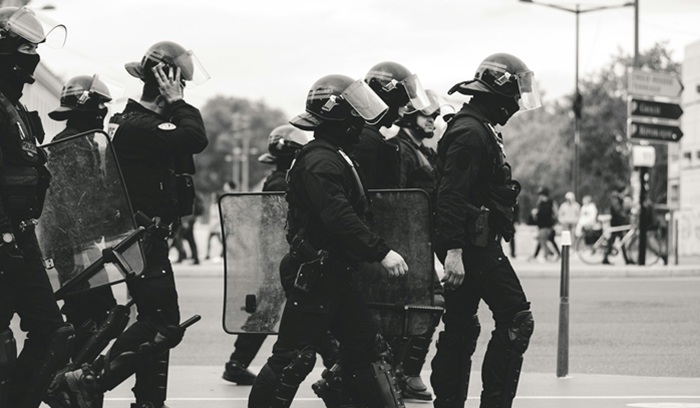
California has taken a historic step to increase transparency and public trust in law enforcement with the passage of the “No Secret Police Act.” This new law prohibits most law enforcement officers, including federal immigration agents, from wearing masks or other facial coverings while conducting official business. The legislation, signed by Governor Gavin Newsom, is the first of its kind in the United States. This action is a direct response to public concern over the use of face coverings during recent immigration raids in Los Angeles. This law is a progressive measure that aims to create a more accountable and transparent system of law enforcement.
A Stand Against Federal Overreach
The passage of this law is a powerful statement about a state’s right to push back against federal overreach. Governor Newsom and other proponents of the bill framed it as a defense of California’s diverse communities. The law is intended to prevent the use of tactics that critics have called “dystopian” and that have been a source of fear and confusion. The law specifically prohibits the use of masks, balaclavas, and neck gaiters, which can obscure an officer’s identity and prevent them from being held accountable for their actions. It is a bold move that has inspired similar proposals in other states.
Building a Safer and More Accountable Community
The new law is designed to have a direct, positive impact on public safety. By requiring officers to be clearly identifiable, it helps to build a sense of trust between law enforcement and the communities they serve. This is particularly important for immigrant communities, who have been the target of recent enforcement actions. The law also aims to prevent individuals from impersonating officers to commit crimes, a growing concern in some areas. While opponents of the law, including the Department of Homeland Security, have expressed concerns about officer safety and doxing, supporters argue that transparency and accountability are fundamental to a healthy democracy. Law enforcement agencies are required to adopt a policy governing the use of facial coverings by July 1, 2026. This will give departments time to adjust to the new rules while ensuring the law is implemented effectively.
A Blueprint for Future Reforms
The “No Secret Police Act” is a key piece of a larger legislative effort in California to reform the criminal justice system and protect the rights of its residents. The state has already passed other measures to protect immigrant families and provide legal aid to those facing deportation. This new law, which goes into effect on January 1, 2026, could serve as a blueprint for other states and cities looking to enact similar reforms. It shows that states are not powerless in the face of federal policy they disagree with and that they can take action to protect their own citizens. This move is a significant step toward a future where law enforcement is more transparent and accountable to the public it serves.
A Focus on Democratic Values
This law is ultimately about upholding democratic values. It affirms the principle that law enforcement should operate with transparency and accountability, and that individuals have the right to know who is enforcing the law. Governor Newsom and other supporters have stated that this legislation is a direct defense of the constitutional rights of all Californians. It is a declaration that the state will not tolerate tactics that erode public trust and create a climate of fear. This stand for basic freedoms is a hopeful sign for the future of civil liberties in the United States.
- For a deeper look at the importance of transparency in policing, the American Civil Liberties Union (ACLU) provides resources on the rights of protesters and the public.
- For more details on the law and its legal implications, you can read the bill’s official summary on the California State Legislature’s website.
- You can read more about the legal rationale for such laws from constitutional law experts at the University of California, Berkeley.
More Good News
-

Senegal launches all-electric bus network powered by renewable energy
Senegal has successfully launched a transformative Bus Rapid Transit system in Dakar, featuring a fleet of 121 fully electric buses. As the first network in Sub-Saharan Africa to operate entirely on renewable energy, the initiative utilizes local solar power to transport up to 300,000 passengers daily. By utilizing dedicated lanes, the clean energy fleet cuts cross-city commute times in half while preventing nearly 60,000 tons of carbon dioxide emissions annually. This monumental project dramatically improves urban air quality and establishes Senegal as a pioneering leader in sustainable, green public infrastructure.
-

Yangtze River showing remarkable ecological recovery following fishing ban
China’s Yangtze River is experiencing a remarkable ecological revival five years into a sweeping ten-year commercial fishing ban. Recent surveys reveal significant increases in overall fish biomass and the heartening return of critically endangered species in the world’s fifth largest river. Furthermore, thousands of former commercial fishers have been successfully transitioned into new roles as official river guardians. This massive conservation effort offers a hopeful, replicable model for global freshwater restoration.
-

Rob Jetten becomes The Netherland’s first openly gay prime minister
In a historic victory for representation and progressive politics, Rob Jetten has been sworn in as the first openly gay Prime Minister of the Netherlands. At 38 years old, the centrist Democrats 66 leader is also the youngest head of government in Dutch history. Jetten successfully formed a minority coalition government following a tense election that defeated far-right populist opponents. His platform prioritizes climate investment, economic fairness, and strong international collaboration. Jetten’s premiership powerfully reaffirms the Netherlands’ global legacy as a pioneer of LGBTQ+ equality and inclusive, cooperative democratic leadership.
-

Millions of New York City workers gain additional time off through new law
Millions of workers in New York City are benefiting from a major expansion of the Protected Time Off Law, which officially took effect in late February 2026. The progressive legislation grants employees an additional 32 hours of unpaid, protected leave that is available immediately upon hire or at the start of the calendar year. This ensures workers do not have to wait to accrue hours before addressing sudden medical emergencies or family crises. The law also vastly expands permitted uses to include mental health care, public disaster recovery, and caring for disabled loved ones.
-

Malaysia bans electronic waste imports to protect the environment and public health
In a monumental victory for public health and environmental justice, Malaysia has enacted an immediate and absolute ban on the importation of electronic waste. By removing regulatory loopholes and launching a strict enforcement campaign, the nation is successfully preventing toxic heavy metals from polluting its soil and waterways. Authorities have already intercepted hundreds of thousands of kilograms of illegal e-waste at major ports, vowing to return the hazardous materials to their countries of origin. This decisive action establishes Malaysia as a leading force in Southeast Asia’s growing movement to reject global waste and prioritize ecological sustainability.