
Humans begin to use spears with complex stone blades
These stone heads could be fixed to the spear shaft by gum or resin or by bindings made of animal sinew, leather strips or vegetable matter.

These stone heads could be fixed to the spear shaft by gum or resin or by bindings made of animal sinew, leather strips or vegetable matter.

The development of human language is one of the most significant achievements in our species’ history. This revolutionary leap, which likely began in Africa over 135,000 years ago, transformed our survival capabilities. Language enabled complex social cooperation, allowing early humans to coordinate intricate hunting and migration strategies. More profoundly, it provided the cognitive framework for cumulative learning and the building of cultural memory, paving the way for all subsequent human innovation and success.

All mitochondrial genomes today should be traceable to a single woman, a ‘Mitochondrial Eve’. This woman, the researchers concluded, probably lived in Africa around 100,000 to 200,000 years ago.

Early Homo sapiens settling the Arabian Peninsula demonstrated exceptional ingenuity by mastering abstract climate models and deep planning. Migrating through “Green Arabia” between 130,000 and 75,000 years ago, these pioneers developed resilient technologies and social cohesion, proving critical for their successful global dispersal.
Southern Africa was first reached by Homo sapiens before 130,000 years ago, possibly before 260,000 years ago.
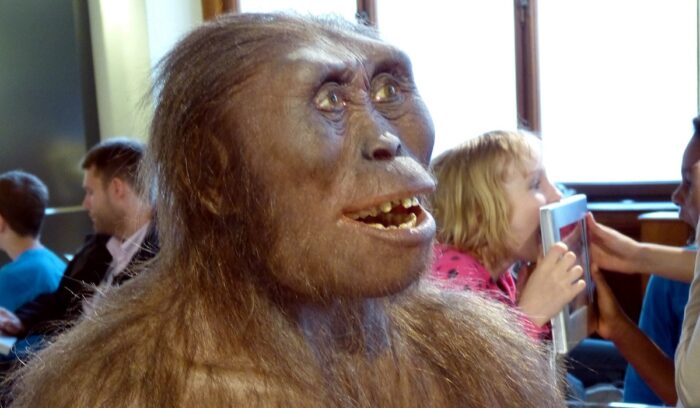
Y-chromosomal Adam is the name scientists give to the most recent common paternal ancestor of all living men. Genetic studies show that every Y chromosome today traces back to this individual, who lived in Africa around 200,000 to 300,000 years ago. His story is not about one man alone, but about the shared roots of humanity. By studying haplogroups and Y-chromosome mutations, researchers continue to refine when and where he lived. Y-chromosomal Adam reminds us that beneath all differences, we are deeply connected—a single family bound together across time by shared ancestry.

This groundbreaking innovation profoundly improved early human hunting and survival capabilities. The invention of glue allowed for the creation of superior composite tools. It laid the foundation for complex engineering and materials science thousands of years later.

While early members of the genus Homo had used fire opportunistically for ages (e.g. in the aftermath of a lightning strike), the ability to create it on their own using flint vastly expanded its availability and usefulness.