
First permanent human settlement is built, perhaps in modern day Czech Republic
Approximately 25,000 years ago, during the Upper Paleolithic period of the Stone Age, a small settlement was founded on the site of what is now Dolní Věstonice.

Approximately 25,000 years ago, during the Upper Paleolithic period of the Stone Age, a small settlement was founded on the site of what is now Dolní Věstonice.

A map-like representation of a mountain, river, valleys and routes around Pavlov in the Czech Republic has been dated to 25,000 B.C.E.

It is currently unclear whether 21,000-year-old campfire remains found in the Valley of Mexico are the earliest human remains in Mexico.

The oldest firmly dated rock art painting in Australia, dated at roughly 26,000 B.C., is a charcoal drawing on a rock fragment in the Narwala Gabarnmang rock shelter in the Northern Territory.

People used baskets as backpacks, as baby carriers, as cupboards, as plates and cups, as cradles, as birdcages, as measuring cups and as sandals, and to catch fish.

Many scientists believe cooked meat, and cooked food generally, played a pivotal role in early humans’ survival and success. Cooking not only gave early humans the energy they needed to build bigger brains but also helped them get more calories from food so that they could gain weight.

The Bhimbetka rock shelters are an archaeological site in central India that spans the prehistoric paleolithic and mesolithic periods, as well as the historic period. It exhibits the earliest traces of human life on the Indian subcontinent and evidence of Stone Age starting at the site in Acheulian times.

The Venus of Galgenberg is one of the earliest examples of figurative art in Europe. The sculpture was discovered in 1988 close to Stratzing, Austria.

The Gravettian was an archaeological industry of the European Upper Paleolithic that succeeded the Aurignacian circa 33,000 years BP. It is archaeologically the last European culture many consider unified.
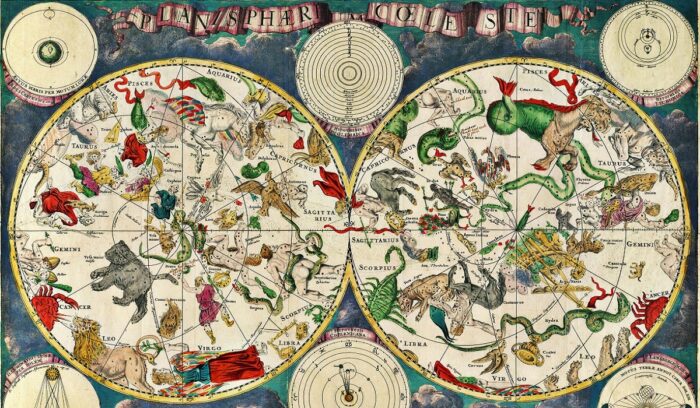
The oldest known star chart may be a carved ivory Mammoth tusk that was discovered in Germany in 1979. This artifact is 32,500 years old and has a carving that resembles the constellation Orion.