
Early humans discover and settle Micronesia
The Northern Marianas were the first islands in Oceania colonized by the Austronesian peoples. It was settled by the voyagers who sailed eastwards from the Philippines at approximately 1500 B.C.E.

The Northern Marianas were the first islands in Oceania colonized by the Austronesian peoples. It was settled by the voyagers who sailed eastwards from the Philippines at approximately 1500 B.C.E.

The Iron Age began when iron replaced bronze as the most popular metal used for weapons.

The Nok culture is an early Iron Age population whose material remains are named after the Ham village of Nok in Kaduna State of Nigeria, where their famous terracotta sculptures were first discovered by Westerners in 1928.

The finding of bronze axes at Nyaunggan located in Shwebo township suggests that Bronze Age of Burma began around 1500 B.C.E. in parallel with the earlier stages of Southeast Asian bronze production.

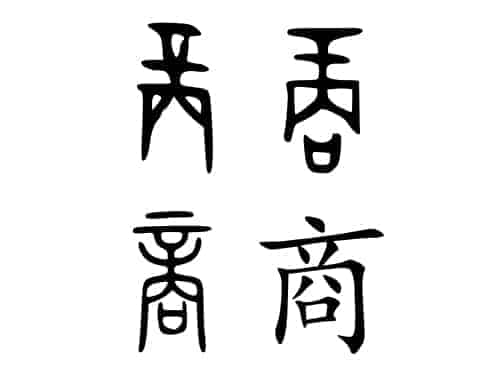
The Shang dynasty is the earliest dynasty of traditional Chinese history supported by archaeological evidence.
The code consists of 282 laws, with scaled punishments, adjusting “an eye for an eye, a tooth for a tooth” as graded depending on social status, of slave versus free man.

The First Babylonian Empire, or Old Babylonian Empire, is dated to c. 1894 B.C.E. – c. 1595 B.C.E., and comes after the end of Sumerian power with the destruction of the 3rd dynasty of Ur, and the subsequent Isin-Larsa period.

The Andronovo culture is a collection of similar local Bronze Age cultures that flourished c. 2000-900 B.C.E. in western Siberia and the central Eurasian Steppe.

Austronesian people form the majority of the modern population. They may have arrived in Indonesia around 2000 B.C.E. and are thought to have originated in Taiwan.
The earliest fully developed spoke-wheeled horse chariots are from the chariot burials of the Andronovo (Timber-Grave) sites of the Sintashta-Petrovka Proto-Indo-Iranian culture in modern Russia and Kazakhstan from around 2000 B.C.E.